
Scheduling Your Heater Startup Before the First Frost in Burlington County
Waiting for the first freezing night to test your heating system often leads to sudden ignition failures. Testing early in the fall ensures you avoid backordered replacement parts.

The Hidden Risk of Waiting for the First Freezing Night
With the autumn chill just around the corner, scheduling your heater startup before the first frost in Burlington County is the single most important step you can take for your home's comfort right now. During the early fall, the weather is often unpredictable. The days remain pleasantly warm, and it is a common habit for homeowners to leave their thermostats turned off until it is absolutely necessary to use them. You might think you are saving energy and prolonging the life of your equipment by waiting, but keeping that system dormant carries a significant, hidden risk.
For reliable heating services, your best move is to schedule heating maintenance before the deep freeze arrives.
The concrete problem reveals itself on that very first freezing night of the season. You walk over to the thermostat, switch it from cooling to heating, and wait for the familiar sound of warm air rushing through the vents. Instead, you hear a click, a faint hum, and then nothing. The system fails to ignite. Because the unit has been sitting idle for months, minor issues like dust accumulation or a brittle ignitor have quietly turned into a complete system failure.
The decision point is clear: You can choose to run a test cycle and have a professional look at your system now, or you can wait until the cold hits and find yourself competing with hundreds of other local homeowners for emergency repairs. Proactive homeowners know that the secret to a stress-free winter is handling this during the September pre-frost window. By taking action early in Burlington County, you completely bypass the frustration of a freezing house and the anxiety of waiting for a technician.
The 'Moving Day' Cautionary Tale: When Untested Heaters Fail
A typical pattern we see unfold every single year involves homeowners who are caught completely off guard because they assumed a silent heater was a healthy heater. This is especially common when people change residences during the colder months. For instance, one recent customer moved into their new home during the winter, only to discover the heater was entirely broken on their very first night in the house. Our team made it a priority to stop by immediately, check out the dormant system, and keep them informed every step of the way until the heater was fully repaired.
This moving day scenario is a powerful cautionary tale, but it does not just apply to people buying new houses in Burlington County. In reality, every homeowner experiences a "moving day" of sorts when the seasons change. You are transitioning your home from summer cooling to winter heating, and you are asking a complex piece of machinery to wake up and perform flawlessly after months of total inactivity.
When an untested heater fails right when you need it most, the stress is instantly compounded. You are not just dealing with a cold living room; you are suddenly facing a situation where specific parts might need to be ordered, leaving your family in discomfort for days. The frustration of a sudden no-heat situation is entirely preventable. Prioritizing a diagnostic visit before the cold sets in ensures that if any components are failing, they can be identified, ordered, and installed on your schedule—not during a midnight emergency.
The Supply Chain Reality of the First Regional Freeze
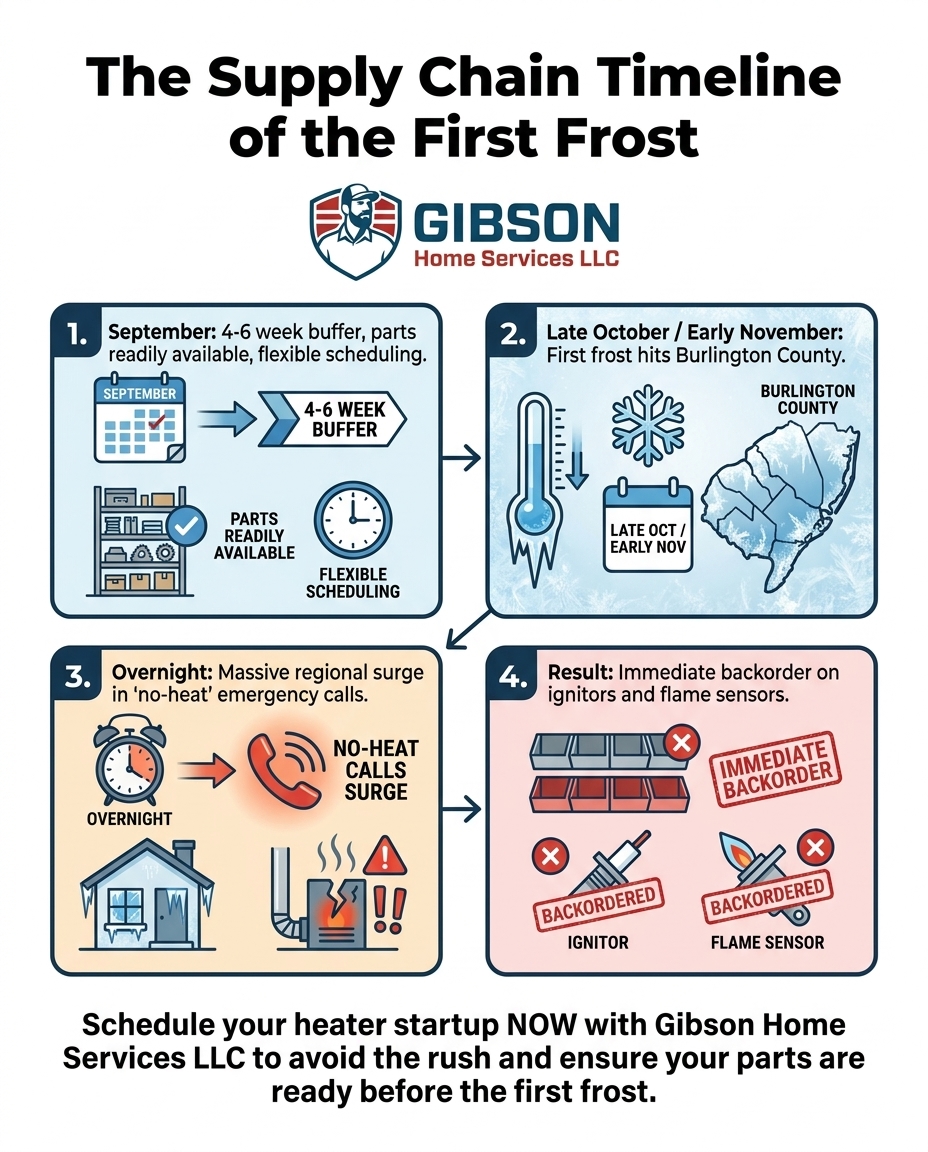
To truly understand why waiting is a gamble, you have to look at the mechanics of the local HVAC supply chain. Burlington County frequently experiences sudden, sharp overnight freezes in late October or early November. When that first real temperature drop happens, it triggers a massive, simultaneous regional surge in service calls. Thousands of local homes turn on their heating systems on the exact same night, and a predictable percentage of those systems will fail to start.
The Overnight Regional Demand Spike
When everyone experiences an ignition failure at the same time, the local supply houses that stock replacement parts are rapidly drained of their inventory. The morning after the first freeze is always chaotic. Technicians are dispatched across the region, and they are all pulling from the same local warehouses to fix the exact same problems.
• September pre-frost — Homeowner Demand: Low to moderate — Parts Availability: Fully stocked, immediate access
• Night of the First Freeze — Homeowner Demand: Massive regional spike — Parts Availability: Warehouses begin depleting rapidly
• 48 Hours Post-Freeze — Homeowner Demand: Sustained emergency calls — Parts Availability: Common ignition parts on backorder
Why Ignition Parts Go Out of Stock First
The components that fail most frequently after summer dormancy are ignitors and flame sensors. Because these parts are the most common casualties of an idle system, they are highly sought after during the initial weeks of winter. Once the local supply houses run out of these specific components, technicians have to order them from regional or national distributors. That means your repair is delayed, and your house stays cold. A September pre-frost startup check completely bypasses this bottleneck, ensuring that if you need a new sensor, it is available and installed long before the rush begins.
Why Ignition Failures Happen After Summer Dormancy
Understanding why your heater struggles to wake up can help you see the value of a proactive check. Heating systems are complex, and they do not respond well to sitting idle in a humid, dusty environment for six months. These startup issues affect all types of heating setups, from standard forced-air furnaces to complex boiler systems.
During the summer, your basement, attic, or utility closet goes through significant temperature and humidity fluctuations. Airborne dust settles over everything, including the highly sensitive components inside your heating unit. When you finally call for heat, that accumulation of summer debris actively interferes with the ignition sequence.
The Impact of Dust on Flame Sensors
The flame sensor is a crucial safety component designed to detect whether a fire has actually been lit. If it does not sense a flame, it shuts the system down immediately to prevent gas from building up in your home. However, summer dust accumulation acts as a microscopic insulator on the sensor's surface.
• Microscopic buildup: Even a thin layer of household dust can blind the sensor to the flame.
• Short cycling: The system might ignite for a few seconds, fail to read the flame due to the dust, and immediately turn off.
• Professional handling: Cleaning these sensors requires a delicate touch and professional tools to avoid scratching or damaging the sensitive metal rod.
In addition to sensor issues, the ignitor itself can become a problem. Ignitors get incredibly hot to light the fuel, and over time, the constant heating and cooling causes the material to become brittle. A long period of dormancy followed by a sudden demand for high heat can cause an older, brittle ignitor to crack and fail instantly. Addressing these vulnerabilities during the September pre-frost period keeps your system running safely.
Capitalizing on the 4-to-6 Week Buffer
Timing is everything when it comes to home maintenance. Testing your system right now provides a critical 4-to-6 week window before the typical late autumn frost arrives in the region. This buffer is your ultimate defense against the stress of a sudden breakdown.
1. Run a brief test cycle: Turn your thermostat to heat on a cooler morning in September. Let it run for 15 minutes to ensure warm air is flowing.
2. Identify odd behaviors early: Listen for strange noises, unusual smells, or a system that turns off too quickly.
3. Schedule a professional startup: Use this buffer period to have a technician perform a comprehensive diagnostic.
4. Source parts without pressure: If a component is showing signs of wear, the 4-to-6 week buffer allows ample time for technicians to source and install the part without leaving your home freezing.
This early scheduling also offers significantly more flexible appointment times. Instead of taking time off work to meet an emergency technician during a busy winter week, you can choose a convenient September pre-frost appointment that fits your routine. Furthermore, this early transition check is equally important for homes utilizing heat pump services, as these systems must shift their reversing valves to switch from cooling to heating mode.
How Local Expertise Beats the Winter Rush
Navigating seasonal supply chain issues requires a contractor with strong, established local supplier relationships. This is where Gibson Home Services' prompt, local expertise in Delran and Burlington County makes a massive difference. A company that knows the local climate patterns and maintains close ties with regional supply houses can quickly catch and fix ignition failures before the peak winter service rush even begins.
A professional startup check goes far beyond just turning the thermostat up to see if the vents get warm. A trained technician will inspect the heat exchanger, test the electrical draw on the blower motor, verify the integrity of the flame sensor, and ensure the ignitor is within safe operational limits. This level of detail provides the peace of mind that comes from knowing the system is fully operational and safe to run.
The ultimate benefit: You get to contrast the ease of an early diagnostic visit with the severe stress of dealing with late-season furnace problems. When you partner with a local expert who understands Burlington County's specific weather challenges, you are actively protecting your home from the chaos of the first freeze.
Take Action Now for a Warm, Worry-Free Winter
Beating the first frost is not just about avoiding a chilly evening; it is about strategically avoiding the regional parts bottleneck that catches thousands of homeowners off guard every single year. The supply chain reality is clear: waiting until your system fails means waiting in line for backordered parts. Securing your spot on the schedule during the September pre-frost window guarantees your comfort later.
Do not let a dusty flame sensor or a brittle ignitor turn the first cold night into a stressful emergency. Now is the perfect time to schedule heating maintenance while parts, inventory, and skilled technicians are still readily available for your home.
Frequently Asked Questions
Why won't my furnace ignite after sitting dormant all summer?
Dust accumulation and lack of use are the primary culprits. Over the summer, microscopic debris settles on sensitive components like the flame sensor, acting as an insulator that prevents it from reading the flame. Additionally, ignitors can become brittle over time and may crack when suddenly forced to heat up after months of inactivity.
When should I turn my heat on for the first time in NJ?
You should run a brief test cycle in September, well before the cold weather actually arrives. Testing your system early gives you a 4-to-6 week buffer to address any hidden issues. If you wait until the first real frost in late October or November, you risk discovering a problem right when everyone else is calling for emergency service.
What should I do if my furnace won't ignite during a test run?
If your system fails to start, turn the thermostat back off and resist the urge to repeatedly force it to ignite. This is a clear sign that a component, such as the flame sensor or ignitor, needs professional attention. Reach out to a local HVAC technician to perform a proper diagnostic and safely resolve the issue.
When should I schedule heater maintenance in Burlington County?
The ideal time to schedule your maintenance is during the early fall, specifically in September. This timing ensures your system is cleaned, tested, and ready to perform long before the sudden overnight freezes hit the region. Early scheduling also guarantees you get a convenient appointment time before the winter rush begins.
Are furnace ignition parts really on backorder during the first frost?
Yes, it is a very common occurrence. Because thousands of homes turn on their heating systems on the exact same night, local supply houses experience a massive, sudden drain on their inventory. Flame sensors and ignitors are the most frequent components to fail, meaning they are the first parts to go on regional backorder.
How long does a professional pre-season heater startup test take?
A thorough professional startup check typically takes about an hour to complete. During this time, the technician will clean sensitive components, check electrical connections, inspect the heat exchanger, and verify that the system cycles on and off safely. It is a brief visit that provides months of uninterrupted peace of mind.
Latest articles
Discover more articles

Upgrading to a Variable-Speed Blower vs. Single-Stage for Better Fall Humidity Control
If your house feels cold but clammy during mild autumn weather, your AC might be short-cycling. See why upgrading your blower motor solves this sticky problem.
Can I Get a 24/7 Heat Pump Repair on a Weekend in Marlton?
When your system fails on a Friday night, you need to know if an emergency call means a real fix or just a patch. Find out what a weekend service call actually covers.
The Truth About Dead Compressors and Aggressive Replacement Quotes
A sudden AC breakdown is stressful when a technician immediately condemns your entire system. Before signing a replacement contract, see why a 'dead' compressor might just be a minor electrical issue.