
Is a 24-Hour Emergency Furnace Repair in Moorestown Worth the Extra Cost?
When your heating fails at 3 AM during a November cold snap, panic sets in. Use this clear framework to decide if you need an immediate after-hours dispatch.

Waking Up Cold: Deciding When to Call for Immediate Furnace Help
You wake up freezing at 3 AM, and the first question that crosses your mind is: Is a 24-Hour Emergency Furnace Repair in Moorestown Worth the Extra Cost? The sudden realization that your heating system has failed overnight brings immediate stress. You check the thermostat, see the numbers steadily dropping, and face a difficult decision: do you pay the premium for an after-hours dispatch, or do you bundle up and wait for regular business hours? At Gibson Home Services LLC, our team has helped countless homeowners navigate this exact pre-winter panic, and we know that making the right call requires a logical triage of the risks rather than a panic-driven reaction.
During a sudden November cold snap, the threat to your home shifts rapidly. What starts as a chilly inconvenience can quickly escalate into a property-threatening emergency if you do not know what to monitor. The key is separating temporary discomfort from actual danger. A dead furnace in the middle of the night forces you to evaluate the safety of your family, the vulnerability of your plumbing, and the operational state of your heating equipment.
Before you pick up the phone, you need a clear framework for assessing the situation. While securing professional heating services is always the ultimate solution to a broken system, the timing of that service call depends entirely on a few critical factors. By understanding how to read your home's temperature loss and identifying true safety hazards, you can make an informed choice that protects both your property and your budget.
The Reality of Overnight Breakdowns
In our years of providing heating solutions across Delran and Moorestown, we've noticed that heating systems rarely fail at convenient times. They typically break down when they are working their hardest—which happens to be during the coldest hours of the night. When the outdoor temperature plummets, your furnace runs longer cycles to keep up. If a component is already worn out, this extended strain is usually what pushes it over the edge into a complete system lockout.
When this happens, the immediate drop in indoor air temperature is noticeable. However, the ambient air temperature in your living room is only one part of the equation. The more pressing concern is the temperature inside your wall cavities, basements, and crawlspaces, where your home's critical infrastructure lives. Understanding this distinction is the first step in deciding whether an immediate dispatch is necessary.
Assessing the Danger: The 55-Degree Rule for Your Home
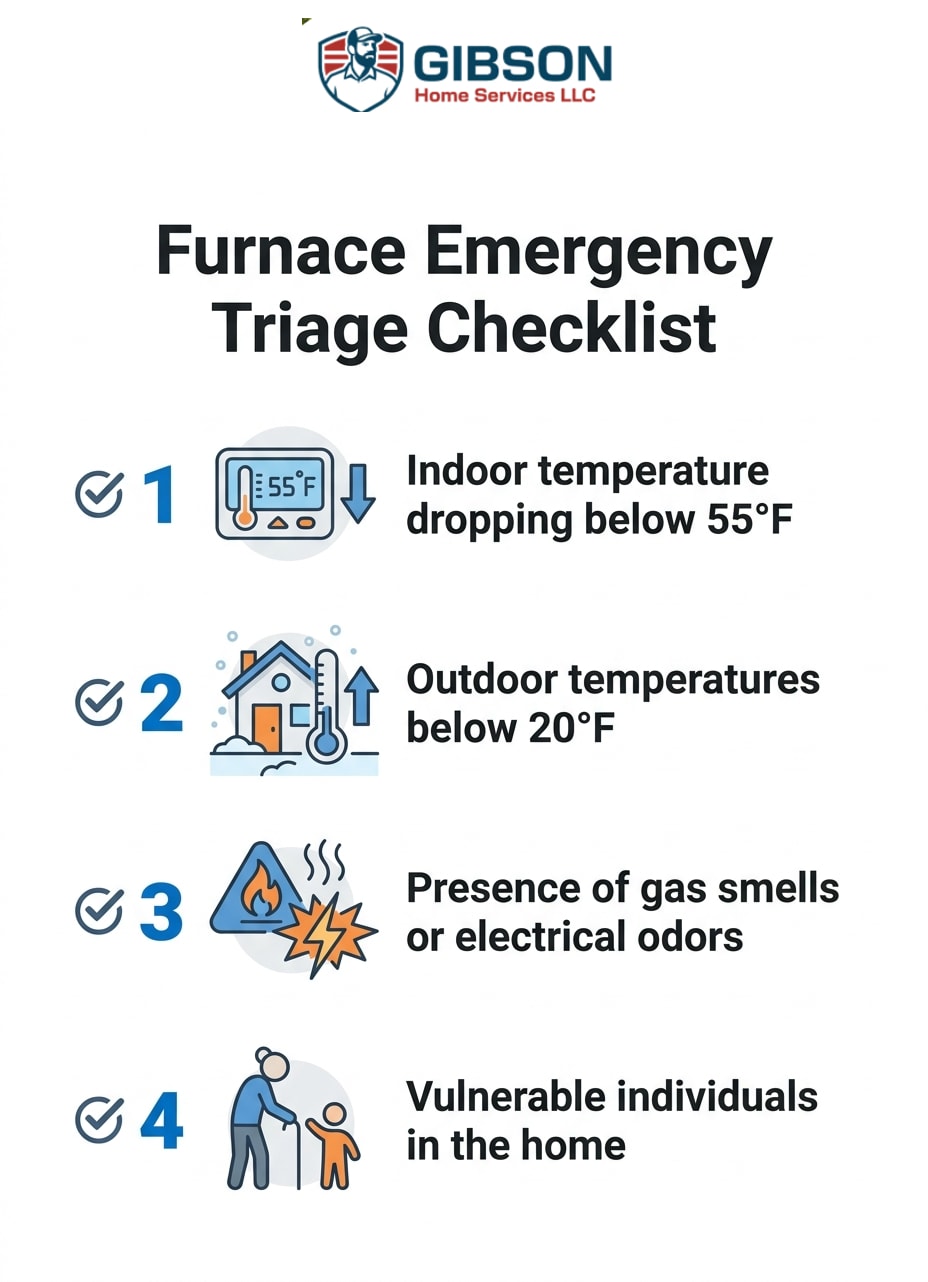
To remove the guesswork from your midnight decision, you need objective temperature thresholds. The most important benchmark to remember is the 55-degree rule. The American Red Cross strongly recommends keeping your thermostat set no lower than 55°F during winter months to prevent frozen pipes. If your heating system fails and your indoor temperature is dropping below 55°F, your situation is rapidly moving from an uncomfortable night to a potential plumbing disaster.
How quickly your home reaches this danger zone depends entirely on your property's thermal envelope. A heavily insulated newer build might retain safe temperatures for 12 to 24 hours after a furnace failure. Conversely, an older home with drafty windows and minimal wall insulation might bleed heat in a matter of hours, especially if high winds accompany the low temperatures.
Tracking Your Home's Heat Loss Rate
Instead of guessing, use this simple checklist to monitor your home's condition during the first few hours of a breakdown:
• Document the initial temperature: Note the exact indoor temperature and the time you discovered the furnace was broken.
• Check the outdoor conditions: Look at the current outdoor temperature and the forecast for the next six hours. If it is plunging into the teens, your home will lose heat much faster.
• Monitor the drop every 30 minutes: Keep a log of the indoor temperature. If you are losing one degree per hour, you have time. If you are losing three or four degrees per hour, you are on a fast track to the danger zone.
• Inspect the perimeter: Feel the interior walls facing the outside of your home. If they are ice-cold to the touch, the cavities where your pipes run are already reaching freezing temperatures.
If your tracking shows the indoor temperature is approaching that 55°F threshold before morning, paying for an emergency dispatch becomes a necessary investment to protect your home from catastrophic water damage.
The Hidden Risk of Frozen Pipes in Older South Jersey Homes
The architecture of your specific home plays a massive role in how you should handle a heating failure. While pipes generally begin to freeze when outdoor temperatures hit 20°F, uninsulated indoor pipes are at a significantly higher risk, even if the main living areas still feel somewhat warm. Our technicians at Gibson Home Services LLC frequently see this specific vulnerability in the local area when assessing older properties.
Many older, historic homes in Moorestown feature crawlspaces and unfinished basements. These areas are notoriously under-insulated. When a sudden November cold snap hits, temperatures can drop rapidly into the 20s before homeowners have had a chance to fully winterize their properties. Because heat rises, these lower cavities are the first to drop below freezing when the furnace stops circulating warm air.
Why Crawlspaces Are the Weak Link
The plumbing routed through a crawlspace is completely exposed to the ambient temperature of that unconditioned area. Without the furnace running, the residual heat that normally keeps the floorboards warm vanishes. The water inside those exposed pipes can freeze, expand, and create immense pressure. The actual pipe burst often happens inside the walls or ceilings, far away from the frozen blockage itself, leading to devastating water damage once the ice thaws.
Immediate Steps to Protect Your Plumbing
If you decide to wait until morning for a repair, you must take active steps to mitigate the risk to your plumbing:
• Open cabinet doors: Expose the plumbing under your kitchen and bathroom sinks to the warmer air in the main living spaces.
• Let faucets drip: Turn on both the hot and cold water slightly. Flowing water is much harder to freeze than stagnant water, and the open valve relieves the pressure that causes pipes to burst.
• Seal off drafts: Stuff towels under exterior doors and close all window treatments to trap as much residual heat in the house as possible.
Taking these steps buys you time, but they are only temporary measures. If the cold snap is severe, delaying repair is a gamble with your home's infrastructure.
True Heating Emergencies vs. Uncomfortable Inconveniences
Not every late-night furnace issue requires a 3 AM wake-up call for a technician. Categorizing the type of failure you are experiencing helps you accurately classify the situation. Some problems are immediate safety hazards that demand instant action, while others are merely uncomfortable but completely safe to delay.
Categorizing Your Furnace Failure
• Strong smell of rotten eggs (natural gas) — Classification: Severe Emergency — Recommended Action: Evacuate immediately, call the gas company, then call for emergency HVAC repair.
• Electrical burning odor or sparking at the unit — Classification: Severe Emergency — Recommended Action: Shut off the furnace breaker immediately and request an urgent after-hours dispatch.
• Furnace runs but blows lukewarm air — Classification: Inconvenience — Recommended Action: Safe to wait until morning. Check the air filter and thermostat settings in the meantime.
• Total system failure, indoor temp dropping fast — Classification: Property Emergency — Recommended Action: Monitor against the 55°F rule. Call for emergency service if the threshold is threatened.
Beyond the mechanical and structural risks, the human element is a major deciding factor. The presence of elderly family members, infants, or individuals with compromised health instantly elevates a heating breakdown to an immediate emergency. These groups cannot safely regulate their body temperatures in a rapidly cooling house, making an after-hours repair an absolute necessity.
If your situation falls into the "inconvenience" category, you might be dealing with a minor sequence error. For example, diagnosing a furnace that blows cold air before igniting often reveals that the system is simply stuck in a safety lockout due to a dirty flame sensor or a clogged filter. In these safe-to-delay scenarios, you can try resetting the furnace power or swapping the filter to see if a simple fix restores the heat before morning.
Understanding the Emergency Service Premium Without the Stress
If you determine that your situation requires immediate intervention, the next hurdle is usually anxiety over the cost. After-hours premiums exist across the entire home service industry, and understanding why they are charged can help alleviate the stress of paying them. This fee compensates technicians for maintaining 24/7 readiness, leaving their families in the middle of the night, and operating dispatch logistics during off-hours.
A reputable company will always be upfront about these costs over the phone before a technician is ever dispatched to your home. You should never be surprised by an emergency dispatch fee upon arrival. Transparency builds trust, and knowing exactly what you are paying for allows you to make a calm, calculated decision.
The Value of Honest Diagnostics After Hours
The true value of an emergency call lies in honest diagnostics. When you are panicked and freezing, you are highly vulnerable to high-pressure sales tactics. A trustworthy technician focuses on solving the immediate crisis without unnecessary upselling. Earlier this spring, one local homeowner called our team when their furnace started malfunctioning and they feared it would need multiple expensive parts replaced. The responding Gibson Home Services LLC technician performed a thorough diagnostic, determined the extra parts were entirely unnecessary, and repaired only what was required. That level of integrity ensures you only pay for what is actually broken, even in the middle of the night.
Furthermore, if an overnight diagnostic reveals that your system requires a major repair or a complete replacement, you are not expected to drain your savings on the spot. Professional contractors offer flexible financing options to ease the burden of unexpected, large-scale heating emergencies. This allows you to restore your home's safety immediately while managing the cost responsibly over time.
How to Avoid the 3 AM Heating Crisis Altogether
The best way to handle an emergency furnace repair is to prevent it from happening in the first place. Transitioning from reactive panic to proactive prevention saves you from the stress, the cold, and the after-hours premiums entirely. Most midnight breakdowns are the result of minor, silent issues that compound over time until a component completely fails under heavy winter strain.
Steps to Proactive Heating Reliability
1. Schedule routine inspections: Having a professional evaluate your system every autumn allows them to catch failing capacitors, worn blower motors, and dirty flame sensors before they cause a complete system lockout on a freezing night.
2. Join a preventative maintenance program: Enrolling in a preventative maintenance plan ensures your system receives consistent care. These plans often come with the added benefit of priority scheduling, moving you to the front of the line if a breakdown does occur.
3. Keep up with filter changes: A clogged air filter restricts airflow, causing the furnace to overheat and trip its high-limit safety switch. Replacing your filter every 30 to 90 days is the easiest way to prevent a sudden shutdown.
4. Monitor system behavior: Pay attention to short-cycling (turning on and off rapidly) or strange noises. Addressing these symptoms during regular business hours prevents them from turning into midnight emergencies.
The assurance that comes from knowing your heating system is prepared for sudden winter weather shifts is invaluable. Last winter, a customer whose heater broke unexpectedly right after moving into a new home needed urgent help. Because they reached out to a reliable team, a technician made a priority visit, kept the homeowner updated while securing the necessary part, and successfully completed the repair. Establishing a relationship with a trusted HVAC provider before disaster strikes guarantees that when you do need help, you already know who to call.
Frequently Asked Questions About Emergency Furnace Breakdowns
What is considered a true furnace emergency?
A true furnace emergency is any situation involving gas leaks, electrical burning smells, or a total loss of heat when outdoor temperatures are below freezing. If the health of vulnerable individuals in the home is at risk, or if the property is in danger of freezing pipes, immediate professional intervention is required. Always prioritize physical safety over waiting for regular business hours.
How cold can a house get before pipes freeze?
Pipes are at severe risk when outdoor temperatures drop below 20°F, but indoor thermostats should never be allowed to drop below 55°F. This threshold is recommended because the temperature inside uninsulated wall cavities and crawlspaces is significantly colder than your living room. Maintaining at least 55°F ambient heat provides a necessary buffer for your plumbing.
Can I safely wait until morning for furnace repair?
Yes, you can safely wait until morning if the indoor temperature is stable above 55°F, there are no vulnerable individuals in the home, and there are no signs of gas or electrical dangers. If the furnace is simply blowing lukewarm air but still running, or if the outdoor weather is mild, bundling up for the night is a safe and cost-effective choice.
What should I do if my furnace stops working in winter?
First, check the thermostat batteries and ensure the circuit breaker hasn't tripped. Next, check the air filter to ensure a severe clog hasn't caused the system to overheat and lock out. Finally, monitor the indoor temperature drop to decide if an immediate after-hours dispatch is needed to protect your home.
Are space heaters a safe alternative while waiting for repairs?
Space heaters can provide temporary comfort for a single room, but they require strict safety precautions. They must be kept away from flammable materials, plugged directly into wall outlets rather than extension cords, and never left unattended while you sleep. They are a short-term bridge, not a replacement for central heating.
How do I check if my furnace issue is just a thermostat problem?
Verify the thermostat is securely set to the 'heat' position and that the temperature setting is several degrees higher than the current room temperature. Replace the batteries if the screen is blank or flashing. If the thermostat clicks but the furnace fails to respond, the issue likely lies within the heating equipment itself.
Make an Informed Decision for Your Home's Safety
Deciding whether to pay for a late-night dispatch ultimately rests on the balance between your home's indoor temperature stability and the presence of direct safety hazards. By applying a clear, practical framework—tracking the 55-degree rule, assessing your home's vulnerability to frozen pipes, and ruling out gas or electrical dangers—you can confidently determine if your situation is a true emergency or just a highly uncomfortable inconvenience.
Protecting your property and your family should always be the priority, but you do not have to make that decision in a panic. Taking proactive steps today can prevent the midnight stress entirely. If you want to ensure your system is ready to handle whatever the winter weather brings, scheduling professional heating maintenance is the most reliable way to secure your home's comfort and safety.
Latest articles
Discover more articles

Dealing with Drafty Sunrooms in Cherry Hill During November
As pre-winter temperatures drop, heating a glass-heavy three-season room is a challenge. Find out if extending central ductwork or adding a mini-split is the smartest permanent fix.
Repairing a 12-Year-Old Furnace vs. Upgrading to a 96% AFUE Model
A failing draft inducer right before winter forces a tough choice. Weigh the immediate repair of your aging system against the long-term reliability of a high-efficiency replacement.
Is a 24-Hour Emergency Furnace Repair in Moorestown Worth the Extra Cost?
When your heating fails at 3 AM during a November cold snap, panic sets in. Use this clear framework to decide if you need an immediate after-hours dispatch.