
Addressing Musty Odors in Delran Basements When the AC Cycles Less Frequently
As mild September weather arrives, your AC stops running long enough to dehumidify your home, turning basements into damp traps. Here is how to eliminate that stale air before winter heating begins.

The Unwelcome Arrival of Fall Basement Odors
Addressing musty odors in Delran basements when the AC cycles less frequently becomes a sudden priority for many homeowners as late summer fades into early fall. You walk down the stairs to grab a light jacket or switch over your seasonal gear, and it hits you: a heavy, damp, stale smell that simply wasn't there in July. Your air conditioner is still working, the house feels generally cool, and you haven't found any standing water. Yet, the air quality in your below-grade space has noticeably degraded in a matter of weeks.
At Gibson Home Services, this is one of the most common frustrations our technicians encounter during the September transition. The central paradox of this early fall season is that your HVAC system is technically functioning exactly as it should, but the changing weather patterns have altered how it interacts with your home's environment. When the intense summer heat breaks, your air conditioner doesn't have to work as hard to reach the target temperature on your thermostat. While this is great for your energy bills, it creates a significant problem for your indoor air quality.
The core issue: Air conditioning systems do two jobs—they cool the air, and they remove moisture. When they stop running as often, the cooling continues, but the moisture removal stops. This leaves homeowners at a frustrating decision point: do you lower the thermostat to an uncomfortable level just to force the AC to run, or do you seek a dedicated moisture control solution?
To understand why this happens, it helps to look at how your system's behavior changes as the seasons shift:
• Peak Summer — Outdoor Conditions: 90°F+ with high humidity — AC Cycle Length: Long, frequent cycles — Basement Air Quality Impact: Air is actively dehumidified; basements stay relatively dry.
• Early Fall — Outdoor Conditions: 70°F–80°F with high humidity — AC Cycle Length: Short, infrequent cycles — Basement Air Quality Impact: Air cools quickly, but moisture is left behind; musty odors develop.
Understanding this shift is the first step in resolving the issue permanently, rather than just masking the smell with air fresheners.
The Physics of September Humidity in South Jersey
To truly solve the problem of a damp basement, our team knows we have to look at the specific climate realities of our region. In our years of servicing local HVAC systems, we've seen firsthand how Delran's proximity to the Delaware River, combined with typical South Jersey water tables, makes local basements highly susceptible to rapid moisture accumulation. When the natural dehumidification provided by your air conditioner stops, that environmental moisture has nowhere to go.
During the September transition, we enter what HVAC professionals call the "no-run" zone. Outdoor temperatures often drop into the comfortable 70s, but the relative humidity remains stubbornly high. Because below-grade spaces naturally retain cooler air, the basement stays quite chilly. Meanwhile, your thermostat—usually located on the main floor or upstairs—reads that the house has reached its target temperature and shuts the system off.
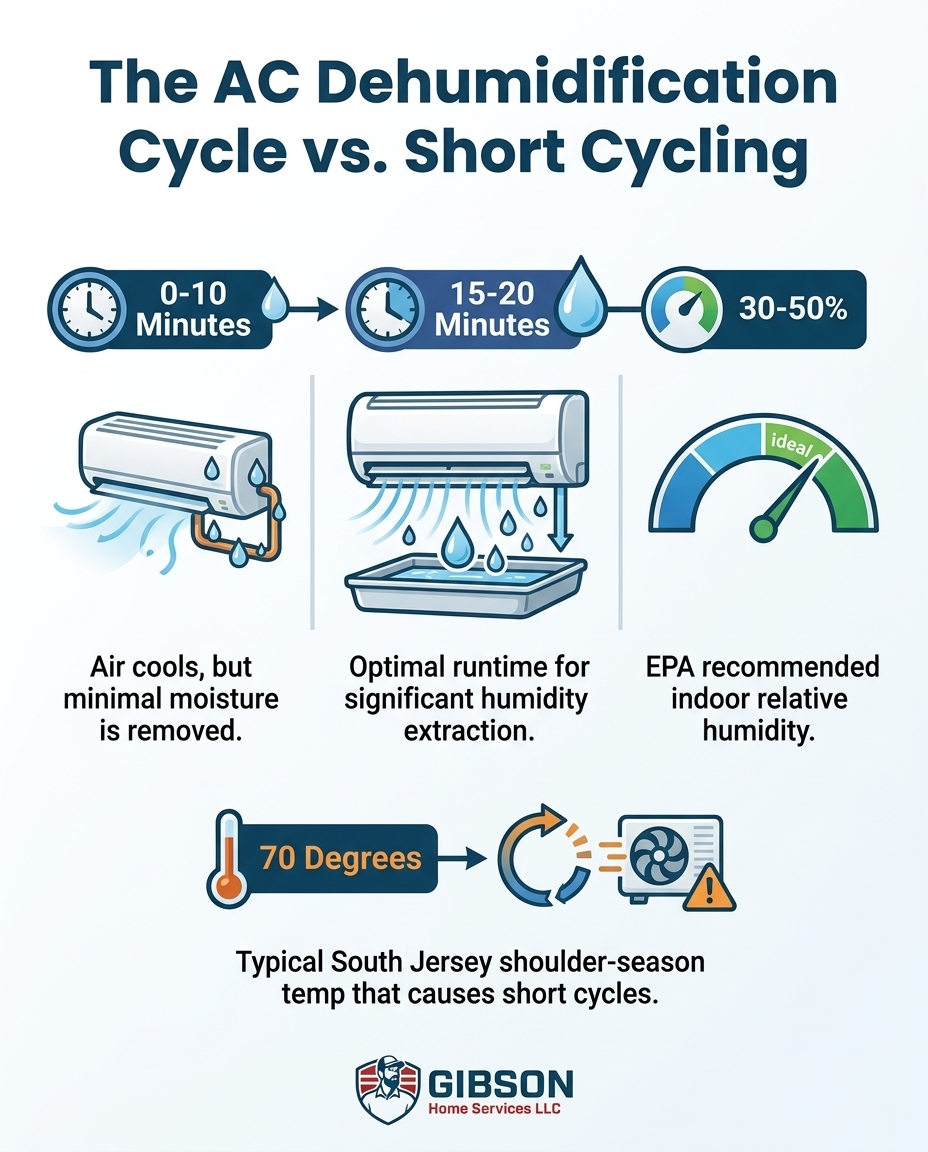
The 15-minute rule: Air conditioners generally need to run for at least 15 to 20 minutes per cycle to effectively extract moisture from the indoor air. When the weather is mild, your system might only run for 5 to 10 minutes. That is plenty of time to drop the temperature a degree or two, but it is not nearly enough time to wring the humidity out of the air. If you are noticing musty odors in basement when AC doesn't run, this short-cycling is almost certainly the culprit.
The EPA recommends keeping indoor relative humidity between 30 and 50 percent to prevent mold and mildew growth. When your AC cycles briefly in September, basement humidity can easily spike to 60 percent or higher, creating the perfect environment for that familiar stale odor. If your system is struggling to keep up with moisture demands, scheduling professional AC service in Delran can help determine if the unit is operating efficiently or if it requires adjustment.
Why Short AC Cycles Fail to Dehumidify
To understand the mechanics of moisture removal, we have to look inside your HVAC system at the evaporator coil. This component is responsible for pulling heat and humidity out of your home's air.
1. The cooling phase: Warm, humid air blows across the freezing cold evaporator coil.
2. The condensation phase: As the air cools, the moisture inside it condenses into water droplets on the coil—much like water beading on the outside of a cold glass of iced tea.
3. The drainage phase: Those water droplets eventually drip down into a drain pan and are carried safely out of your home.
When an AC cycle is too short, the air cools, but the system shuts off before enough water droplets can collect and drain away. The moisture remains on the coil and in the air, resulting in a sticky, damp feeling throughout the house, even when the thermometer says it should be comfortable.
Why Idle Ductwork Becomes a Damp Trap
The musty smell in your basement rarely originates from the open air; it usually comes directly from the vents. To understand why, we need to look at how your home's ductwork reacts to the changing seasons, particularly in South Jersey/Delran basements where conditions can shift rapidly.
Your ductwork is essentially a network of metal tunnels running through the darkest, coolest parts of your home. During the summer, these ducts are constantly filled with cold, conditioned air. But when the weather cools down and the AC fan shuts off for long periods, those cold metal ducts interact with the ambient high humidity in the basement.
Here is exactly how idle ductwork turns into a damp trap:
1. Condensation forms: Just like a cold drink sweats on a warm day, cold metal ductwork sweats when exposed to humid basement air.
2. Moisture pools: Because the system isn't running long enough to dry out the interior of the ducts, residual moisture sits stagnant in the dark.
3. Odors develop: Dark, damp, and idle environments are the exact conditions required for organic growth. Dust and debris inside the ducts absorb the moisture, creating a breeding ground for the precise musty odors you notice when you walk downstairs.
4. The smell circulates: When the system finally does kick on for a brief cycle, it pushes that stale, trapped air directly into your living space.
A note on thermostat settings: Many homeowners try to fix stagnant air by switching their thermostat fan setting from "AUTO" to "ON." While this does circulate the air, it can actually make the moisture problem worse. Running the fan continuously without active cooling pulls the moisture that was sitting on the evaporator coil and re-evaporates it directly back into the house. If you are already researching why your AC is leaking water or struggling with humidity, leaving the fan set to "ON" will only exacerbate the dampness.
The Costly Mistake of Overcooling Your Home
When faced with a damp, musty basement in early fall, a common homeowner reaction is to walk over to the thermostat and drop the temperature down to 68 degrees or lower. The logic makes sense on the surface: if the AC needs to run to pull moisture out of the air, forcing it to run by lowering the temperature should solve the problem.
Unfortunately, our technicians frequently see this strategy backfire, wasting energy and creating entirely new issues for your HVAC system. Overcooling your home to manage basement humidity is a costly mistake for several reasons.
• Freezing upper floors: To get the basement dry, you end up making the main floors of your home uncomfortably cold, forcing your family to wear sweaters indoors during September.
• Unnecessary wear and tear: Forcing your compressor to run continuously when outdoor temperatures are mild puts excessive strain on the equipment, potentially shortening its lifespan.
• Increased duct condensation: Pushing excessively cold air through the basement ductwork when the surrounding air is still humid actually increases the amount of condensation forming on the outside of the metal, worsening the underlying moisture issue.
Before you resort to overcooling your home, it is vital to have the system inspected to ensure the short cycling isn't being caused by a mechanical issue. A dirty, clogged air filter can restrict airflow, causing the system to behave erratically. Similarly, an oversized AC unit will always cool the house too quickly and shut off before dehumidifying, regardless of the season. Routine air conditioning maintenance is the best way to rule out these mechanical faults before assuming the issue is purely environmental.
Dedicated Moisture Control for Delran Homes
If overcooling isn't the answer, how do you eliminate the musty odors in basement when AC doesn't run? The solution lies in treating humidity and temperature as two separate variables. As local South Jersey microclimate experts, our crew at Gibson Home Services knows that relying on an air conditioner to manage September humidity in a Delran basement is asking the equipment to do a job it wasn't designed for in mild weather.
The most effective, professional approach is installing a whole-home dehumidifier. Unlike small, portable units that you have to empty manually every day, a whole-home system integrates directly into your existing HVAC ductwork. It monitors the moisture levels in the air independently of the thermostat. When the humidity rises above the recommended 50 percent, the dehumidifier kicks on, pulls the moisture out of the air, and drains it automatically—even if the air conditioner is completely shut off.
In addition to dedicated moisture control, resolving persistent odors often requires professional duct inspection and cleaning. If moisture has been sitting in your ductwork for weeks, organic growth and damp dust need to be physically removed. Clean, dry ductwork is essential for healthy indoor air.
A pattern we see often is homeowners waiting until the smell is unbearable before calling for help. When one local homeowner recently reached out to us for a new equipment installation to combat these exact odors, they needed a quick estimate and reliable scheduling. Our team arrived promptly, assessed the layout, and completed the work with top-tier professionalism. At Gibson Home Services, we bring that exact same standard to designing custom moisture control systems for your home. We don't just guess at the problem; our certified technicians measure the airflow, inspect the ductwork, and provide clear, tailored options.
Tailoring the Solution to Your Space
Not every basement requires the exact same approach. A comprehensive home assessment provides clear information so you can make the right decision for your property. Depending on your home's footprint, options might include:
• Targeted ventilation improvements: Adjusting ductwork dampers to ensure proper airflow to below-grade spaces.
• Stand-alone professional dehumidification: High-capacity units permanently installed in the basement to manage localized moisture.
• Integrated whole-home systems: Advanced units tied directly into the HVAC system to treat the entire house simultaneously. (Note: Generally applicable energy rebates or federal tax credits may apply to qualifying high-efficiency installations; we always advise verifying current programs with your utility provider or a tax professional.)
Investing in proper indoor air quality services ensures that your home remains comfortable, dry, and odor-free, regardless of what the weather is doing outside.
Addressing Basement Odors Before Heating Season Begins
Our team strongly advises that timing is critical when dealing with seasonal air quality issues. The September/Early Fall transition is a brief window, and ignoring a musty smell now guarantees complications later. If you allow moisture and damp dust to remain trapped in your ductwork, that odor won't just disappear when winter arrives.
Once the weather turns cold and your furnace kicks on, it will blow hot air through those same damp, dirty ducts. The heat will bake the trapped moisture and organic matter, circulating a strong, unpleasant smell throughout your entire home all winter long. Furthermore, damp ductwork can negatively impact your heating efficiency, forcing your furnace to work harder to push air through the system.
Your pre-winter checklist should include:
• Scheduling a professional ductwork inspection to check for pooling water or organic growth.
• Evaluating your current basement humidity levels with a digital hygrometer.
• Discussing dedicated dehumidification options with a licensed HVAC technician.
• Replacing your system's air filter before switching from cooling to heating.
The transition season is the absolute best time to address these issues. By scheduling a professional evaluation before the first major cold snap hits South Jersey, you can ensure your ductwork is clean, dry, and ready to deliver warm, fresh air safely and efficiently all winter long.
Frequently Asked Questions
Why does my AC smell musty in the fall?
Your AC smells musty in the fall because milder outdoor temperatures cause the system to run in shorter cycles. These short cycles cool the air but don't run long enough to remove humidity from your home. The leftover moisture settles in your ductwork and basement, creating a damp environment where stale, musty odors quickly develop.
How long does an AC need to run to dehumidify?
An air conditioner typically needs to run for at least 15 to 20 minutes per cycle to effectively extract moisture from the indoor air. During the first 10 minutes, the system is primarily cooling the air and the evaporator coil. It takes sustained operation for condensation to form on the coil, collect in the drain pan, and actively lower the humidity levels in your home.
Should I lower my thermostat to dehumidify the basement?
No, lowering your thermostat just to dehumidify the basement is not recommended. While it forces the AC to run longer, it wastes a significant amount of energy, puts unnecessary wear and tear on your compressor, and usually makes the upper floors of your home uncomfortably freezing. A dedicated dehumidifier is a much more efficient and effective solution.
Does running the AC help with a musty basement?
Running the AC can help remove moisture during peak summer when the system runs in long, continuous cycles. However, during mild weather, the AC shuts off too quickly to pull moisture out of a below-grade space. In fact, running the AC fan continuously without active cooling can sometimes re-evaporate trapped moisture back into the basement air, making the smell worse.
How can I improve indoor air quality in my Delran basement without freezing upstairs?
The most effective way to improve air quality without overcooling your home is to install a whole-home dehumidifier. This equipment works independently of your air conditioner to monitor and remove moisture from the air. Combined with professional duct cleaning to remove existing damp dust, it ensures your basement stays dry and odor-free while keeping the rest of the house at a comfortable temperature.
If you are tired of dealing with seasonal basement odors and want a permanent solution for your indoor air quality, the team at Gibson Home Services is here to help. Reach out today to schedule a comprehensive assessment, and let us ensure your home is clean, dry, and comfortable before the winter heating season begins.
Latest articles
Discover more articles

Upgrading to a Variable-Speed Blower vs. Single-Stage for Better Fall Humidity Control
If your house feels cold but clammy during mild autumn weather, your AC might be short-cycling. See why upgrading your blower motor solves this sticky problem.
Can I Get a 24/7 Heat Pump Repair on a Weekend in Marlton?
When your system fails on a Friday night, you need to know if an emergency call means a real fix or just a patch. Find out what a weekend service call actually covers.
The Truth About Dead Compressors and Aggressive Replacement Quotes
A sudden AC breakdown is stressful when a technician immediately condemns your entire system. Before signing a replacement contract, see why a 'dead' compressor might just be a minor electrical issue.