
Furnace Repair in Delran, NJ

Experiencing Furnace Problems in Cold Weather?
Don't let a broken furnace leave you in the cold this winter. At Gibson Heating & Cooling, we deliver fast, reliable service throughout Delran, NJ, that gets your heat running smoothly again. Call us for immediate service or ask about our financing options to handle unexpected repairs.
- Same-day furnace repair services ensure you're not left in the cold.
- Transparent pricing and no hidden fees mean no surprises on your bill.
- Certified technicians expertly handle all furnace models and makes.
All repairs are fully licensed, insured, and come with a comprehensive warranty.

Comprehensive Diagnostic and Repair Solutions
When your heating system fails, you need more than a quick patch; you need a thorough analysis of the root cause to prevent future breakdowns. Modern furnaces are complex systems involving electrical components, gas lines, and airflow mechanisms. A failure in one area can often trigger symptoms in another. Our technicians arrive equipped to handle a wide array of mechanical and electrical issues immediately. We focus on identifying the specific failure point, whether it is a faulty ignition system, a cracked heat exchanger, or a malfunctioning thermostat.
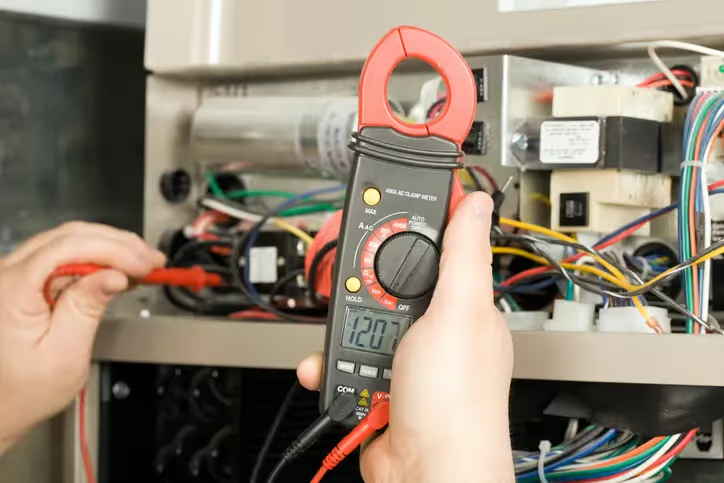
Residents in this area deal with specific environmental factors that put unique strain on heating equipment. From the humidity variations to the sharp drops in temperature, your system works hard to maintain a consistent indoor climate. We address common issues such as frequent cycling, where the unit turns on and off rapidly without reaching the set temperature, or uneven heating, where some rooms remain cold while others are overheated. Our approach ensures that the repair addresses efficiency and longevity, not just the immediate symptom.
We handle the full spectrum of furnace components, including:
- Ignition Systems and Pilot Lights: Electronic ignitors and pilot lights are frequent points of failure. If your furnace clicks but does not fire, or if the pilot light refuses to stay lit, these components usually require adjustment or replacement.
- Blower Motors and Belts: Squealing sounds often indicate a slipped belt or a motor bearing in need of lubrication. If the blower fails, heat is generated but not distributed, leading to potential overheating of the unit.
- Thermostat Calibration: Sometimes the issue lies not within the furnace but in the communication between the control unit and the heater. We recalibrate and repair thermostats to ensure accurate temperature reading and system response.
- Limit Switches and Sensors: Safety sensors, such as the flame sensor and high-limit switch, are designed to shut the system down if unsafe conditions are detected. Cleaning or replacing these sensors restores normal operation.
The Furnace Repair Process
Understanding what happens during a service call helps reduce the stress of a breakdown. We follow a structured protocol designed to minimize downtime and maximize safety.
Arrival and System Assessment
- Initial inspection: Visual review of the furnace, ventilation, and thermostat.
- Diagnostics: Advanced tools test electrical voltage, gas pressure, and airflow.
- Performance indicators: Unusual noises and odors are evaluated to pinpoint mechanical failures or leaks.
Problem Identification and Quote Presentation
- Clear explanation: The issue is explained in straightforward, technical terms.
- Cost clarity: A detailed breakdown of required parts and labor is provided.
- Upfront pricing: A flat-rate quote is presented before work begins.
Execution of Repairs
- Efficiency: Fully stocked service vehicles allow most repairs to be completed in one visit.
- Quality parts: Damaged components are replaced with manufacturer-approved parts.
- System integrity: Gas lines and electrical connections are inspected and secured.
System Testing and Safety Verification
- Operational testing: The furnace completes a full heating cycle to confirm proper function.
- Safety checks: Carbon monoxide testing and exhaust venting verification are completed.
- Final review: The work area is cleaned and the repair is reviewed with you.
Deciding Between Repair and Replacement
Homeowners often need to determine whether repairing an existing unit or replacing it is the better investment. This decision depends on age, efficiency, and cumulative repair costs.
The Age Factor
- Expected lifespan: Most gas furnaces last 15 to 20 years. Units over 15 years old often suffer from declining efficiency and limited part availability.
- Repair limitations: Fixes on aging systems are often temporary.
The 50% Rule
- Cost comparison: If repair costs approach 50% of the price of a new system, replacement is typically more economical.
- Long-term value: New systems offer warranties and higher efficiency.
Frequency of Breakdowns
- Service history: Multiple repairs within two years often indicate end-of-life conditions.
- Cost escalation: Repeated service calls can exceed the cost of financing a replacement.
Energy Efficiency and Monthly Costs
- Older systems: Furnaces operating at 60–70% AFUE waste a significant portion of fuel costs.
- Modern upgrades: New systems reach 90% AFUE or higher, reducing ongoing expenses.
When Gibson Heating & Cooling evaluates your system, we provide an objective analysis to help you understand long-term heating costs.
Navigating Local Regulations and Climate Demands
Operating a furnace in New Jersey requires compliance with local codes and an understanding of regional climate conditions.
Climate Impact on Equipment
- Extended run times: Winter temperatures often fall below freezing, requiring longer heating cycles.
- Seasonal transitions: Improper venting can cause condensation issues during temperature shifts.
- Proper sizing: Systems must handle peak winter demand without short-cycling during milder months.
Permitting and Safety Codes
- Code compliance: Gas line and electrical work must meet local building standards.
- Future considerations: Proper permitting ensures safety and avoids complications during home sales.
Rebates and Incentives
- Efficiency programs: The New Jersey Board of Public Utilities offers incentives for high-efficiency upgrades.
- Cost reduction: Proper documentation can significantly reduce installation or retrofit costs.
Operational Safety and Hazards
A malfunctioning furnace poses serious safety risks and requires professional attention.
Carbon Monoxide Risks
- Heat exchanger failure: Cracks can allow dangerous gases to circulate through your home.
- Inspection process: Detailed inspections identify damage not visible to the naked eye.
Gas Leaks
- Leak causes: Loose fittings or valve failures can create fire and explosion hazards.
- Immediate action: Sulfur or rotten egg odors require shutting off the gas and calling for service.
Electrical Fire Hazards
- Wiring issues: Frayed wires or overloaded circuits can overheat and spark.
- Safety controls: Failed internal switches increase fire risk if not professionally addressed.
Why Professional Service Matters
Attempting DIY repairs on a furnace is dangerous and often voids manufacturer warranties. Modern heating systems utilize proprietary technology and precise calibration that requires specialized training. A professional technician brings diagnostic computers and specialized tools that are not available to the general public.
Furthermore, manufacturer warranties almost always require proof of professional maintenance and repair. Failing to provide this record can leave you liable for the full cost of a replacement part, such as a compressor or heat exchanger, which usually carries a long-term parts warranty. We ensure that your warranty remains intact by documenting all service and adhering to manufacturer specifications.
Reliable heating is essential for safety and comfort. Whether you are dealing with a sudden breakdown or a system that is slowly losing efficiency, prompt professional attention protects your home and your wallet. Gibson Heating & Cooling is dedicated to restoring comfort to your home with precision and transparency.
Call Now
Don't wait until the temperature drops further—schedule your repair service today.
our process
Our heating Process Section
01
Thorough Diagnosis/Consultation
We start with a comprehensive assessment of your needs.
02
Upfront & Honest Pricing
We provide a clear, detailed estimate before any work begins.
03
Professional
Schedule
Our certified technicians perform the work to the highest standards.
04
Final Inspection & Clean-up
We ensure everything is working perfectly and leave your home clean.
testimonials
The Customer Experience:
Where Comfort Meets Reliability.
Trusted by Homeowners Across Burlington County.
