
Heating Service in Delran, NJ

Struggling with a Cold Home? Instant Heating Services Available
Facing the winter chill with a malfunctioning heater can be more than just uncomfortable—it can be unbearable. Gibson Heating & Cooling offers prompt, reliable heating services to restore your warmth and comfort, no matter the hour; call us or contact us online to schedule immediate service.
- Rapid response team dispatched within hours to tackle all heating emergencies.
- Transparent pricing with no hidden fees ensures you know what to expect.
- Expert servicing by certified technicians to get it right the first time.
Licensed and insured with attractive financing options available, we're here to make your experience worry-free.
Comprehensive Heating Diagnostics and Repair Solutions
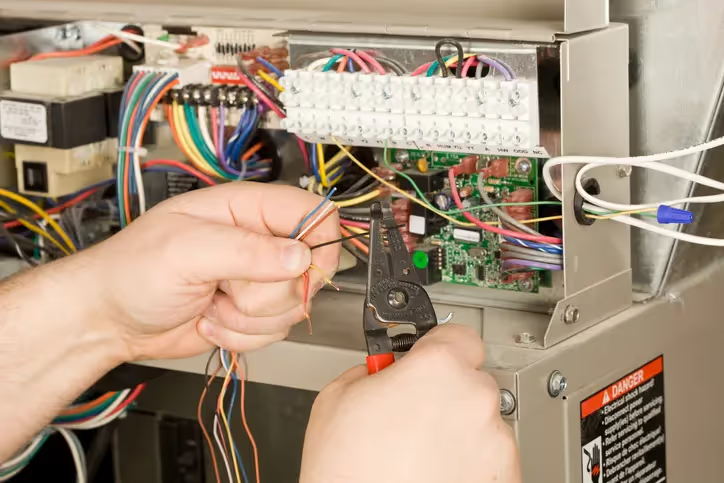
When a heating system fails in Delran, the priority is restoring thermal comfort and safety immediately. A professional service visit begins with a systematic analysis of the entire HVAC ecosystem. Technicians do not simply guess at the problem; they utilize advanced diagnostic tools to pinpoint the exact failure point, whether it is an electrical fault, a mechanical breakdown, or a gas supply issue.
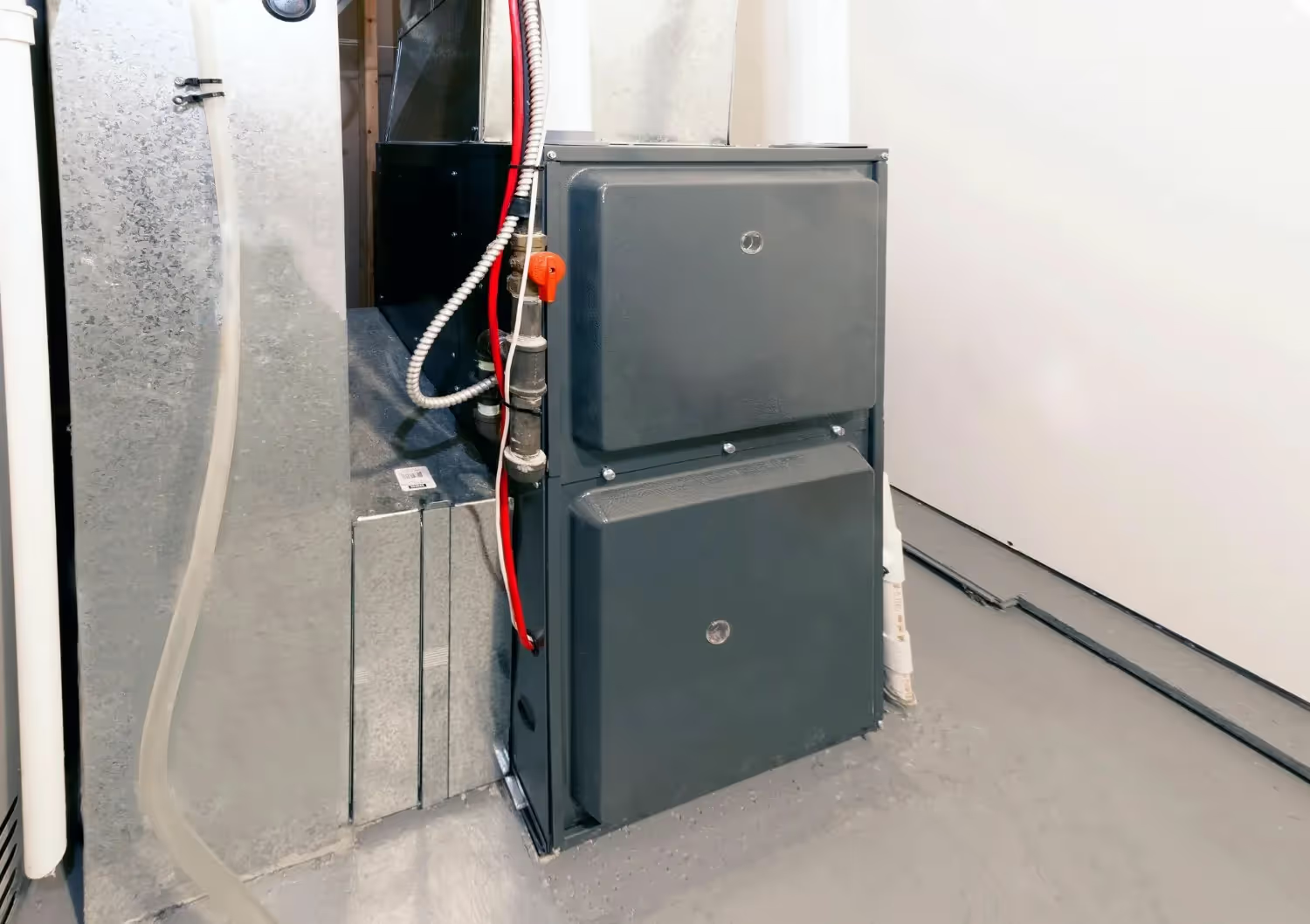
Residents can expect a thorough examination of the following components during a service call:
- Thermostat Calibration: The interface between the homeowner and the heating system is often the first point of failure. Technicians verify that the thermostat is reading ambient temperatures correctly and sending the appropriate signals to the furnace or boiler.
- Ignition Systems and Pilot Lights: For gas furnaces, the ignition sequence is critical. Issues with hot surface igniters, flame sensors, or pilot assemblies prevent the system from generating heat, even if the blower is running.
- Heat Exchanger Inspection: This is a vital safety check. A cracked heat exchanger can leak carbon monoxide into the living space. Technicians inspect this component for corrosion, cracks, or soot buildup to ensure safe operation.
- Blower Motor and Airflow: If the furnace generates heat but cannot distribute it, the blower motor or belt may be compromised. Technicians check amperage draw, capacitor health, and fan balance to ensure proper air movement.
- Boiler Specifics: For homes utilizing hydronic heating, the focus shifts to circulator pumps, expansion tanks, and radiator valves to ensure hot water is moving effectively through the baseboards or radiators.
Upon completion of the diagnostic phase, you receive a detailed report of the findings. This includes a clear explanation of the failed part, the cause of the failure (such as wear and tear or lack of maintenance), and a direct quote for the repair. The goal is to provide the information necessary to make a quick decision so work can commence immediately.
The Technician’s Process for Restoration and Installation
Professional heating service follows a structured workflow designed to minimize disruption to the household while ensuring code compliance and system efficiency. Whether it is a minor repair or a full system replacement, the process remains rigorous.
- Initial Site Protection: Before tools are unpacked, technicians prepare the workspace. This involves laying down drop cloths and wearing shoe covers to protect flooring and surrounding areas from debris and dirt.
- System Isolation: Electrical power and gas supplies are shut off to ensure safety during the repair or installation. This prevents accidental shocks or gas leaks while the unit is open.
- Component Removal and Replacement: For repairs, the faulty part is extracted and replaced with OEM (Original Equipment Manufacturer) or equivalent high-quality components. For installations, the old unit is disconnected from ductwork and utility lines and carefully removed from the property.
- Precision Installation: The new component or system is installed according to strict manufacturer specifications. This includes torqueing electrical connections to the correct tightness, sealing gas fittings with approved compound, and aligning motors for optimal performance.
- Testing and Commissioning: Once the physical work is done, the system is not merely turned on. It undergoes a commissioning sequence. Technicians measure gas pressure, check temperature rise (the difference in air temperature entering and leaving the unit), and verify static pressure in the ducts.
- Final Cleanup and Walkthrough: The workspace is returned to its original condition. Old parts and packaging are hauled away. Finally, the technician demonstrates the operation of the system or new thermostat, ensuring the user understands how to maintain maximum efficiency.
Determining When to Repair vs. When to Replace
Homeowners often face the difficult choice between investing in another repair or opting for a full system replacement. Making the right financial decision requires analyzing the age of the unit, the cost of the current repair, and the system's recent performance history.
The 50% Investment Rule
A standard metric used in the industry is the 50% rule. If the cost of the necessary repair approaches or exceeds 50% of the value of a brand-new system, replacement is generally the more being financially sound option. Putting half the cost of a new unit into an old machine offers diminishing returns, as other parts are likely to fail soon.
Age and Efficiency Considerations
Heating systems typically have a lifespan of 15 to 20 years for furnaces and boilers, and 10 to 15 years for heat pumps. If a unit in Delran is nearing the end of this window, even a minor repair might be throwing good money after bad. Newer systems offer higher AFUE (Annual Fuel Utilization Efficiency) ratings. Upgrading from a unit with 70% efficiency to one with 95% efficiency can result in significant energy savings that offset the monthly cost of a new installation.
Frequency of Breakdowns
If a heating system requires service calls more than once a year, it has become unreliable. The cumulative cost of emergency service fees and parts often outweighs the monthly payment of a financed new system. Furthermore, reliability issues pose a safety risk during freezing temperatures.
Comfort and Noise Levels
Aging systems often struggle to maintain consistent temperatures, leading to hot and cold spots throughout the house. They may also operate with excessive noise—rattling, banging, or humming. These are signs that the mechanical components are worn out. If the system can no longer keep the home comfortable without straining, replacement provides an immediate upgrade in quality of life.
Local Climate Factors and Regulatory Requirements
Operating a heating system in New Jersey requires specific attention to regional climate patterns and local building codes. The weather in Delran oscillates between humid subtropical summers and cold winters where temperatures frequently drop between 25°F and 40°F. This creates a unique demand on HVAC equipment.
- Sizing for Extremes: Heating systems must be sized not just for the average winter day, but for the coldest nights of the year. An undersized unit will run continuously without reaching the set temperature, driving up utility bills and wearing out components prematurely. Gibson Heating & Cooling performs precise load calculations to ensure equipment meets these specific local demands.
- Humidity Management: While heating is the primary concern in winter, the system sits dormant during humid summers. Moisture can accumulate in flue pipes and heat exchangers if not properly vented or maintained, leading to early corrosion. Regular seasonal maintenance is essential to combat the effects of local humidity.
- Permitting and Inspections: Replacing a furnace or boiler in Burlington County generally requires a construction permit to ensure the installation meets safety standards regarding gas piping, electrical grounding, and exhaust venting. Professional providers handle the application and inspection scheduling as part of the turnkey service.
- NJ Clean Energy Program: New Jersey offers substantial rebates for homeowners who upgrade to high-efficiency heating equipment. Utilizing these state-sponsored incentives requires installing equipment that meets specific SEER2 and AFUE criteria. working with a participating contractor ensures eligibility for these financial benefits.
- Utility Coordination: Whether the home uses natural gas from PSE&G or another provider, any alterations to gas lines require adherence to utility provider standards. Technicians ensure that gas pressure is regulated correctly to match the appliance rating, preventing dangerous over-firing or inefficient under-firing.
The Importance of Certified Technical Expertise
The difference between a functional heater and a hazardous appliance often lies in the skill level of the technician performing the work. Modern heating systems are complex machines integrating printed circuit boards, variable-speed motors, and advanced combustion technologies.
- Safety Compliance: Handling natural gas, high-voltage electricity, and combustion exhaust requires rigorous training. Certified professionals adhere to safety protocols that prevent gas leaks, electrical fires, and carbon monoxide poisoning.
- Warranty Protection: Most equipment manufacturers require proof of professional installation and maintenance to uphold the warranty. DIY repairs or work performed by unlicensed handymen can void these warranties, leaving the homeowner liable for expensive part replacements in the future.
- Diagnostic Accuracy: A certified technician uses specialized tools—such as manometers, combustion analyzers, and multimeters—to diagnose issues scientifically. This eliminates trial-and-error repairs that waste time and money.
- Long-Term Reliability: Correct installation and repair extend the lifespan of the equipment. When components are calibrated to factory specifications, they experience less friction and thermal stress, resulting in fewer breakdowns over the life of the system.
Secure Your Home Comfort Today
Winter weather does not wait for a convenient time to strike. Ensuring your heating system is operational, efficient, and safe is a necessity for protecting your home and family. Whether you require an emergency repair to get the heat back on tonight or a consultation for a high-efficiency replacement, professional assistance is the only path to guaranteed results.
Do not let a failing heater compromise your safety or comfort. Take action now to resolve heating issues with certified expertise.
our process
Our heating Process Section
01
Thorough Diagnosis/Consultation
We start with a comprehensive assessment of your needs.
02
Upfront & Honest Pricing
We provide a clear, detailed estimate before any work begins.
03
Professional
Schedule
Our certified technicians perform the work to the highest standards.
04
Final Inspection & Clean-up
We ensure everything is working perfectly and leave your home clean.
testimonials
The Customer Experience:
Where Comfort Meets Reliability.
Trusted by Homeowners Across Burlington County.
