
HVAC Service in Cherry Hill, NJ

Unpredictable Temperatures Demand Reliable Climate Control
When your heating or cooling system fails during a humid Cherry Hill summer or a freezing New Jersey winter night, the immediate discomfort requires a swift, professional response. Contact our team immediately to schedule a diagnostic visit or inquire about available financing options for system replacement.
Facing unpredictable weather patterns without a functional climate control system puts your property and safety at risk. Gibson Heating & Cooling delivers precision services designed to restore normalcy to your home environment the moment issues arise. Whether you are dealing with a furnace that blows cold air or an air conditioner that refuses to cycle on, our approach focuses on rapid identification and resolution of the root cause.
- Rapid response capabilities: Teams are available to address urgent heating and cooling failures, ensuring you are not left waiting during extreme weather conditions.
- Professional installations: Systems are sized and installed to ensure year-round comfort using top-rated, energy-efficient equipment.
- Transparent pricing structures: Receive a free, upfront estimate with no hidden costs so you can make informed decisions about your property.
All installations and repairs comply strictly with local codes and are backed by robust warranties and flexible financing options to suit your budget.
.webp)
Immediate HVAC Services and Solutions
Homeowners require more than just a quick fix; they need a comprehensive analysis of their indoor climate systems. When you request service, the objective is to secure the thermal envelope of your home against the elements. Service encompasses the full spectrum of heating, ventilation, and air conditioning needs, ranging from minor component replacements to complex system overhauls.
Upon arrival, technicians focus on stabilizing your indoor environment. If a system is completely offline, the priority is identifying the electrical or mechanical failure point. This often involves testing capacitors, contactors, and refrigerant levels for cooling units, or inspecting igniters, flame sensors, and heat exchangers for heating units. The goal is to return the system to operational status during the initial visit whenever possible.
For systems that are running but performing poorly, the focus shifts to efficiency and airflow. A unit that runs constantly without reaching the set temperature indicates a mismatch between the equipment's output and the home's load requirements, or a significant malfunction within the distribution system. Technicians assess ductwork integrity, airflow restrictions, and thermostat calibration to ensure the equipment is not overworking itself, which leads to premature failure and inflated utility costs.
Available services cover a wide array of equipment types:
- Central Air Conditioning Systems: Diagnosis of refrigerant leaks, compressor failures, and frozen evaporator coils.
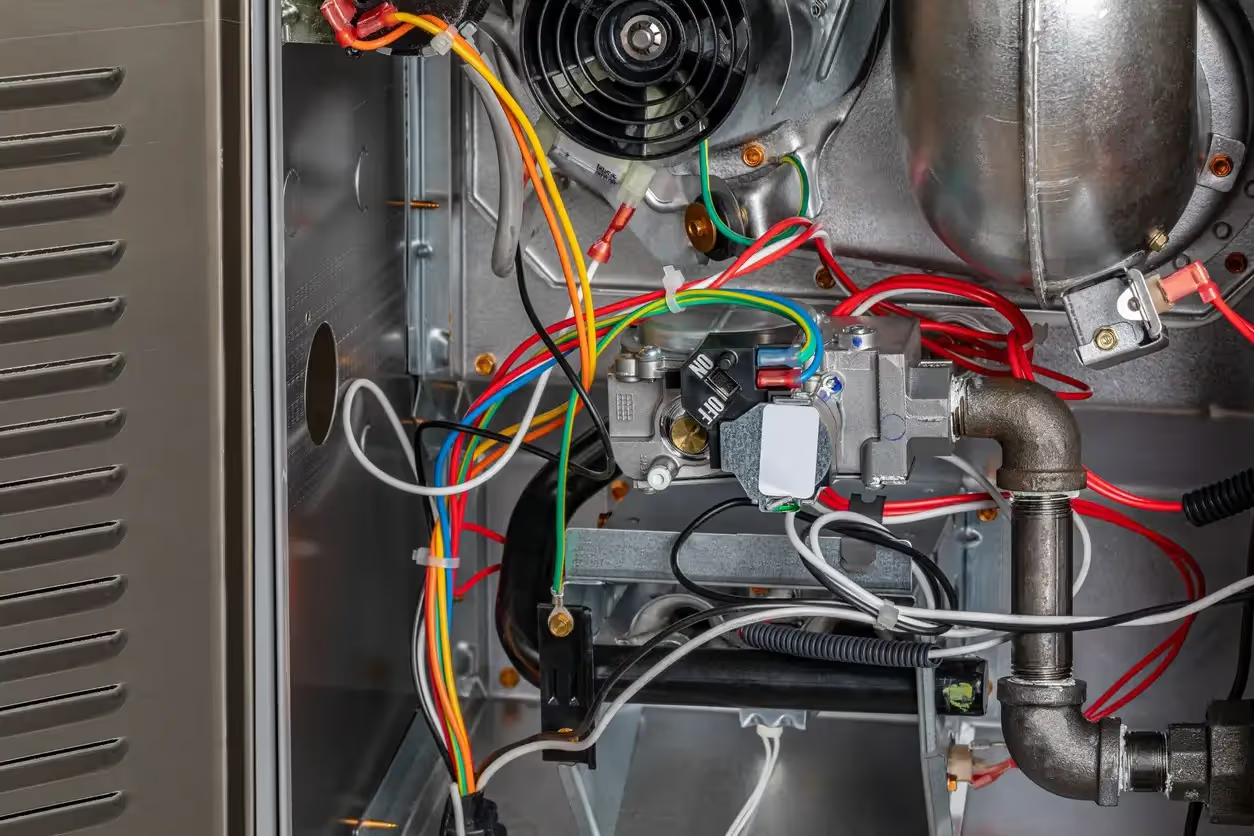
- Furnaces (Gas and Electric): Resolution of ignition problems, blower motor malfunctions, and cracked heat exchangers.
- Heat Pumps: Repair of reversing valves and auxiliary heat strips for efficient heating and cooling from a single unit.
- Ductless Mini-Splits: Troubleshooting communication errors, condensate drainage issues, and zoning inefficiencies.
- Indoor Air Quality Units: Servicing of whole-home humidifiers, dehumidifiers, and air purification systems integrated into the HVAC framework.
The Installation and Repair Process
Understanding the workflow of a professional service call eliminates uncertainty. The process is designed to be systematic, transparent, and focused on technical accuracy. Every step taken is documented, ensuring you understand exactly what work is being performed and why it is necessary for the health of your HVAC system.
Initial Assessment and Diagnostics
The process begins with a thorough evaluation of the existing equipment. Technicians utilize advanced diagnostic tools to measure static pressure, voltage, amperage, and temperature differentials. This data provides a clear picture of the system’s health. Instead of guessing, decisions are based on the actual operating metrics of the unit. You receive a detailed explanation of the findings, including digital evidence of worn or broken parts where applicable.
Strategic Repair Execution
Once the issue is identified and the scope of work is approved, the repair process commences. Technicians carry fully stocked service vehicles with common parts to expedite repairs.
- Preparation: The work area is protected to prevent damage to flooring or surrounding property. Power is safely disconnected to ensure electrical safety.
- Replacement: Faulty components are removed and replaced with OEM (Original Equipment Manufacturer) or high-quality equivalent parts to ensure longevity.
- Calibration: After part installation, the system is calibrated to manufacturer specifications. This includes adjusting gas pressure for furnaces or weighing in the correct refrigerant charge for air conditioners.
System Replacement and Installation
When a new system is required, the process is more involved to ensure the new unit is perfectly matched to the home.
- Load Calculation: A Manual J load calculation is performed to determine the exact heating and cooling requirements of the specific property in Cherry Hill. This accounts for square footage, insulation levels, window orientation, and local climate data.
- Ductwork Inspection: Existing ductwork is evaluated to ensure it can handle the airflow of the new, likely more efficient, system. Modifications are made if necessary to prevent back pressure and noise.
- Installation: The old unit is reclaimed and removed responsibly. The new equipment is set, leveled, and connected. This includes brazing refrigerant lines with nitrogen purging to prevent oxidation and securing all electrical connections.
- Commissioning: The system is started and tested through a full cycle. Technicians verify that temperature splits are correct and that safety controls are functioning.
Determining When to Upgrade Your Unit
One of the most critical decisions a homeowner faces is choosing between repairing an aging unit or investing in a modern replacement. While repairs often seem like the lower-cost option upfront, they can become financially draining if the system is nearing the end of its useful life. Making the right choice requires analyzing technical data and financial projections.
The Age Factor
HVAC systems have a finite lifespan. Air conditioners and heat pumps generally last 10 to 15 years, while furnaces can last 15 to 20 years. If your equipment is within or past this age range, major components like the compressor or heat exchanger are at higher risk of failure. Investing in a costly repair for a system that has exceeded its life expectancy is rarely economical.
The 50% Rule
A standard industry benchmark for decision-making is the 50% rule. If the cost of the necessary repair approaches 50% of the value of a new system, replacement is generally the smarter financial move. This is particularly true if the equipment has required multiple repairs in the last two years. Continuous spending on a dying system provides diminishing returns.
Efficiency and Operating Costs
Older systems operate with significantly lower efficiency ratings compared to modern standards. An air conditioner installed 15 years ago may have a SEER (Seasonal Energy Efficiency Ratio) rating of 10 or less. Modern units start at 13 or 14 SEER and go much higher. By upgrading, homeowners often see a drastic reduction in monthly utility bills. Over time, these energy savings can offset a significant portion of the installation cost.
Comfort and Performance
As systems age, they lose their ability to maintain consistent temperatures and control humidity. If you notice distinct hot and cold spots in different rooms, or if the unit struggles to keep up on the hottest days of the year, it indicates that the system’s capacity or airflow management is compromised. Newer systems often feature variable-speed blowers and two-stage compressors that provide superior comfort and humidity control.
Navigating Local Climate and Regulations
The specific environment of Cherry Hill dictates how HVAC systems must be configured and maintained. This region experiences a humid subtropical climate, characterized by hot, muggy summers and cold winters. These extremes place a dual burden on HVAC equipment, requiring it to be equally proficient at heat rejection and heat generation.
Humidity Management
In the summer months, high humidity levels can make indoor environments feel warmer than the thermostat reading. A properly sized air conditioner does more than cool the air; it dehumidifies it. Gibson Heating & Cooling technicians evaluate airflow and coil temperature to ensure the system runs long enough to pull moisture from the air without overcooling the space. In some cases, whole-home dehumidifiers are recommended to aid the AC system and improve indoor air quality.
Winter Freeze Protection
During winter, temperatures frequently drop below freezing. For homes relying on heat pumps, this requires a functioning defrost board and auxiliary heat strips to handle the load when the outdoor coil freezes. For gas furnaces, ensuring that exhaust flues are clear of snow and ice is vital to prevent carbon monoxide buildup and system lockouts.
Permitting and Code Compliance
New Jersey maintains strict building codes regarding HVAC installations to ensure safety and energy efficiency.
- Permit Requirements: Most system replacements and significant alterations require a permit from the local township. This process ensures that the installation meets safety standards regarding electrical connections, gas piping, and venting.
- Inspections: Following installation, a municipal inspection is often required to close the permit. This provides third-party verification that the work was done correctly.
- Refrigerant Regulations: Regulations regarding refrigerants are evolving. Older R-22 systems are becoming obsolete and expensive to repair due to phase-outs. Modern systems use R-410A or newer alternatives that are compliant with environmental standards.
Utility Rebates and Incentives
Local utility providers often offer rebates for upgrading to high-efficiency equipment. These programs change annually and usually require the installation of equipment that meets specific SEER or HSPF (Heating Seasonal Performance Factor) ratings. Professional contractors stay updated on these programs to help homeowners maximize available savings.
Securing Long-Term Performance
Choosing the right service provider is the variable that determines the longevity and efficiency of your HVAC investment. The equipment is only as good as the installation and maintenance it receives. High-quality hardware installed poorly will fail prematurely and operate inefficiently.
Technical Expertise and Certification
Technicians are trained to handle complex thermodynamics and electrical systems. Certifications and continuous training ensure familiarity with the latest technologies, such as smart thermostats, variable refrigerant flow systems, and communicating HVAC equipment. This expertise translates to accurate diagnostics, preventing the "parts cannon" approach where technicians guess at the problem at your expense.
Warranty Protection
Professional service protects your equipment warranty. Manufacturers often require proof of regular maintenance by a licensed professional to honor warranty claims. Neglecting this documentation can leave you responsible for the cost of parts that should have been covered. Service agreements provide the necessary paper trail to keep warranties valid.
Safety Assurance
HVAC systems involve high-voltage electricity, combustible gases, and high-pressure refrigerants. DIY repairs or reliance on unqualified handymen can lead to catastrophic failures, fire hazards, or health risks. Professional service prioritizes safety protocols, ensuring that gas lines are leak-tested, electrical connections are torqued to spec, and venting is properly drafted to expel exhaust gases.
Contact Us Today
Your home is your sanctuary, and its climate control system is the engine that keeps it habitable. Don't wait for a total system failure to address underlying issues. Whether you need an emergency repair today or are planning a full system replacement, trust Gibson Heating & Cooling to restore comfort and efficiency to your property.
Take control of your indoor climate today—contact us to schedule your service or request an estimate for a new system.
our process
Our heating Process Section
01
Thorough Diagnosis/Consultation
We start with a comprehensive assessment of your needs.
02
Upfront & Honest Pricing
We provide a clear, detailed estimate before any work begins.
03
Professional
Schedule
Our certified technicians perform the work to the highest standards.
04
Final Inspection & Clean-up
We ensure everything is working perfectly and leave your home clean.
testimonials
The Customer Experience:
Where Comfort Meets Reliability.
Trusted by Homeowners Across Burlington County.
