
Heating Service in Evesham, NJ

Experiencing Heating Issues? Immediate Help Available
Struggle with inconsistent heating or a complete system breakdown? In Evesham's varied climate, you need a trustworthy, quick-response heating service. Contact us now to schedule an emergency dispatch or inquire about our flexible financing options to restore your home's comfort immediately.
When temperatures drop, a malfunctioning furnace or heat pump is more than an inconvenience; it is a safety concern for your property and family. You need a solution that addresses the root cause of the failure rather than a temporary patch that will fail again during the next cold snap.
- Rapid response and diagnosis within hours, not days.
- Expert repairs and installations with high-quality parts.
- Year-round maintenance contracts to ensure your comfort.
All services come with a certified warranty and are compliant with local building codes.
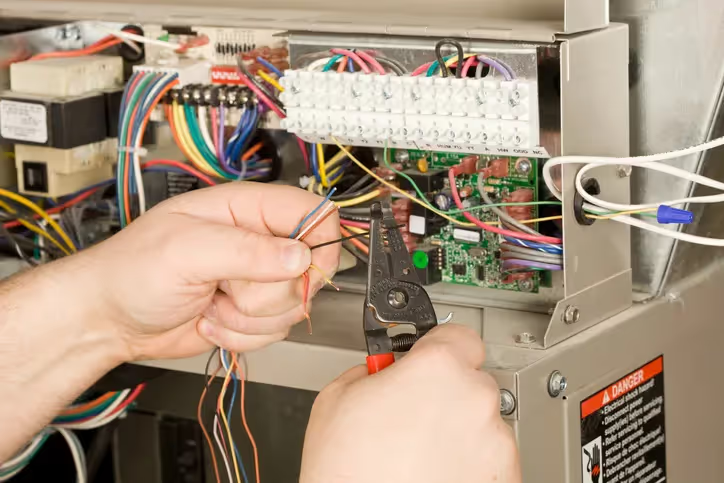
Comprehensive Heating Diagnostics and Repair Services
When a heating system fails, the priority is restoring warmth efficiently and safely. A professional response begins with a thorough diagnostic process designed to pinpoint the exact failure point within the HVAC infrastructure. Residents in Evesham rely on systems that must handle fluctuating humidity and freezing winter temperatures, meaning the diagnostic process must account for environmental stressors on the equipment.
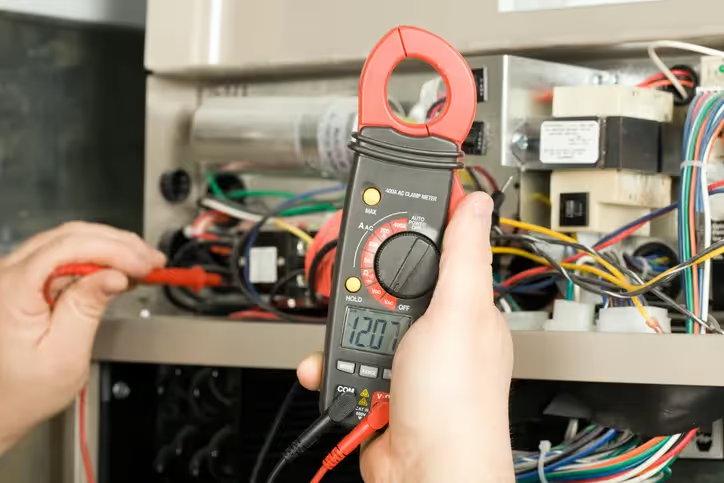
Upon arrival, the technician performs a systematic evaluation of the heating unit. This includes testing the thermostat calibration, inspecting the heat exchanger for cracks or corrosion, and verifying proper airflow throughout the ductwork. For gas furnaces, the ignition system, flame sensor, and gas valves are tested to ensure safe combustion. Electric heat pumps require a different approach, focusing on refrigerant levels, compressor health, and the reversing valve operation.
The goal is to provide a clear explanation of what went wrong and how it will be fixed. This eliminates guesswork. You receive a detailed report on the condition of the system, the necessary repairs, and an honest assessment of the remaining lifespan of the unit.
Immediate Repair Protocols
Time is a critical factor when a heating system goes down. Service trucks are stocked with a wide inventory of universal parts, including capacitors, igniters, motors, and control boards. This preparation allows for same-day repairs in the majority of service calls.
- Ignition Control Module: Diagnosis of intermittent firing or complete failure to ignite.
- Blower Motor Replacement: Restoration of airflow when motors seize or capacitors fail.
- Heat Exchanger Inspection: Identification of dangerous carbon monoxide leaks or structural failures.
- Thermostat Rewiring: Correction of communication errors between the control unit and the furnace.
Systems Serviced
Heating technology varies significantly from home to home. Technical teams are trained to handle a diverse range of equipment, ensuring that regardless of the make or model, the issue can be resolved.
- Gas and Propane Furnaces: High-efficiency and standard-efficiency units.
- Heat Pumps: Split systems and packaged units common in modern construction.
- Boilers: Radiant heating systems and baseboard water heaters.
- Ductless Mini-Splits: Zoned heating solutions for additions or homes without ductwork.
The Installation and Replacement Process
There comes a point where a repair is no longer the most improved financial decision. Installing a new heating system is a complex construction project that requires precise calculation, fabrication, and integration with the home’s existing infrastructure. A proper installation determines the efficiency, longevity, and safety of the system for the next 15 to 20 years.
The process begins with a load calculation. Old rules of thumb based solely on square footage often lead to oversized or undersized units. Oversized units cycle on and off too frequently, leading to premature wear and uneven heating. Undersized units run continuously without ever reaching the set temperature. Gibson Heating & Cooling utilizes industry-standard Manual J calculations to determine the exact heating requirements based on insulation levels, window surface area, and the specific orientation of the home.
Step-by-Step Installation Workflow
- Site Evaluation and Sizing: Measurements are taken to ensure the new unit fits the physical space and meets the thermal load requirements of the structure.
- System Selection: Options are presented ranging from single-stage standard efficiency units to modulating variable-speed systems that offer superior humidity control and energy savings.
- Removal and Disposal: The existing unit is disconnected from gas, electric, and flue lines. It is removed safely, and all debris is cleared from the site.
- Ductwork Modification: The plenum (the transition between the unit and the ductwork) is often modified to ensure optimal airflow and static pressure.
- Installation and Connection: The new unit is set in place. Gas lines are piped, electrical connections are secured, and flue pipes are vented according to code.
- Commissioning and Testing: The system is fired up and tested. Gas pressure is adjusted, temperature rise is measured, and safety limits are verified.
Post-Installation Support
A new installation is an investment that requires protection. Registering the equipment for the manufacturer's warranty is part of the service. Furthermore, explaining the operation of new programmable or smart thermostats ensures that the homeowner can utilize the full efficiency capabilities of the new system.
When to Replace vs. Repair Your Heating System
Deciding between repairing an aging unit or investing in a replacement is a common dilemma. While a repair is often cheaper upfront, it can be more expensive in the long run if the system is near the end of its service life. Clear criteria help make this decision logical rather than emotional.
The 50% Rule and Age Factor
A widely accepted industry standard is the 50% rule: if the cost of the repair approaches 50% of the value of a new system, replacement is the smarter financial move. Additionally, the age of the system is a primary indicator.
- Furnaces: Typically last 15 to 20 years. If a furnace is over 15 years old and requires a major component like a heat exchanger or blower motor, replacement is recommended.
- Heat Pumps: Generally last 10 to 15 years. Because they run year-round for both heating and cooling, they experience more wear. A compressor failure in an older unit usually signals the need for replacement.
- Boilers: Can last 20 to 30 years with proper maintenance. However, a leaking cast iron section is often a terminal failure.
Efficiency and Operational Costs
Older systems often operate at 60% to 70% AFUE (Annual Fuel Utilization Efficiency). This means 30 to 40 cents of every dollar spent on fuel is wasted up the chimney. Modern systems achieve ratings between 80% and 98%. Upgrading to a high-efficiency unit can lower monthly utility bills significantly, offsetting the cost of installation over time.
Rising Frequency of Repairs
If service calls are becoming a seasonal or bi-seasonal occurrence, the cumulative cost of repairs will quickly exceed the cost of a new monthly payment on a modern system. "Nickel and diming" an old unit is a drain on resources.
Safety Considerations
Safety is non-negotiable. If a heat exchanger is cracked, it poses a risk of carbon monoxide poisoning. In such cases, the system must be shut down immediately. While heat exchangers can be replaced, the labor and part cost usually make a full system replacement the only viable option for an older unit.
Local Considerations for Heating in Evesham
Operating a heating system in this region requires specific attention to local climate patterns and regulations. The humid subtropical climate means that heating systems must be resilient against moisture in the shoulder seasons and capable of handling sharp temperature drops in the winter.
Weather Impacts on Equipment
The area receives moderate snowfall, typically around 20 inches annually. For homes utilizing heat pumps, this requires the outdoor unit to be elevated on snow legs or a stand. This prevents snow accumulation from blocking airflow, which can cause the unit to freeze up or operate inefficiently. Furthermore, the high humidity levels in the summer and late spring can accelerate corrosion on outdoor components if not properly maintained.
Permitting and Code Compliance
All major heating installations and significant alterations require adherence to local building codes. This ensures that gas piping is pressure-tested, electrical circuits are properly sized, and venting meets safety standards.
- Permit Acquisition: Professional providers handle the administrative work of pulling permits with the local township.
- Inspection Coordination: Following installation, a municipal inspection is often required to close the permit. This third-party verification protects the homeowner's insurance validity and property value.
- Utility Rebates: Local utility providers often offer rebates for upgrading to high-efficiency equipment. Navigating the paperwork for these incentives is part of the service provided.
Oil to Gas Conversions
Many older homes in the region still rely on oil heat. With the fluctuation in oil prices and the cleaner burning nature of natural gas, conversion is a popular service. This involves running a gas line to the property (coordinated with the utility company), removing the oil tank, and installing a gas-fired furnace or boiler. This transition requires specific knowledge of local utility requirements and piping codes.
Proof of Reliability and Service Excellence
Choosing a heating contractor is a decision that impacts the safety and comfort of your home. The difference lies in the details—the training of the technicians, the transparency of the pricing, and the guarantees behind the work.
Technical Expertise
Technicians undergo rigorous training to stay current with evolving HVAC technology. From inverter-driven heat pumps to communicating furnace systems, the team is equipped to diagnose complex electrical and mechanical issues that general handymen cannot.
Transparent Pricing
Unexpected costs are a major source of frustration for homeowners. A professional approach involves flat-rate pricing. The cost of the repair is quoted upfront after the diagnosis, regardless of how long the repair takes. There are no hidden fees or hourly rate surprises. You approve the price before any work begins.
Warranty and Guarantees
Quality workmanship is backed by written guarantees. Repairs generally carry a warranty on both parts and labor. New installations come with manufacturer warranties that cover major components for up to 10 years, provided the system is registered and maintained.
Respect for Property
Service involves entering your private space. Technicians use drop cloths to protect flooring and wear shoe covers to keep dirt out of the house. The workspace is left as clean as, or cleaner than, it was found. Old equipment and packaging materials are removed and recycled responsibly.
A functioning heating system is essential for safety and quality of life. Whether you are facing an emergency breakdown in the middle of the night or planning a strategic upgrade to a high-efficiency system, professional support is available.
Call Us Now!
Do not let a heating failure compromise your home environment. Secure expert diagnostics, compliant installation, and reliable repair services today.
Contact Gibson Heating & Cooling to schedule your service or request a free estimate on a new system installation.
our process
Our heating Process Section
01
Thorough Diagnosis/Consultation
We start with a comprehensive assessment of your needs.
02
Upfront & Honest Pricing
We provide a clear, detailed estimate before any work begins.
03
Professional
Schedule
Our certified technicians perform the work to the highest standards.
04
Final Inspection & Clean-up
We ensure everything is working perfectly and leave your home clean.
testimonials
The Customer Experience:
Where Comfort Meets Reliability.
Trusted by Homeowners Across Burlington County.
