
Boiler Repair in Evesham, NJ

Struggling With a Faulty Boiler?
Facing an unexpected boiler breakdown in your home can be a major inconvenience, especially during Evesham’s harsh winters. You need a fast, reliable solution to restore your comfort, so contact us immediately to schedule a diagnostic visit or inquire about financing options. Gibson Heating & Cooling understands that when your heat fails, time is of the essence.
- Rapid response times with same-day service availability to tackle emergency repairs.
- Comprehensive diagnostics and transparent pricing, ensuring no unpleasant surprises.
- Warranty-backed repairs performed by certified professionals for long-lasting results.
All repairs are carried out in compliance with state regulations and come with robust warranty options.
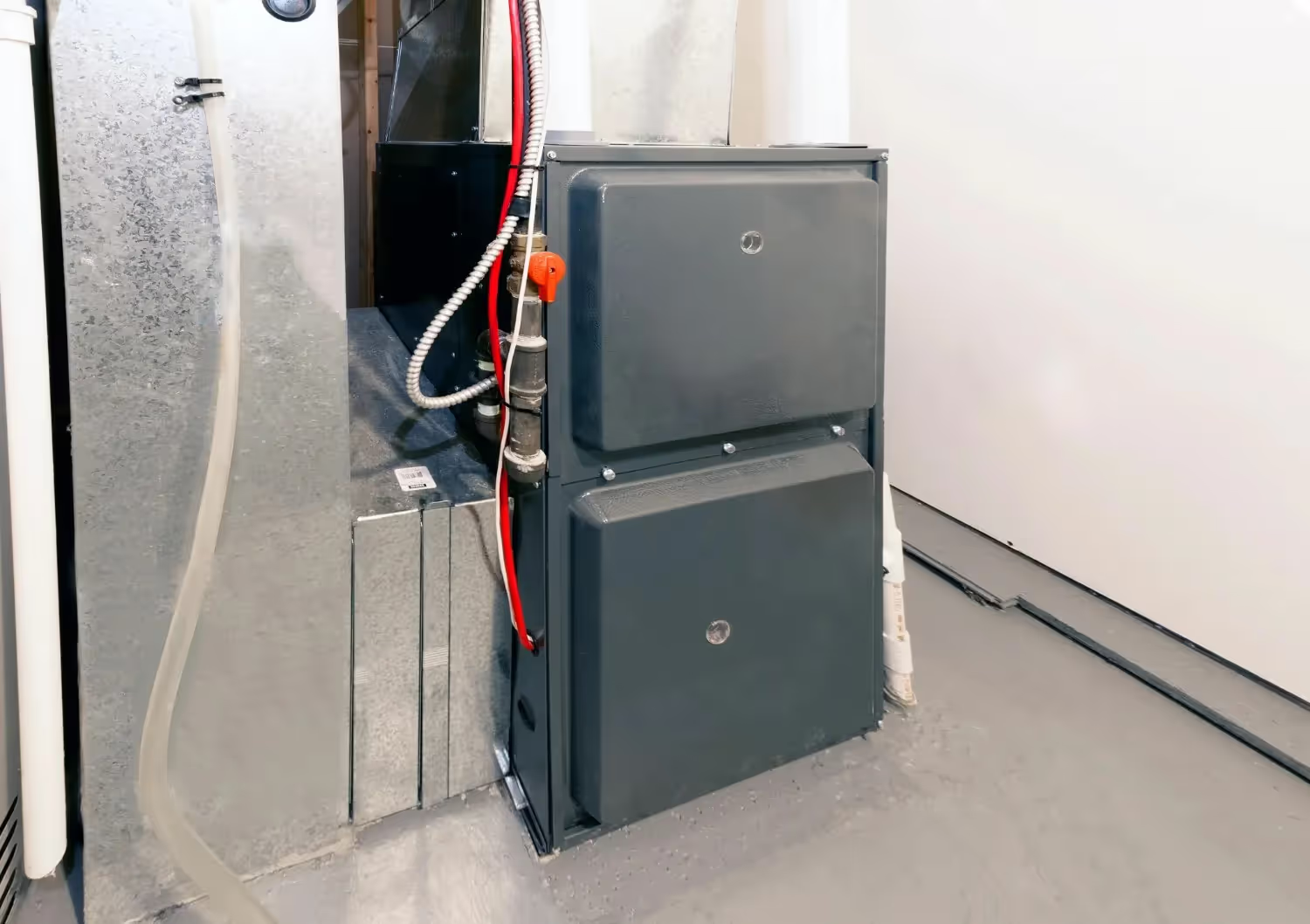
Instant Relief for Boiler Breakdowns
When a boiler stops working correctly, the impact on your home environment is immediate. The radiant heat that usually warms your floors and radiators disappears, leaving rooms uncomfortably cold. Identifying the root cause of the failure is the first step toward restoring warmth. Homeowners in Evesham frequently encounter specific issues that indicate a system is in distress, ranging from complete loss of ignition to inefficient heating cycles.
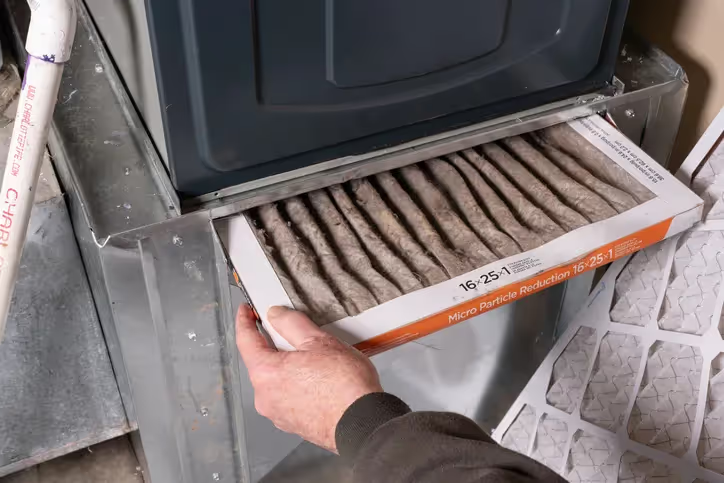
One common indicator of failure is kettling. This occurs when mineral deposits, often from hard water, accumulate on the heat exchanger. These deposits trap water, which then boils into steam and expands rapidly, causing a loud banging or rumbling noise similar to a boiling kettle. If left unaddressed, the pressure generated by kettling can cause severe damage to the heat exchanger, turning a repairable issue into a need for a full replacement.
Another frequent issue involves the pilot light or ignition system. Modern boilers often use electronic ignition, while older models rely on a standing pilot light. If the pilot light goes out and refuses to stay lit, it often points to a faulty thermocouple. This safety device shuts off the gas supply if it detects no flame, preventing gas leaks. When the thermocouple malfunctions, it cuts off fuel even when a flame is present, leaving the boiler unable to fire.
Loss of pressure is also a critical failure point. Boilers require a specific pressure level to circulate hot water effectively. A drop in pressure usually suggests a leak in the system or a failure of the pressure relief valve. Leaks can occur at pipe joints, around the pump, or inside the boiler casing itself. Identifying the source of the pressure drop requires a systematic inspection of the entire hydronic loop to ensure that water is not escaping into walls or floorboards.
Finally, thermostat and zone valve issues can cause uneven heating. In homes with multiple heating zones, a single failed motorized valve can leave one wing of the house freezing while others remain warm. We address these specific mechanical failures to ensure the entire system functions as a cohesive unit.
Today’s Fix: What’s Included in Your Service
When you book a service appointment, the goal is to resolve the issue with precision and speed. The service visit is structured to move from diagnosis to resolution without unnecessary delays. You receive a comprehensive assessment of the boiler’s current condition, covering not just the broken component but the overall health of the system.
- System Diagnostics: The technician arrives equipped with advanced diagnostic tools to test electrical connections, gas pressure, and water flow. This includes using multimeters to check voltage to the circulator pump and combustion analyzers to measure the efficiency of the burn.
- Component Isolation and Testing: We test individual components such as the aquastat, which controls the water temperature, and the expansion tank, which handles thermal expansion. If the expansion tank is waterlogged, it causes pressure spikes; this is checked immediately.
- Safety Inspections: Every repair includes a safety check for carbon monoxide leaks and proper venting. A blocked flue or a cracked heat exchanger can pose serious health risks. We verify that exhaust gases are venting safely outside the home.
- Gas Piping and Valve Checks: We inspect the gas line connection to the boiler for leaks and verify that the gas valve is opening and closing correctly to modulate the flame.
- Circulator Pump Verification: The pump is the heart of a hydronic system. We check for seized bearings, electrical failures, or air locks that prevent the pump from moving hot water to your radiators or baseboards.
- Cleaning and Calibration: Once the repair is complete, we clean the burners and pilot assembly to ensure a clean, blue flame. We also calibrate the thermostat and pressure settings to manufacturer specifications.
Our Boiler Repair Process: Steps to Warmth
Restoring a boiler to full functionality requires a disciplined approach. We follow a strict protocol to ensure that the repair is done right the first time and that the system remains stable after we leave. This process is designed to minimize disruption to your household while maximizing the efficiency of the repair work.
- Initial Assessment and Site Protection: The technician begins by entering the utility area and laying down protective coverings to keep your home clean. We listen to the boiler’s operation (if it runs) to identify abnormal sounds and visually inspect the area for water pooling or soot buildup.
- Shut Down and Isolation: For safety, the system is powered down electrically, and the fuel supply is shut off. If the repair involves the water loop, such as replacing a pump or valve, we isolate the specific zone or drain the boiler to prevent water damage.
- Fault Verification: Using diagnostic equipment, we pinpoint the exact failure. For example, if the boiler is not firing, we trace the electrical path from the thermostat to the relay switch and then to the ignition module. This confirms whether the issue is a control failure or a mechanical breakdown.
- Part Replacement and Repair: Once the faulty component is identified, we remove it carefully. Corroded bolts or stuck valves are handled with specialized tools to prevent damage to surrounding pipework. The new component is installed using proper sealing materials, such as pipe dope or Teflon tape, to ensure leak-free connections.
- System Repressurization and Venting: If the water was drained, we refill the system to the correct pressure (usually between 12 and 15 psi for residential systems). As the system fills, we bleed air from the radiators and the boiler itself. Air pockets can block water flow and cause noise, so thorough bleeding is essential.
- Combustion Analysis and Testing: After the repair, the boiler is fired up. We use a combustion analyzer to ensure the fuel-air mixture is correct and that the system is burning cleanly. We cycle the boiler through several on/off phases to verify that the thermostat controls are responding accurately.
- Final Walkthrough: We explain exactly what was fixed, show you the old parts, and provide guidance on monitoring the system over the next few days. You receive a clear report of the work performed.
Repair or Replace? Making the Right Call
Deciding whether to repair a faltering boiler or invest in a new unit is a significant financial decision. While repairs are often the fastest solution, there comes a point where sinking money into an aging system becomes uneconomical. We help you weigh the immediate costs against long-term efficiency and reliability.
- The Age of the Unit: Boilers generally last longer than forced-air furnaces, often providing 15 to 20 years of service. However, if your boiler is approaching the 20-year mark, parts may become obsolete or prohibitively expensive. If the unit is over 15 years old and faces a major failure, replacement is often the wiser investment.
- The Cost of Repair vs. Value: A common industry standard is the "50% Rule." If the cost of the repair approaches 50% of the cost of a new boiler, replacement is recommended. A significant repair bill on an old unit is often just the first of many expenses as other components begin to fail in quick succession.
- Heat Exchanger Integrity: The heat exchanger is the most critical and expensive component of the boiler. If it cracks or corrodes, it cannot be safely repaired. A compromised heat exchanger risks carbon monoxide leakage. In this scenario, replacement is almost always the only safe option.
- Efficiency Ratings (AFUE): Older boilers may have an Annual Fuel Utilization Efficiency (AFUE) rating of 50% to 70%, meaning a significant portion of your fuel bill is wasted heat sent up the chimney. Modern condensing boilers achieve AFUE ratings of 95% or higher. Upgrading can result in substantial monthly savings on energy bills, which helps offset the installation cost over time — view current promotions today.
- Frequency of Breakdowns: If you find yourself calling for service multiple times in a single winter, the system is likely unreliable. Constant breakdowns not only drain your wallet but also leave you vulnerable to freezing temperatures during the coldest nights. A new system provides peace of mind and warranty protection.
Understanding Evesham’s Boiler Regulations
Operating a boiler in Evesham requires adherence to specific local and state standards designed to ensure safety and efficiency. The region's climate also dictates certain operational requirements that homeowners must be aware of to protect their property.
- Permitting and Inspection Requirements: Major boiler repairs and replacements often require permits from the local building department. This ensures that the work meets current safety codes, particularly regarding gas piping and exhaust venting. Professional technicians handle the permitting process, ensuring that all work passes municipal inspections.
- Venting and Chimney Standards: New Jersey building codes have strict requirements for boiler venting to prevent carbon monoxide buildup. Older masonry chimneys may need to be lined with stainless steel if a new, higher-efficiency boiler is installed, as the cooler exhaust gas can cause condensation that damages bricks and mortar. We assess your venting system to ensure it meets current code requirements.
- Cold Weather and Freeze Protection: Evesham winters see temperatures dropping into the mid-20s. Boiler systems must be protected against freezing, especially if the heating pipes run through uninsulated areas like crawl spaces or attics. We ensure that antifreeze agents (specifically inhibited propylene glycol) are used where necessary and that pipes are properly insulated to prevent bursting during power outages or system failures.
- Backflow Prevention: Local water codes require boilers to have backflow preventers. These devices stop boiler water, which may contain chemicals or stagnant contaminants, from flowing back into the home’s potable water supply. We verify that these safety valves are in place and functioning correctly during every service call.
Why Choose Us: Our Evesham Commitment to Quality
Selecting a service provider for boiler repair goes beyond just finding someone with a wrench. It requires a team that understands the intricate physics of hydronic heating and the specific needs of local homes. Our technicians are not just parts changers; they are skilled diagnosticians trained to look at the heating system as a whole.
- Certified Expertise: Our team holds necessary state certifications and undergoes continuous training on both legacy steam boilers and modern high-efficiency condensing units. This depth of knowledge ensures that we can troubleshoot effectively regardless of the age or make of your equipment.
- Transparent Communication: We believe in explaining the "why" behind the repair. You will never be pressured into a service you do not need. We provide clear, written estimates before work begins, so you understand exactly what the job entails and what it costs.
- Local Reliability: Being local means we understand the urgency of an Evesham winter. We stock our trucks with common parts specifically suited for the boilers found in this area, minimizing the need to order parts and wait for shipping. Our goal is to get your heat back on in a single visit whenever possible.
- Respect for Your Home: We treat your property with care. From wearing shoe covers to using drop cloths, we ensure that the workspace is left as clean as we found it. We handle the disposal of any damaged parts or debris, leaving you with nothing but a warm home.
Contact Us Today!
If your boiler is acting up, making strange noises, or failing to keep your home warm, do not wait for a complete system failure. Trust the experts at Gibson Heating & Cooling to diagnose and resolve the issue swiftly.
Secure your comfort today—call us now to schedule your boiler repair service.
our process
Our heating Process Section
01
Thorough Diagnosis/Consultation
We start with a comprehensive assessment of your needs.
02
Upfront & Honest Pricing
We provide a clear, detailed estimate before any work begins.
03
Professional
Schedule
Our certified technicians perform the work to the highest standards.
04
Final Inspection & Clean-up
We ensure everything is working perfectly and leave your home clean.
testimonials
The Customer Experience:
Where Comfort Meets Reliability.
Trusted by Homeowners Across Burlington County.
