
Heat Pump Installation in Voorhees, NJ

Facing Heating or Cooling Inefficiencies? Explore Our Heat Pump Solutions!
Struggling with an old heating system that barely warms your home during Voorhees’s chilly winters, or maybe your current air conditioning can’t handle the muggy peaks of New Jersey summers? Gibson Heating & Cooling provides the comprehensive solution you need; Contact us today to schedule your system evaluation.
Old systems often run continuously without actually achieving the desired temperature, driving up energy costs while leaving hot and cold spots throughout the house. A modern heat pump addresses these issues by moving heat rather than generating it, providing a versatile solution for our distinct seasonal swings.
- Experience reliable, energy-efficient comfort year-round with our modern heat pump installations.
- Rapid installation process ensures your home won’t stay uncomfortable for long.
- Enjoy lower utility bills with the latest in heat pump technology.
Fully licensed, offering extended warranties and flexible financing options.
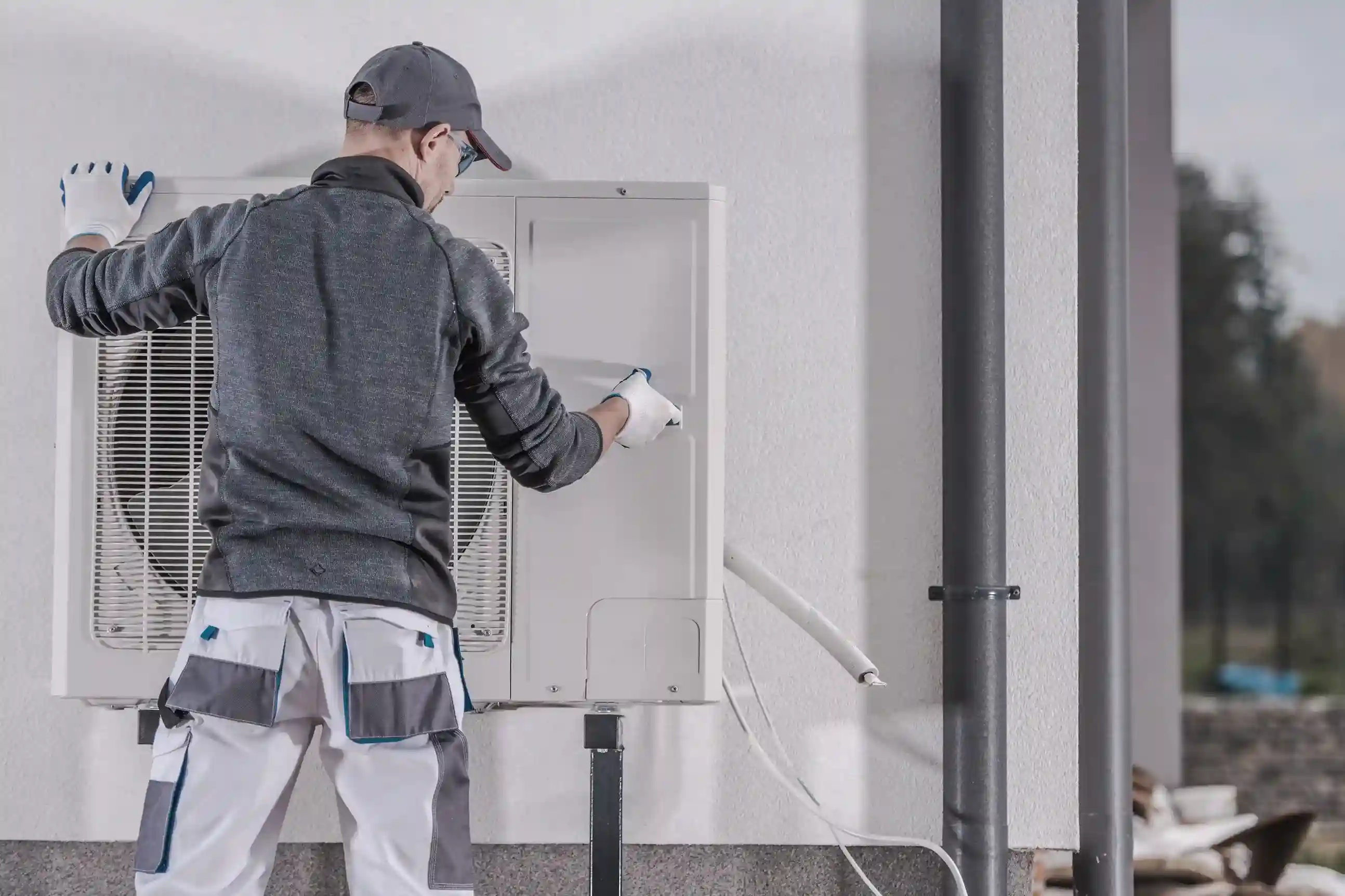
What You Get With a Modern Heat Pump Install
A heat pump installation is more than just swapping out a box outside your home; it is a complete upgrade to how your property manages climate control. In Voorhees, where the weather fluctuates from humid subtropical summers to freezing winters, a properly installed heat pump acts as both a high-efficiency air conditioner and a powerful heater.
When you move forward with a new installation, you receive a system designed for the specific thermal load of your property. This ensures that the unit does not short-cycle (turn on and off too frequently) or run constantly without reaching the set temperature.
The installation scope generally includes:
- Load Calculation and Sizing: We perform a Manual J load calculation to determine the exact heating and cooling requirements of your specific floor plan, insulation levels, and window orientation.
- Equipment Selection: You receive high-performance equipment, including the outdoor condenser unit and the matching indoor air handler or coil, selected based on SEER2 (cooling efficiency) and HSPF2 (heating efficiency) ratings.
- Thermostat Integration: Installation includes a smart or programmable thermostat that communicates effectively with the heat pump to optimize energy usage and maintain precise temperature control.
- Infrastructure Assessment: We verify that your existing ductwork is sealed and sized correctly to handle the airflow requirements of the new system, ensuring static pressure remains within manufacturer specifications.
- Cold Climate Technology: For New Jersey homeowners, we often recommend systems equipped with cold-climate inverters that maintain heating capacity even when outdoor temperatures drop significantly.
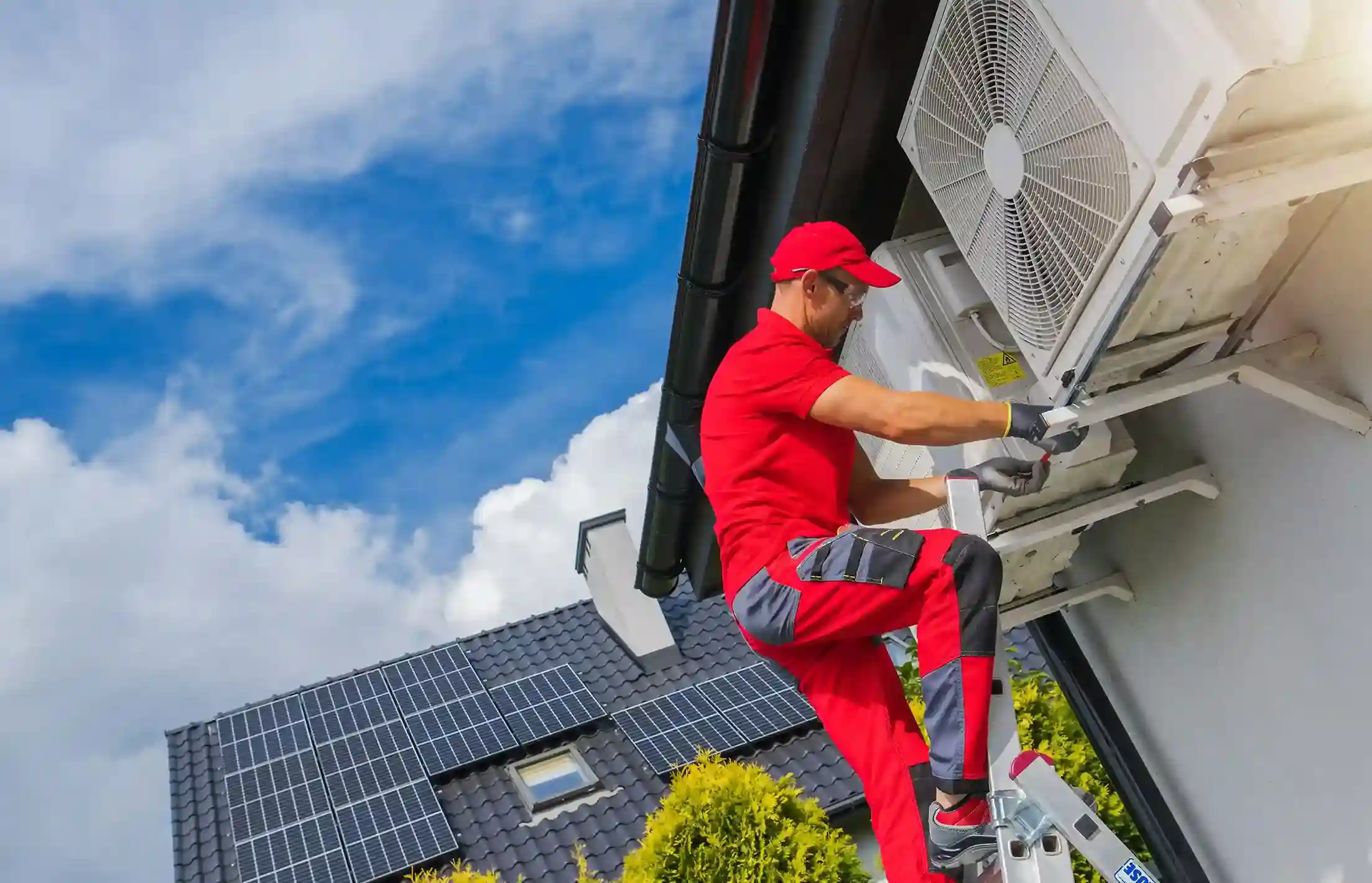
How the Installation Process Works
Replacing or installing a new HVAC system involves a coordinated series of technical steps designed to protect your home and ensure the longevity of the equipment. Our technicians follow a strict protocol to ensure the system is brought online safely and operates at peak efficiency from day one. Gibson Heating & Cooling prioritizes a clean workspace and a systematic approach to the installation day.
Site Preparation and Protection:
- Technicians arrive and immediately lay down drop cloths and protective floor coverings to safeguard your home’s interior.
- Power to the existing HVAC circuits is shut off at the breaker panel to ensure electrical safety during the transition.
Removal of Existing Equipment:
- If this is a replacement, the refrigerant from the old unit is recovered into certified cylinders according to EPA regulations; it is never vented into the atmosphere.
- The old condenser and air handler are disconnected from electrical and gas lines (if applicable) and removed from the property for proper disposal.
Positioning the New Units:
- The outdoor pad is inspected. If the existing pad is cracked or unlevel, it is replaced with a composite, vibration-absorbing pad to ensure the new heat pump sits level and stays clear of snow accumulation.
- The indoor unit is positioned, ensuring tight connections to the supply and return plenums to prevent air leakage.
Refrigerant Line Set Connection:
- Copper refrigerant lines (the liquid line and suction line) are run from the outdoor unit to the indoor coil.
- Technicians braze the connections while flowing nitrogen through the lines. This critical step prevents oxidation and soot buildup inside the copper, which can damage the compressor later.
Electrical and Control Wiring:
- High-voltage wiring is connected to the disconnect box and the unit, adhering to local electrical codes.
- Low-voltage control wiring is installed to connect the thermostat, air handler, and heat pump, ensuring they communicate properly for features like defrost cycles and auxiliary heat.
System Evacuation and Charging:
- A vacuum pump is attached to the system to remove moisture and non-condensables from the refrigerant lines, measuring the vacuum in microns to ensure a perfectly dry system.
- Once the vacuum holds, the factory refrigerant is released, and the charge is fine-tuned based on "subcooling" and "superheat" measurements to match the specific length of the line set.
Final Commissioning:
- The system is powered on and tested in both heating and cooling modes.
- Static pressure tests are conducted to verify airflow.
- The installer walks you through the operation of the new thermostat and maintenance requirements.
When Replacement Beats Repair
Deciding between fixing an aging unit and investing in a new heat pump is a common dilemma. While repairs are often feasible for minor issues, there comes a point where the cost of maintenance outweighs the value of the system. In an area like Voorhees, where systems run hard during both summer and winter, efficiency losses become noticeable on utility bills quickly.
You should consider replacement if:
- The 50% Rule Applies: If the cost of the repair approaches 50% of the value of a new system, replacement is the financially sound choice.
- Age of the Unit: Heat pumps generally have a lifespan of 10 to 15 years. If your unit is over 12 years old and requires a major component like a compressor or reversing valve, a new unit offers better reliability.
- Refrigerant Type: Older systems utilizing R-22 refrigerant are becoming prohibitively expensive to repair due to the phase-out of this chemical. Upgrading to a system using R-410A or newer refrigerants eliminates this sourcing issue.
- Rising Energy Bills: As compressors and coils age, they lose efficiency. If your kilowatt-hour usage has spiked despite normal weather patterns, the equipment is likely working double-time to maintain comfort.
- Uneven Temperatures: If certain rooms are freezing while others are hot, or if the unit struggles to keep up when the temperature drops below 35°F, modern variable-speed technology will solve these comfort gaps.
Local Installation Factors: Permits, Utilities, and Weather
Installing a heat pump in this region requires specific attention to local regulations and environmental factors. Ignoring these can lead to compliance issues during a home sale or insufficient heating during deep freezes.
Permitting and Inspections:
- Camden County and Voorhees Township require construction permits for HVAC replacements. This ensures the installation meets safety codes regarding electrical connections and gas piping (if a dual-fuel system is installed).
- Professional installers handle the application process and schedule the required municipal inspections upon completion.
Climate Considerations:
- With winter lows averaging 25°F, standard heat pumps may struggle without "cold climate" ratings or auxiliary heat strips. We size systems specifically to handle these lower temperatures so you aren't reliant solely on expensive emergency electric heat strips.
- High summer humidity requires a system that runs long enough to dehumidify the air, not just cool it. Variable-speed heat pumps are excellent for this, as they can run at lower capacities to pull moisture out of the air without overcooling the space.
Utility Rebates and Incentives:
- New Jersey’s Clean Energy Program and federal tax credits under the Inflation Reduction Act (IRA) offer significant financial incentives for installing high-efficiency heat pumps.
- To qualify, equipment must meet specific SEER2 and HSPF2 benchmarks. We provide the AHRI certificates needed to claim these rebates and tax credits.
Dual Fuel Systems: The Hybrid Option
For homeowners concerned about the coldest days of the year, a dual fuel system is a robust option. This setup combines an electric heat pump with a gas furnace.
In this configuration, the heat pump handles the heating load for the majority of the fall and winter, operating efficiently down to about 30-35°F. Once the temperature drops below that set point, the system automatically switches to the gas furnace. This "hybrid heat" approach maximizes efficiency by using electricity when it is most effective and switching to gas only when raw heating power is needed for extreme cold. This setup is particularly popular for older homes with less than optimal insulation.
Technology That Drives Efficiency
The difference between a heat pump from a decade ago and what is available today lies in the motor technology.
- Inverter-Driven Compressors: Unlike single-stage compressors that are either 100% on or 100% off, inverter compressors can modulate their speed. They might run at 40% capacity to maintain the temperature, using a fraction of the electricity and creating a quieter outdoor environment.
- Communicating Systems: Modern systems monitor indoor and outdoor conditions constantly. If the humidity inside rises, the blower motor slows down to remove more moisture. If the outdoor temperature drops, the compressor speeds up to extract more heat.
- Smart Defrost Cycles: Old heat pumps would defrost on a timer, wasting energy. New units use demand-defrost, only activating the cycle when sensors detect actual frost accumulation on the outdoor coil.
Why Choose Professional Installation
While the hardware is important, the quality of the installation determines 70% of the system's efficiency and longevity. A top-tier unit installed poorly will perform worse than a budget unit installed perfectly.
Professional installation guarantees that the refrigerant charge is accurate to the ounce and that airflow is balanced. Improper charging can reduce efficiency by up to 20% and cause premature compressor failure. Furthermore, factory warranties are almost universally dependent on proof of installation by a licensed contractor.
Our approach ensures:
- Code Compliance: All electrical and mechanical work meets current NJ safety codes.
- Debris Removal: We haul away the old unit and all packaging materials, leaving your basement and yard clean.
- Post-Install Support: You have a dedicated partner for future maintenance, warranty claims, and seasonal check-ups.
Ensuring your home remains comfortable through every season requires a system installed with precision and care. Do not leave your heating and cooling to chance.
Contact us now to discuss your heat pump installation options.
Professional Heat Pump Installation Designed For Long-Term Efficiency
Choosing heat pump installation in Voorhees, NJ, is a strategic investment in consistent performance and controlled energy usage. Gibson Heating & Cooling delivers precision-driven installations tailored to your home’s layout and system demands. Limited installation slots mean delaying could restrict access to optimal scheduling and preferred system options. Homeowners rely on our expertise to ensure proper sizing, correct setup, and dependable operation from day one. Secure professional installation now to avoid costly adjustments later.
Upgrade Your Home With Expert Heat Pump Installation Solutions Today
our process
Our heating Process Section
01
Thorough Diagnosis/Consultation
We start with a comprehensive assessment of your needs.
02
Upfront & Honest Pricing
We provide a clear, detailed estimate before any work begins.
03
Professional
Schedule
Our certified technicians perform the work to the highest standards.
04
Final Inspection & Clean-up
We ensure everything is working perfectly and leave your home clean.
testimonials
The Customer Experience:
Where Comfort Meets Reliability.
Trusted by Homeowners Across Burlington County.
