
Boiler Repair in Voorhees, NJ

Resolve Your Boiler Issues Quickly: Emergency Repair Services Available
Facing sudden boiler breakdowns in Voorhees involves more than just a drop in temperature; it puts your home’s plumbing at risk and disrupts your daily life during the harsh winter months. If your radiators are cold or your unit is making alarming noises, contact us immediately to dispatch a certified technician to your location. Don’t let a malfunctioning boiler disrupt your comfort or compromise your safety during freezing winter nights or the humid transition into summer. Gibson Heating & Cooling provides the rapid response necessary to restore warmth and peace of mind to your home.
- Same-day boiler repairs to restore your heating effectively and prevent frozen pipes.
- Certified technicians available 24/7 to address your emergency needs safely.
- Guaranteed workmanship to ensure long-term reliability and system efficiency.
Fully licensed and insured—your satisfaction is guaranteed.

What You Can Expect From Our Boiler Repair Service
When your heating system fails, you need a solution that addresses the root cause rather than a temporary patch. Our service is designed to provide comprehensive diagnostics and immediate repairs for homeowners in Voorhees, NJ. We understand that hydronic heating systems are complex, involving high pressure, gas lines, and intricate water distribution networks. Our technicians arrive in fully stocked service vehicles, prepared to handle the specific challenges of residential boilers.
We focus on restoring your system to manufacturer specifications. This includes checking the integrity of the heat exchanger, ensuring the expansion tank is properly pressurized, and verifying that all zone valves are communicating correctly with your thermostats. Whether you possess a modern high-efficiency condensing boiler or an older cast-iron steam unit, the goal is always the same: safe, consistent heat delivery.
- Comprehensive Diagnostics: We utilize advanced testing equipment to pinpoint issues within the electrical controls, gas valve assembly, or water circulation components.
- Leak Resolution: We identify and repair leaks at pipe connections, pressure relief valves, or within the boiler body to prevent water damage and system pressure loss.
- Circulation Restoration: We address failures in circulator pumps and airlocks that prevent hot water from reaching your baseboards or radiators.
- Safety Inspections: Every repair visit includes a rigorous check for carbon monoxide leaks and proper flue gas venting to ensure your home remains safe.
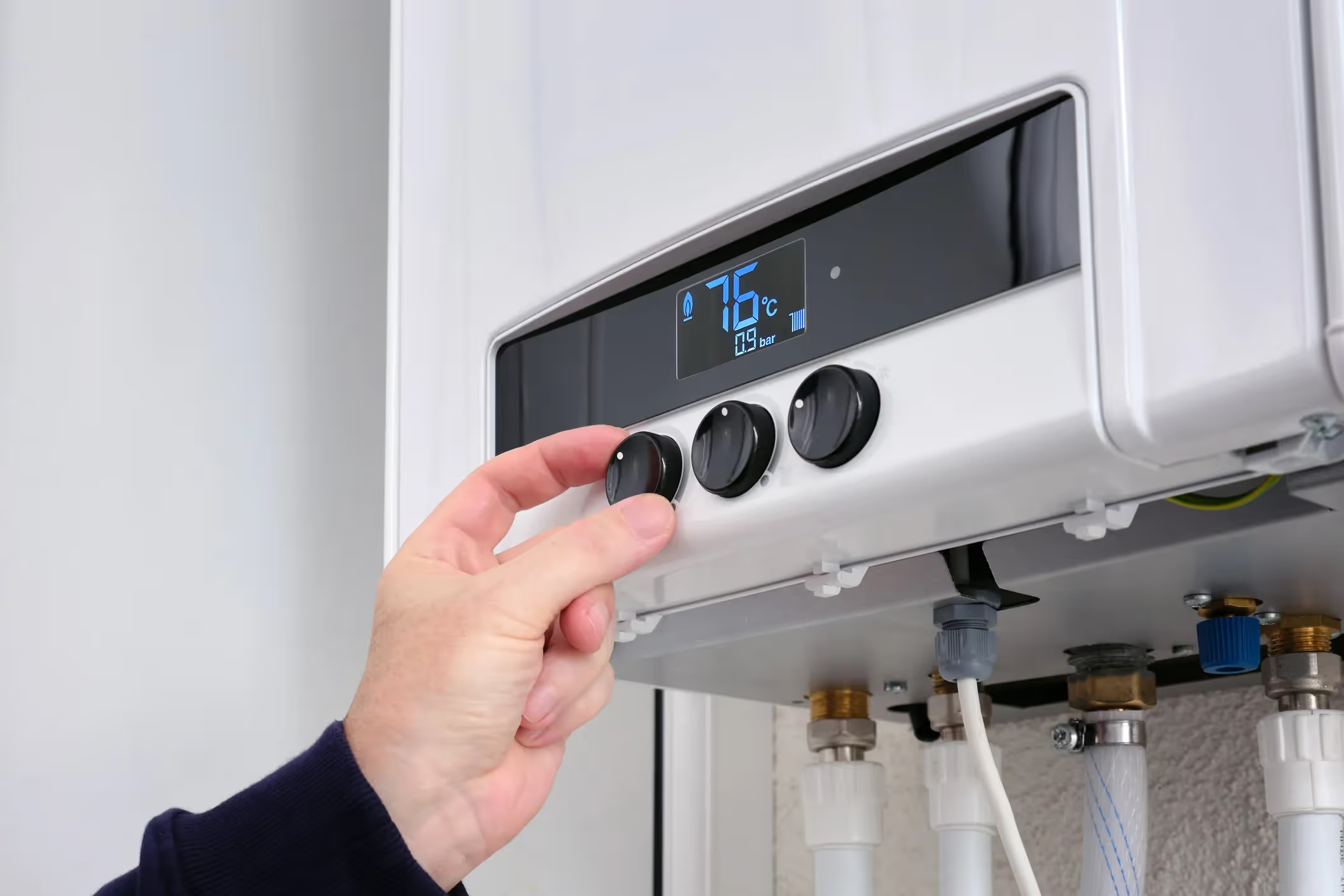
The Boiler Repair Process: Step-by-Step
Understanding what happens once a technician arrives can alleviate the stress of a breakdown. We follow a structured protocol to ensure nothing is overlooked and that the repair is conducted efficiently. This process is designed to minimize disruption to your household while maximizing the effectiveness of the service.
- Initial Assessment: Upon arrival, the technician will listen to your description of the problem and conduct a visual inspection of the boiler and visible piping. They will check the thermostat settings and the boiler’s pressure gauge to gather baseline data.
- System Testing: The technician will attempt to cycle the boiler to observe its startup sequence. This helps identify at which stage the failure occurs, whether it is during ignition, combustion, or circulation.
- Detailed Diagnosis: Using multimeters and combustion analyzers, the technician tests specific components such as the thermocouple, aquastat, and zone controllers. This step isolates the exact part causing the failure.
- Explanation and Authorization: Before any work begins, the technician explains the findings clearly. You receive a detailed breakdown of the necessary repairs and the associated costs. Work proceeds only after you understand the scope and provide approval.
- Execution of Repair: The technician performs the repair, replacing faulty components with high-quality parts. This may involve draining the system, soldering pipes, or rewiring control boards depending on the issue.
- Verification and Cycling: After the repair is complete, the system is refilled and purged of air. The technician cycles the boiler multiple times to ensure it reaches the target temperature and that all radiators or baseboards are heating evenly.
- Site Cleanup: The workspace is cleared of any debris, old parts, or tools. We treat your home with respect, wearing shoe covers and using drop cloths to protect your flooring.
Diagnosing Common Boiler Problems
Boilers often give warning signs before a total shutdown. Recognizing these symptoms early allows for proactive repairs that can save significantly on emergency service costs. In the Voorhees area, where systems work hard against Northeast winters, certain issues are more prevalent.
- Kettling and Strange Noises: If your boiler sounds like a tea kettle coming to a boil, it likely suffers from "kettling." This is caused by hard water deposits (limescale) building up on the heat exchanger. This scale restricts water flow and causes the water trapped behind it to overheat and turn into steam, creating pressure and noise. Ignoring this can lead to a cracked heat exchanger, which is a catastrophic failure.
- Loss of Pressure: A boiler requires a specific internal pressure to circulate water effectively. If the pressure gauge constantly drops, there is a leak in the system or a faulty pressure relief valve. Leaks may not always be visible at the boiler itself; they can occur anywhere along the pipework under floorboards or inside walls. Constant low pressure prevents the system from firing and can damage the pump.
- Cold Spots on Radiators: If the bottom of a radiator is hot but the top is cold, air is trapped in the system. While bleeding the radiator often fixes this, recurring airlocks indicate a deeper issue, such as a leak drawing in air or corrosion creating hydrogen gas within the system.
- Pilot Light Issues: For older standard efficiency boilers with a standing pilot light, a flame that keeps going out usually points to a faulty thermocouple. This safety device cuts the gas supply if it doesn't detect heat. If the thermocouple is broken, the pilot won't stay lit, and the main burner will never ignite.
When to Repair vs. When to Replace
Deciding between repairing an aging boiler and investing in a new system is a significant financial consideration — check our current promotions for savings. While our priority is always to repair your existing unit whenever feasible, there are distinct scenarios where replacement is the more prudent economic choice. Gibson Heating & Cooling provides honest assessments to help you make this determination based on data and system condition.
- The 50% Rule: A general guideline in the industry suggests that if the cost of the repair approaches 50% of the cost of a new system, replacement is the better option. Sinking substantial money into a dying asset rarely yields a return on investment.
- Frequency of Breakdowns: If you have required multiple service calls in the last two years, the system is likely entering the end of its reliable lifespan. Constant "nickel and diming" for small parts adds up quickly and indicates general component fatigue.
- System Age: Cast iron boilers can last 20 to 30 years, while modern condensing boilers typically last 15 to 20 years. If your unit is surpassing these age benchmarks, parts may become obsolete or prohibitively expensive to source.
- Efficiency Considerations: Older boilers often operate at 60% to 70% AFUE (Annual Fuel Utilization Efficiency), meaning 30 to 40 cents of every dollar you spend on gas goes up the chimney. Modern systems achieve 95% efficiency or higher. The fuel savings from upgrading can sometimes offset the monthly cost of a new installation.
- Corrosion and Leaks: While a leaking valve is fixable, a leaking boiler body (heat exchanger) usually spells the end of the unit. Corrosion inside the combustion chamber cannot be reversed and poses safety risks.
Critical Components We Service
To understand the scope of our repair capabilities, it helps to know the critical components that drive your hydronic system. Failure in any one of these parts can bring the entire heating cycle to a halt.
- Expansion Tank: This vessel absorbs the excess volume of water created when the system heats up. If the internal bladder fails, pressure spikes can cause the relief valve to discharge water onto your floor.
- Circulator Pump: The heart of the system, this pump pushes hot water to your radiators. If it seizes or the impeller breaks, the boiler will fire, but the heat will not leave the basement, causing the boiler to short-cycle and overheat.
- Aquastat: This device controls the water temperature inside the boiler. A faulty aquastat can cause the water to become dangerously hot or prevent the burner from firing even when the house is freezing.
- Zone Valves: These valves direct water to specific areas of your home (e.g., upstairs vs. downstairs). If a zone valve motor burns out, that specific area of the house will lose heat while others remain warm.
- Flue Pipe and Venting: Proper venting is non-negotiable for safety. We inspect flue pipes for signs of deterioration, rust, or blockage (such as bird nests) that could force carbon monoxide back into the living space.
Local Considerations for Voorhees Residents
Operating a boiler in Voorhees, NJ, requires attention to specific regional factors. The local climate and regulations play a role in how your system should be maintained and repaired.
- Climate Impact: Our region experiences distinct freeze-thaw cycles. During deep freezes, pipes running through unconditioned spaces (like crawl spaces or attics) are at high risk of freezing if the boiler fails for even a few hours. This makes emergency response times critical.
- Local Codes and Permits: Significant repairs, particularly those involving gas line modifications or flue pipe replacement, must comply with local building codes. We adhere strictly to these regulations to ensure your system is safe and compliant for future home inspections or sales.
- Water Quality: The local water supply hardness can impact boiler longevity. Systems without proper water treatment or periodic flushing are more susceptible to scale buildup, reducing efficiency and leading to premature heat exchanger failure.
- Fuel Type Availability: While natural gas is common in the area, many older properties still rely on oil. We are equipped to handle the specific repair needs of gas-fired hydronic systems, ensuring proper combustion calibration for the available fuel source.
Why Professional Service Matters
Attempting DIY repairs on a boiler is dangerous and often illegal due to the risks associated with natural gas, carbon monoxide, and high-pressure steam or water. Professional service ensures that the repair is not only effective but safe for your family.
- Safety Protocols: Technicians are trained to handle gas connections and high-voltage wiring safely. They carry specialized tools to detect gas leaks that are imperceptible to the human nose.
- Proper Tools: Calibrating a modern boiler requires combustion analyzers to adjust the air-fuel ratio precisely. Without this equipment, a boiler may run inefficiently or produce excessive soot.
- Warranty Preservation: Many boiler manufacturers require proof of professional service to maintain the warranty — view our memberships for regular care. DIY attempts can void these protections, leaving you liable for future component failures.
- Correct Part Sourcing: Using generic or "universal" parts can cause compatibility issues. We source OEM (Original Equipment Manufacturer) parts designed specifically for your boiler make and model.
Troubleshooting Before You Call
While professional repair is usually necessary, checking a few basics can sometimes resolve simple issues or provide our technicians with better information.
- Check the Thermostat: Ensure the thermostat is set to "Heat" and the temperature setting is at least five degrees above the current room temperature. Sometimes, the issue is simply a dead battery in the thermostat unit.
- Inspect the Breaker Panel: Check your electrical panel to see if the circuit breaker controlling the boiler or furnace has tripped. Reset it once to see if the system powers on. If it trips again immediately, do not reset it a second time; this indicates a dangerous electrical short.
- Verify the Emergency Switch: Most boilers have a red emergency switch plate, often located at the top of the basement stairs or near the unit. Ensure this has not been accidentally toggled to the "Off" position.
- Look at the Pressure Gauge: If the pressure reading is at zero, the system may have a leak. Do not attempt to manually fill it without knowing how to vent the air, as this can cause airlocks.
Restoring Comfort to Your Home
A broken boiler is an emergency that demands professional attention. Whether it is a minor component replacement or a major system overhaul, the goal is to restore heat quickly and safely. We prioritize clear communication, transparent diagnostics, and lasting repairs.
When you need reliable boiler repair in Voorhees, NJ, trust the team that understands hydronic systems inside and out. Gibson Heating & Cooling is ready to diagnose your issue and implement the right solution to keep your home warm.
Restore your heat today—schedule your boiler repair service now.
our process
Our heating Process Section
01
Thorough Diagnosis/Consultation
We start with a comprehensive assessment of your needs.
02
Upfront & Honest Pricing
We provide a clear, detailed estimate before any work begins.
03
Professional
Schedule
Our certified technicians perform the work to the highest standards.
04
Final Inspection & Clean-up
We ensure everything is working perfectly and leave your home clean.
testimonials
The Customer Experience:
Where Comfort Meets Reliability.
Trusted by Homeowners Across Burlington County.
