
Boiler Installation in Voorhees, NJ

Immediate Boiler Installation Services
Facing uneven heating or a complete boiler breakdown creates urgency, especially during a Voorhees winter. At Gibson Heating & Cooling, quick, professional installation ensures your home stays warm without the stress of frequent outages. Contact us or apply for financing today to restore your heat immediately.
- Quick, reliable service — get your boiler up and running rapidly.
- Experienced technicians ensure a safe, efficient installation compliant with New Jersey codes.
- Clear, upfront pricing with no hidden fees or surprise costs.
All installations are fully licensed, with extended warranties and flexible financing options available.
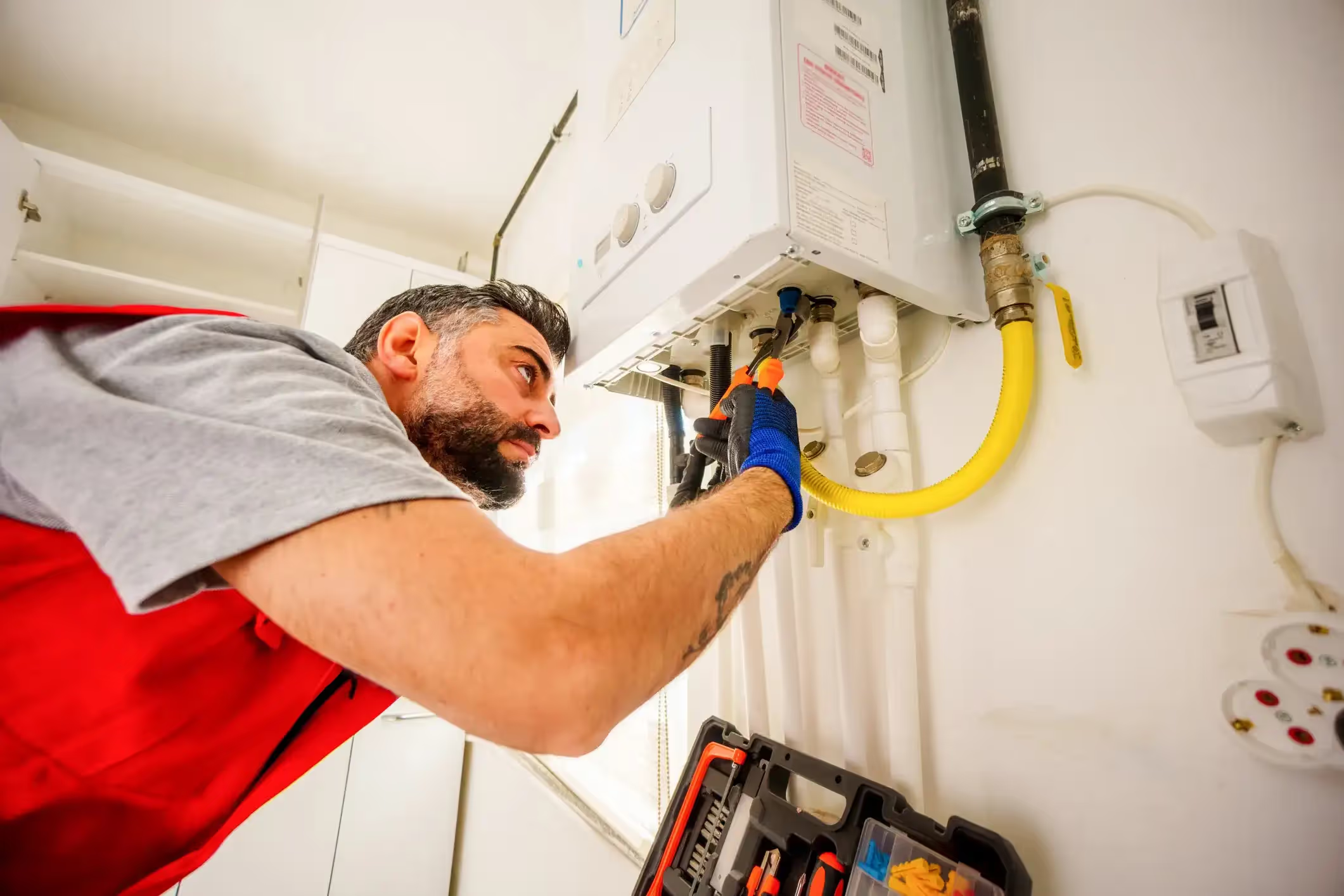
What You Get With Professional Boiler Replacement
When you schedule a boiler installation, the focus is on restoring comfort and safety to your property with minimal disruption. The process begins with a comprehensive assessment of the existing heating infrastructure. Technicians evaluate the current piping, radiators, baseboards, and ventilation systems to ensure the new unit integrates seamlessly with your home's layout.
Gibson Heating & Cooling provides a turnkey solution that encompasses every aspect of the project. This includes the safe disconnection and removal of the old boiler, disposal of the discarded unit, and the delivery of the new high-efficiency system. The scope of work covers all necessary gas piping modifications, water line connections, and electrical wiring required to bring the system up to current safety standards.
Homeowners receive a detailed timeline before work begins. Most residential boiler installations are completed within a single day, ensuring you do not go without heat overnight. The service includes a full system flush to remove sludge or debris from existing lines, protecting the new boiler from early wear. Once installed, the system undergoes rigorous pressure testing and combustion analysis to verify optimal performance before the technicians leave the premises.
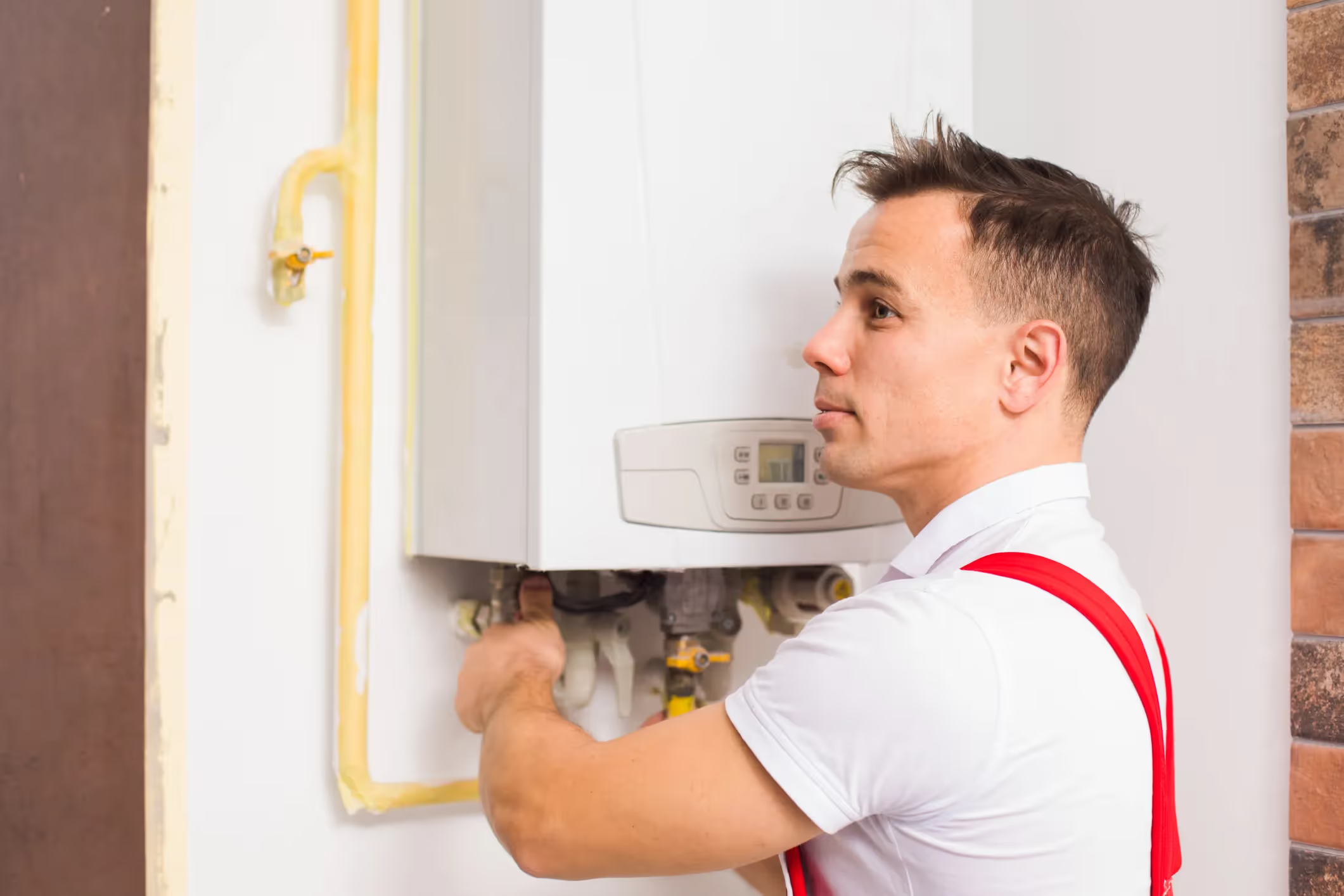
How the Installation Process Works
A structured installation process ensures that every safety protocol and manufacturer specification is met. This systematic approach prevents future breakdowns and maximizes the lifespan of the heating unit.
- Site Preparation and Protection: Technicians begin by preparing the workspace. This involves laying down drop cloths to protect flooring and clearing the area around the utility room. Safety switches are turned off, and gas and water supplies to the boiler are isolated to prevent leaks during the transition.
- System Sizing and Load Calculation: Before the physical installation, a Manual J load calculation is often performed or verified. This determines the exact heating requirements of the specific property in Voorhees, accounting for insulation levels, window quality, and square footage. Correct sizing prevents short-cycling (when a boiler turns on and off too frequently) and ensures the unit is powerful enough for the coldest winter nights.
- Removal of Existing Equipment: The old boiler is drained of water and disconnected from the flue pipe, gas lines, and distribution piping. Heavy equipment is used to carefully remove the unit from the basement or utility closet. Technicians inspect the area for any signs of water damage or floor deterioration that needs addressing before placing the new unit.
- Positioning and Piping: The new boiler is positioned on a level surface or mounted to the wall, depending on the model. New piping is fabricated to connect the boiler to the home’s supply and return lines. Isolation valves, circulator pumps, and expansion tanks are installed at this stage. This piping configuration is critical for proper water flow and hydraulic balance.
- Venting and Gas Connections: Proper venting is essential to prevent carbon monoxide buildup. Technicians install or upgrade the flue piping, ensuring it meets local building codes for draft and clearance. Gas lines are connected using rigid pipe or flexible connectors approved for the municipality, followed by a bubble test to detect any potential leaks.
- Electrical and Control Setup: The boiler is wired to the home’s electrical panel and connected to the thermostat system. If zoning is required, zone valves and controllers are configured to allow different temperatures in different parts of the house. Modern systems often involve setting up outdoor reset controls, which adjust the boiler temperature based on outside weather conditions for maximum efficiency.
- System Start-Up and Commissioning: The system is filled with water and purged of air to prevent noise and uneven heating. The boiler is fired up, and technicians perform a combustion analysis to adjust the fuel-air mixture. This step confirms that the unit is operating at its rated efficiency and producing safe emission levels.
Deciding When to Replace vs. Repair
Determining whether to repair an aging boiler or invest in a new installation is a financial and practical decision. While repairs can solve immediate issues, they are often temporary fixes for a system reaching the end of its useful life.
- The 50% Rule: A common industry standard is the 50% rule. If the cost of a repair approaches 50% of the value of a new system, replacement is the more economically sound choice. Investing heavily in an old unit does not reset its odometer; other components will likely fail soon after.
- Age of the System: Cast iron boilers can last 20 to 30 years, while high-efficiency condensing boilers typically last 15 to 20 years. If the equipment has surpassed its expected lifespan, efficiency drops significantly. A boiler installed two decades ago is likely operating at 60-70% AFUE (Annual Fuel Utilization Efficiency), meaning 30-40 cents of every dollar spent on fuel is wasted. New models achieve 90-98% AFUE.
- Frequency of Breakdowns: If the system requires service calls multiple times a year, reliability is compromised. Continuous spending on minor repairs—such as thermocouples, pumps, or relief valves—adds up quickly. Replacement eliminates these recurring costs and provides peace of mind.
- Uneven Heating and Noise: As boilers age, sludge builds up in the heat exchanger and radiators, leading to cold spots in the house. Kettling (banging noises inside the boiler) indicates hard water deposits restricting flow. If the system struggles to maintain the thermostat setting during moderate weather, it will likely fail during a deep freeze.
- Safety Concerns: Corrosion on the body of the boiler or yellow flames instead of blue can indicate incomplete combustion or heat exchanger failure. These issues pose carbon monoxide risks. In such cases, immediate replacement is a matter of safety, not just comfort.
Local Considerations for Voorhees Installations
Operating a heating system in South Jersey requires attention to specific regional factors. The local climate and regulatory environment influence how boilers are selected and installed.
- Permitting and Inspections: Voorhees Township requires specific construction permits for mechanical work, including boiler replacements. This process ensures that the installation meets the International Residential Code (IRC) and local amendments. The installation team handles the application and scheduling of inspections, ensuring the homeowner is not burdened with administrative tasks. Final inspections by township officials verify that gas lines, venting, and electrical connections are up to code.
- Utility Rebates and Incentives: New Jersey often offers incentives for upgrading to high-efficiency heating equipment through programs like NJ Clean Energy. Utility providers servicing the Voorhees area, such as South Jersey Gas or PSE&G, may have specific rebate structures for qualifying equipment. Professional installers assist in identifying these opportunities to lower the net cost of installation.
- Climate-Specific Sizing: The humid subtropical climate means winters are moderately cold but can experience sharp drops in temperature and significant snowfall. Boilers must be sized not just for the average winter day, but for the "design temperature" of the region. Undersized units will run continuously without satisfying the thermostat, while oversized units will short-cycle, leading to premature wear.
- Water Quality and Treatment: Local water quality affects hydronic systems. Hard water can lead to scale buildup in high-efficiency heat exchangers. Installation often involves testing the fill water and adding inhibitors or installing magnetic filters to prevent corrosion and sludge, ensuring the warranty remains valid.
Differentiators in Boiler Service
Choosing the right provider for boiler installation determines the long-term reliability of the system. The focus should be on technical proficiency and adherence to manufacturer protocols.
- Manufacturer-Specific Training: Modern condensing boilers utilize advanced electronics and proprietary heat exchanger designs. Technicians undergo regular training with specific manufacturers to master the nuances of these systems. This expertise ensures that the unit is not just installed, but calibrated for peak performance.
- Warranty Registration and Support: Proper installation is a prerequisite for warranty validity. Professional providers handle the product registration process, ensuring that the parts and heat exchanger warranties are active. In the event of a defect, having a certified installer means the labor and processing are handled efficiently.
- Comprehensive Post-Installation Support: The relationship does not end once the boiler is running. Support includes explaining the operation of the new thermostat, demonstrating how to check system pressure, and outlining maintenance schedules — read our reviews.
Energy Efficiency and Modern Controls
Upgrading a boiler is an opportunity to modernize the home's entire heating strategy. New technology offers granular control over energy usage.
- Modulating Burners: Unlike older systems that operate at 100% capacity or 0%, modern boilers modulate their firing rate. They can run at lower capacities to maintain a steady temperature, consuming less fuel and reducing wear on components.
- Outdoor Reset Technology: This feature adjusts the boiler’s water temperature based on the outdoor air temperature. On a mild day in Voorhees, the boiler does not need to heat water to 180°F. By lowering the water temperature, the system runs more efficiently and maintains a more consistent indoor climate.
- Zoning Capabilities: New installations can easily integrate zone valves. This allows homeowners to stop heating unused rooms or keep bedrooms cooler than living areas. Zoning reduces fuel consumption significantly and eliminates the problem of a single thermostat governing a multi-story home.
Ensuring Long-Term Performance
A new boiler is a significant investment in the home. Protecting that investment requires adhering to a maintenance schedule. While the new unit will require fewer repairs, annual servicing is non-negotiable for high-efficiency models. This includes cleaning the condensate trap, inspecting the igniter, and checking the combustion levels.
Gibson Heating & Cooling delivers precise, code-compliant boiler installations designed to withstand the demands of New Jersey winters. By focusing on technical accuracy and high-quality components, the system provides consistent warmth and reduced energy bills for years to come.
Secure your home’s comfort today. Call or Contact us online to schedule your boiler installation.
our process
Our heating Process Section
01
Thorough Diagnosis/Consultation
We start with a comprehensive assessment of your needs.
02
Upfront & Honest Pricing
We provide a clear, detailed estimate before any work begins.
03
Professional
Schedule
Our certified technicians perform the work to the highest standards.
04
Final Inspection & Clean-up
We ensure everything is working perfectly and leave your home clean.
testimonials
The Customer Experience:
Where Comfort Meets Reliability.
Trusted by Homeowners Across Burlington County.
