
Heat Pump Repair in Moorestown, NJ

Eliminate Inconsistent Temperatures and System Failures
Is your heat pump failing to keep up with the humid summers or freezing winters common in Moorestown? When your primary source of comfort stops working effectively, you need immediate professional intervention to restore safety and climate control to your home. Call our team now to schedule an emergency diagnostic or to discuss flexible financing options for major repairs.
We understand that a malfunction during a severe weather event is not just an inconvenience; it is a disruption to your daily life. Our service model is built around responsiveness and technical precision to get your system running again without delay.
- Restore your comfort immediately with same-day repair availability.
- Ensure long-term reliability with repairs performed by licensed, expert technicians.
- Access flexible financing options to manage unexpected repair costs comfortably.
All services are fully licensed, insured, and compliant with local codes for your peace of mind.

What to Expect from Your Service Today
When you request service for a failing heat pump in Moorestown, the objective is to minimize downtime and restore your home’s temperature regulation as quickly as possible. The service visit begins with a comprehensive assessment of the unit. Unlike standard air conditioners, heat pumps operate year-round and have unique components that require specialized diagnostic tools. You can expect a technician to arrive in a fully stocked vehicle, carrying the most common parts required to resolve issues on the spot. This preparation reduces the need for follow-up visits and parts ordering, allowing for a faster resolution to your heating or cooling emergency.
Upon arrival, the focus shifts to identifying the root cause of the failure rather than just treating the symptom. For example, if the unit is freezing up, simply melting the ice is not a repair; the technician must determine if the cause is restricted airflow, a refrigerant leak, or a faulty defrost board. Once the issue is isolated, you receive a clear, flat-rate explanation of the required repairs. This transparency ensures that you understand the scope of work and the associated costs before any tools are applied to the system.
The repair phase involves calibrated adjustments and part replacements using OEM or high-quality equivalent components. Whether the issue lies within the electrical control circuit or the mechanical refrigeration cycle, the goal is to return the system to manufacturer specifications. After the repair is completed, the technician does not simply leave; a full system cycle test is performed. This verifies that the heat pump switches correctly between heating and cooling modes, that the auxiliary heat strips engage when necessary, and that the defrost cycle is operational—a critical function for New Jersey winters.
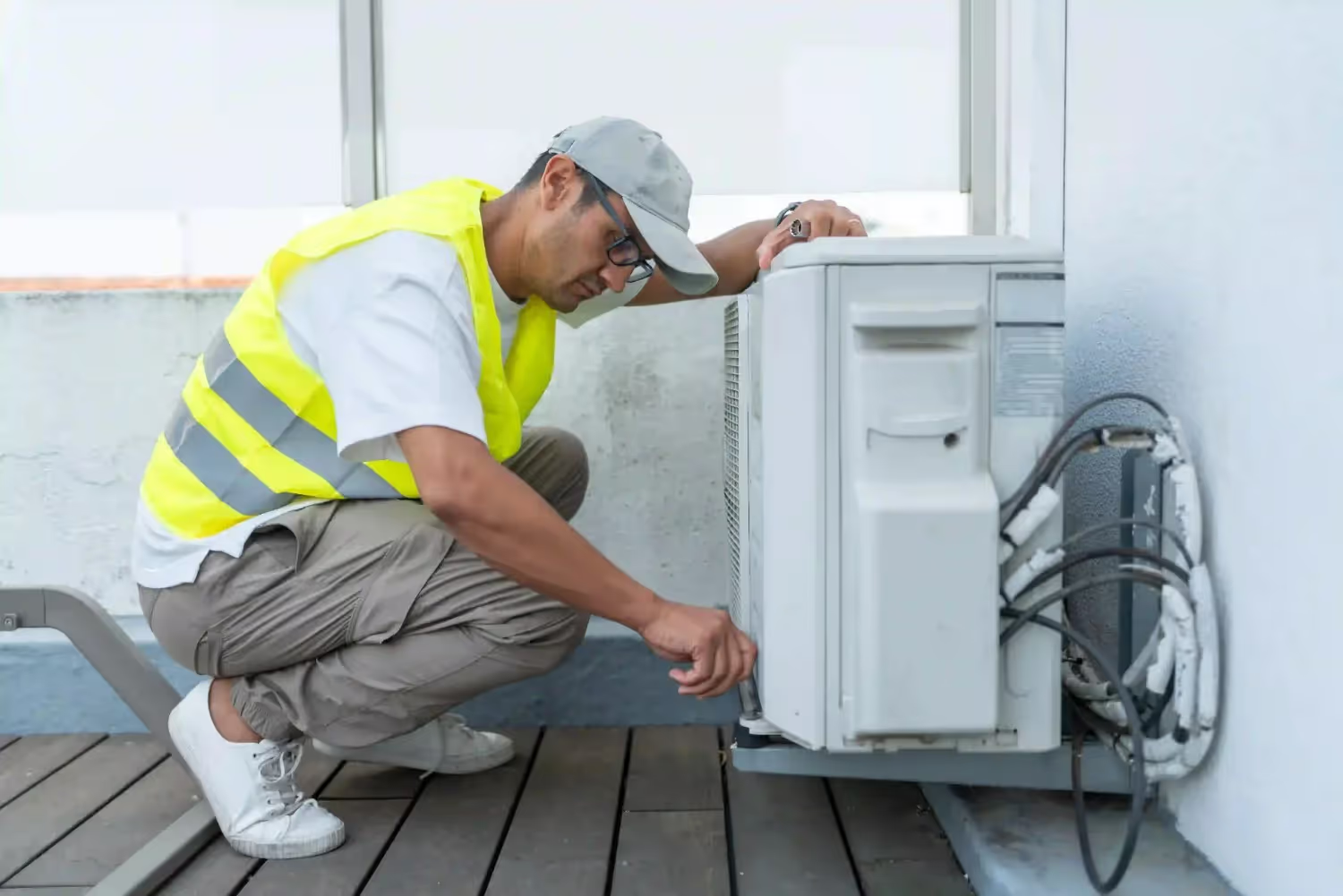
Our Heat Pump Repair Process Simplified
Gibson Heating & Cooling utilizes a systematic approach to troubleshooting and repairing heat pump systems. This structured process ensures that no component is overlooked and that the repair addresses both the immediate failure and any underlying inefficiencies. By following a strict diagnostic protocol, we prevent future breakdowns and extend the lifespan of your existing equipment.
Visual and Auditory Inspection
The process begins with a thorough physical examination of both the indoor air handler and the outdoor condenser unit. Technicians look for signs of wear, oil residue indicating leaks, and loose electrical connections. They also listen for irregular sounds, such as grinding or hissing, which often pinpoint specific mechanical failures like a compromised compressor or a leaking reversing valve.
Electrical System Analysis
Heat pumps rely heavily on complex electrical controls. The technician tests capacitors, contactors, and relays to ensure they are within the correct microfarad ratings and voltage tolerances. Loose wiring or corroded contacts are tightened or replaced to prevent voltage drops that can overheat motors and damage the compressor.
Refrigerant Charge Verification
Correct refrigerant levels are vital for a heat pump's efficiency. Using digital gauges, the technician measures superheat and subcooling levels to determine if the system is undercharged (leaking) or overcharged. If a leak is detected, electronic leak detectors are used to locate the source, allowing for a precise repair followed by a recharge to factory specifications.
Airflow and Ductwork Assessment
Restricted airflow is a leading cause of compressor failure and frozen coils. The technician inspects the air filter, blower motor, and evaporator coil for debris or blockages. Static pressure readings are taken to ensure the ductwork in your Moorestown home is delivering adequate air volume. If the blower wheel is dirty or the motor is dragging, these issues are addressed to restore proper circulation.
Reversing Valve and Defrost Control Testing
The reversing valve is what distinguishes a heat pump from an AC unit, allowing it to switch the flow of refrigerant. Technicians verify that this valve shifts smoothly between heating and cooling modes. Additionally, the defrost control board and sensors are tested to ensure the unit can melt accumulated ice during freezing temperatures, preventing the outdoor unit from becoming a block of ice.
Thermostat and Control Calibration
The interface between you and your system is the thermostat. It is checked for calibration accuracy and proper communication with the heat pump. If the thermostat is not sending the correct signals for stage-one heating, stage-two heating (auxiliary), or cooling, the system cannot function efficiently. Batteries are checked, and wiring is verified.
Final System Performance Test
Once repairs are made, the system is run through a complete operational cycle. Temperature differentials (delta T) are measured across the supply and return air to confirm the unit is adding or removing heat effectively. This final step guarantees that the repair was successful and the system is ready for continuous use.
Repair or Replace? Making the Right Decision
Deciding whether to repair a malfunctioning heat pump or invest in a new system is a significant financial consideration. While our priority is always to repair your existing equipment when feasible, there are specific thresholds where replacement becomes the more prudent economic choice. Understanding these factors helps you make an educated decision regarding your home’s long-term comfort and budget.
The 50% Rule
A general guideline used in the industry is the 50% rule. If the cost of the necessary repair approaches or exceeds 50% of the value of a new system, replacement is often recommended. Putting a large sum of money into an aging unit may not yield a good return on investment, as other components are likely to fail soon after.
System Age and R-22 Availability
Heat pumps generally have a lifespan of 10 to 15 years. If your unit is over 12 years old and requires a major component like a compressor or reversing valve, replacement is usually wiser. Additionally, older systems may utilize R-22 refrigerant, which has been phased out and is prohibitively expensive to restock. Upgrading to a modern system ensures compatibility with current, more environmentally friendly, and affordable refrigerants.
Frequency of Breakdowns
If you find yourself calling for repairs multiple times a year, the cumulative cost of service calls and parts can quickly surpass the monthly cost of financing a new, high-efficiency unit. Frequent breakdowns also indicate that the internal components are suffering from systemic wear, making reliability impossible to guarantee.
Energy Efficiency Considerations
Heat pump technology has advanced significantly in the last decade. Older units often have low SEER (cooling) and HSPF (heating) ratings, leading to excessive energy bills. If your utility costs have been steadily climbing despite maintenance, a new unit with a higher efficiency rating can significantly reduce monthly operational costs, essentially paying for itself over time through energy savings.
Comfort Issues and Noise
If the existing unit can no longer maintain a consistent temperature in your home, or if it runs loudly and struggles to dehumidify during the summer, it may be undersized or nearing the end of its mechanical life. New systems offer variable-speed technology that provides precise temperature control and whisper-quiet operation.
Moorestown-Specific Information You Need to Know
Operating a heat pump in this region requires attention to specific environmental and regulatory factors. The local climate presents a unique challenge: systems must handle high humidity in July and August while remaining capable of extracting heat from the air during freezing January nights. This dual-demand environment puts significant stress on the reversing valve and the defrost control board. In this area, it is critical that your auxiliary heat strips are fully functional to handle the days when temperatures drop below the thermal balance point of the heat pump.
When dealing with repairs that involve refrigerant handling or major component replacement, adherence to local building codes and environmental regulations is mandatory. Licensed contractors ensure that all refrigerants are recovered and disposed of according to EPA guidelines, preventing environmental contamination and potential fines.
Furthermore, homeowners should be aware of electrical requirements. Many older homes in the area may have outdated electrical panels that struggle with the high amperage draw of a struggling compressor. A professional repair often includes inspecting the disconnect box and the breaker panel connection to ensure your home’s electrical infrastructure safely supports the HVAC equipment.
Local utility providers frequently offer rebates and incentives for maintaining high-efficiency equipment. While repairs generally do not qualify for upgrade rebates, keeping your system running at peak efficiency ensures you are not penalized with higher-tier energy rates due to excessive consumption. Properly maintained equipment aligns with regional energy goals and keeps your household expenses predictable regardless of the season.
Why Choose Us? Our Commitment to Quality and Comfort
Selecting a service provider goes beyond just finding someone to fix a machine; it is about finding a partner who respects your home and values your time. We pride ourselves on technical expertise and a customer-centric approach that removes the stress from HVAC emergencies — read our reviews. Our technicians undergo rigorous, ongoing training to stay current with the latest heat pump technologies, from inverter-driven compressors to smart thermostat integration.
Accurate Diagnostics
We do not guess. Our team uses advanced diagnostic tools to pinpoint the exact failure, ensuring you never pay for parts you do not need.
Respect for Your Property
Technicians use drop cloths and shoe covers to protect your flooring and keep your home clean. The workspace is always left as tidy as it was found.
Transparent Communication
You will never be surprised by a bill. All options—repair versus replace, immediate fixes versus preventative maintenance—are explained clearly so you can choose the path that suits your budget.
Inventory Availability
Our service vehicles are stocked with a wide range of universal and OEM parts, enabling us to complete most repairs on the initial visit without waiting for shipments.
Contact Us Today
When you choose Gibson Heating & Cooling, you are choosing a team dedicated to restoring your comfort swiftly and professionally. Do not let a broken heat pump compromise your safety or comfort.
Contact us today to schedule your expert repair service and experience the difference of professional, reliable climate control solutions.
our process
Our heating Process Section
01
Thorough Diagnosis/Consultation
We start with a comprehensive assessment of your needs.
02
Upfront & Honest Pricing
We provide a clear, detailed estimate before any work begins.
03
Professional
Schedule
Our certified technicians perform the work to the highest standards.
04
Final Inspection & Clean-up
We ensure everything is working perfectly and leave your home clean.
testimonials
The Customer Experience:
Where Comfort Meets Reliability.
Trusted by Homeowners Across Burlington County.
