
Reusable Washable Filters vs. Disposable Pleated Filters for Winter Heating
As you prepare for the fall heating startup, choosing the right furnace filter is critical. See how eco-friendly washable options stack up against the superior air quality of pleated filters.

The Seasonal Shift: Preparing Your Home for Winter Heating
The mid-fall heating startup (October) brings a familiar chill to the air, signaling that it is time to wake your furnace from its summer hibernation. As temperatures drop and you prepare to turn your heating system on for the first time, you face an important maintenance task: checking your furnace filter. During this critical transition period, many homeowners find themselves weighing a common dilemma. Should you keep using a reusable washable filter to reduce household waste, or is it time to upgrade to a disposable pleated filter for better air quality?
This decision goes far beyond simple convenience. The choice of filter directly impacts both the health of your household air and the long-term longevity of your heating equipment. Your furnace filter acts as the primary defense line for your entire HVAC system. When you compromise on filtration, you compromise the air you breathe and the machinery keeping you warm.
In this guide, we will explore the core comparison between these two popular options: the environmental benefits of reusable filters versus the superior particulate capture efficiency of disposable models. Understanding this balance is the first step toward achieving better Indoor Air Quality for your home this winter.
Understanding MERV Ratings: The Science of Particulate Capture
To make an informed decision between filter types, you need to understand how filtration is measured. The HVAC industry uses a standard called MERV, which stands for Minimum Efficiency Reporting Value. This rating system measures a filter's ability to capture particles between 3.0 and 10.0 microns in size. For context, a single human hair is about 70 microns thick. We are talking about microscopic irritants that you cannot see with the naked eye.
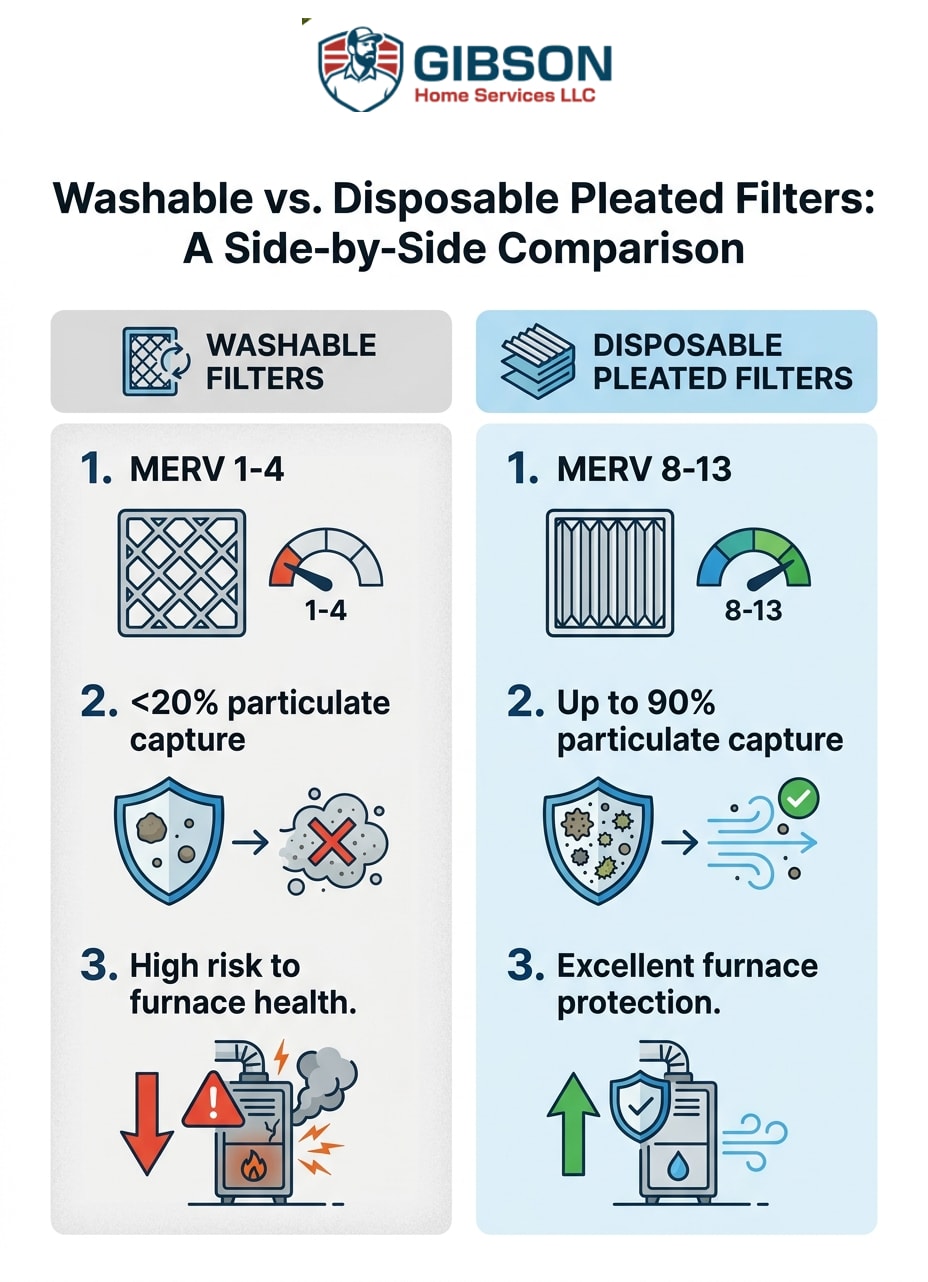
When we look at the data for homes in Delran NJ, the difference in performance is striking. Reusable washable filters typically score a MERV rating of 1 to 4. At this low level, they capture less than 20% of fine particles. They are designed to stop large debris like hair and heavy dust bunnies, but they let microscopic irritants pass right through.
In contrast, disposable pleated filters easily achieve MERV ratings of 8 to 13. These filters capture up to 90% of dust, pollen, and allergens. The secret lies in their physical design. The accordion-like folds—or pleats—create a massive amount of surface area. This allows the dense synthetic fibers to trap a high volume of microscopic particles without choking off the airflow your furnace needs to operate safely.
Side-by-Side Comparison: Washable vs. Pleated
• MERV Rating Range — Washable Filters: MERV 1 to 4 — Disposable Pleated Filters: MERV 8 to 13
• Particulate Capture — Washable Filters: Less than 20% of fine particles — Disposable Pleated Filters: Up to 90% of fine particles
• Primary Use Case — Washable Filters: Stopping large debris and hair — Disposable Pleated Filters: Trapping allergens, fine dust, and pet dander
• Limitations — Washable Filters: Poor indoor air quality protection — Disposable Pleated Filters: Requires routine replacement every 1-3 months
The Appeal and Limitations of Reusable Washable Filters
It is easy to understand the primary appeal of a reusable washable filter. For many homeowners, the idea of a one-time purchase is highly attractive. You buy the filter once, wash it out when it gets dirty, and theoretically never have to throw another fiberglass or synthetic filter into the local landfill. Reducing household waste is a noble goal, and washable filters market themselves heavily on this eco-friendly premise.
However, the physical limitations of washable filter media tell a different story. These filters rely on a combination of large woven mesh and static electricity to trap particles. Because the mesh must be wide enough to allow air to pass through a relatively small, flat surface area, it simply cannot catch small particles. The static charge helps initially, but it quickly diminishes as the filter gets coated in a fine layer of dust.
This creates a frustrating reality: trying to save the environment with a washable filter inadvertently forces you to sacrifice your indoor air quality. By the time the mid-fall heating startup (October) arrives, your home is sealed up. The specific particle sizes that easily bypass washable mesh include fine dust, pet dander, mold spores, and microscopic allergens. These irritants cycle continuously through your living space, settling on your furniture and entering your breathing zone.
Why Disposable Pleated Filters Excel During Fall Allergy Season
The transition into the heating season is notoriously difficult for allergy sufferers. The exact moment you need to turn on your furnace often aligns with a spike in airborne irritants. Identifying common seasonal triggers like ragweed, leaf mold, and lingering pollen is the first step in understanding why superior filtration matters so much right now.
When you install a high-quality pleated filter, the dense synthetic fibers actively trap these microscopic irritants before they can circulate through your ductwork. Here is how disposable pleated filters actively protect your home during this critical season:
1. Maximum Surface Area: The pleated V-shape design fits more filter material into the same one-inch slot, allowing it to catch more debris without blocking airflow.
2. Electrostatic Attraction: High-MERV pleated filters are manufactured with a permanent electrostatic charge that acts like a magnet for tiny particles, pulling ragweed and mold spores out of the air stream.
3. Consistent Performance: Because you replace them regularly, you are always relying on fresh, uncompromised filter media rather than degraded, washed-out mesh.
4. Healthier Breathing Zones: Removing up to 90% of airborne particulates directly reduces coughing, sneezing, and respiratory irritation for your family.
Unlike washable filters that lose their static charge and effectiveness over time, a fresh disposable filter operates at peak efficiency from day one. You can learn more about improving air quality and saving money with regular filter changes by making this simple swap a regular habit in Delran NJ.
Protecting Your HVAC System: How Fine Dust Impacts Furnace Longevity
While breathing clean air is a top priority, a furnace filter's primary job is actually mechanical. The filter was originally invented to protect the blower motor and the heat exchanger from incoming debris. When you view filtration through the lens of equipment protection, the dangers of low-MERV washable filters become glaringly obvious.
The Problem: Washable filters let fine dust bypass the mesh. Over the course of a long winter, this microscopic dust doesn't just disappear. It gets pulled directly into the heart of your HVAC system during the mid-fall heating startup (October) and continues accumulating for months.
The Cause: As dust bypasses the weak filter, it coats the blower motor's fan blades and acts as an insulating blanket on the heat exchanger. The critical data point here is staggering: just 1/16th of an inch of dirt buildup can drastically reduce system efficiency. This thin layer of grime forces the motor to work harder to push air, causing the system to overheat and consume significantly more energy.
The Solution: Gibson Home Services LLC provides honest, technical guidance that prioritizes the long-term health of your heating equipment over the eco-fad of low-efficiency washable filters. Preventing dust buildup with a high-MERV pleated filter is vastly superior to dealing with the aftermath. Cleaning internal blower components is not a DIY task; it requires professional heating maintenance to safely disassemble and restore the equipment. Choosing a disposable pleated filter is the smartest preventative measure you can take.
The Impact of Tightly Sealed Homes on Winter Air Quality
Modern residential construction places a heavy emphasis on energy efficiency. Today, homes are tightly sealed with advanced weatherstripping, heavy insulation, and double-pane windows to prevent heat loss during cold weather. While this is fantastic for reducing drafts, it creates a unique challenge for your indoor air quality.
Delran, NJ's cold winters force homes to remain tightly sealed for months on end. This creates a "closed-loop" effect. Without fresh outdoor ventilation coming in through open windows, your indoor air is continuously recirculated through the furnace, over and over again. Any trapped fall allergens, pet dander, cooking odors, and winter dust compound over these enclosed months if they are not properly filtered out of the airstream.
In this specific closed-loop environment, relying on a washable filter that only catches 20% of particulates means you are breathing progressively dirtier air as the winter drags on. High-efficiency disposable pleated filters are essential here. They act as the primary scrubber for your home's sealed environment, ensuring that every time the furnace cycles on, the air gets slightly cleaner rather than simply redistributing the dust.
Maintenance Realities: The Hidden Risks of Improper Filter Washing
Beyond air quality and equipment protection, there are practical, day-to-day realities of maintaining both filter types. Washable filters are often sold on the promise of low maintenance, but the actual routine required to keep them safe and functional is surprisingly rigorous.
The Washable Filter Maintenance Routine:
• Heavy Scrubbing: You cannot simply rinse a washable filter. It requires monthly hosing, scrubbing with mild detergents, and careful attention to remove grease and packed-in dust.
• Mandatory Air-Drying: This is where most homeowners run into trouble. A washable filter must be completely, 100% bone-dry before it goes back into the system. This often takes several hours of air-drying.
• The Mold Risk: If you reinstall a washable filter while it is even slightly damp, the dark, warm environment of your furnace becomes an instant breeding ground for mold and mildew. This can quickly spread spores throughout your entire house.
• System Downtime: While the filter dries, your furnace must remain off. If you run the system without a filter, you are pulling raw, unfiltered air directly into the blower motor.
Compare this exhaustive process to the 60-second routine of swapping out a disposable pleated filter. You simply slide the old one out, slide the new one in, and turn the system back on. The convenience, safety, and guaranteed performance of disposable filters heavily outweigh the perceived maintenance savings of washable alternatives, especially during the busy mid-fall heating startup (October).
Frequently Asked Questions About Winter Furnace Filters
Why is my washable filter not catching dust?
Your washable filter is likely not catching fine dust because its mesh design is too porous. Washable filters generally have a MERV rating between 1 and 4, meaning they are only built to stop large particles like hair and heavy lint. Microscopic dust, pet dander, and pollen easily bypass the wide mesh and continue circulating through your home in Delran NJ.
Are pleated filters better for allergies in winter?
Yes, pleated filters are significantly better for managing winter allergies. Because they feature dense synthetic fibers and a larger surface area, they can achieve MERV ratings of 8 to 13. This allows them to trap up to 90% of the microscopic allergens, mold spores, and dust mites that trigger respiratory issues when your home is sealed up for the winter.
Can washable filters damage my furnace?
Washable filters can indirectly damage your furnace by allowing fine dust to bypass the filter media. Over time, this dust coats the blower motor blades and the heat exchanger, acting as insulation. This buildup forces the system to run hotter and harder, which can lead to premature wear, reduced efficiency, and potential overheating issues.
What MERV rating is a washable filter?
Most standard washable electrostatic filters max out at a MERV rating of 1 to 4. This is the lowest tier of residential filtration. While they are adequate for keeping large debris out of the equipment, they do not provide meaningful indoor air quality improvements for the people living in the home.
Do washable filters restrict airflow more than pleated ones?
Washable filters generally have low initial airflow restriction, but they can become highly restrictive if they are not cleaned perfectly. Pleated filters are actually designed to balance high filtration with excellent airflow; their accordion-like folds create a massive surface area that lets air pass through easily while still trapping microscopic particles.
How often should I replace a disposable pleated filter during winter?
During the heavy winter heating season, you should inspect your disposable pleated filter every 30 days and replace it every 1 to 3 months. If you have multiple pets, suffer from severe allergies, or run your furnace continuously during cold snaps, replacing it every 30 to 45 days ensures optimal airflow and air quality.
Make the Right Choice for Your Home's Air Quality
When you look closely at the data, the decision becomes clear. While washable filters have eco-friendly intentions and appeal to our desire to reduce waste, disposable pleated filters are the undeniable winner for both human health and equipment longevity. The dense, high-surface-area design of a pleated filter is exactly what modern, tightly sealed homes need to combat indoor air pollution.
As the mid-fall heating startup (October) gets underway, now is the time to make this transition. Do not wait until the heavy winter cold sets in and your furnace is running around the clock. Upgrading your filtration strategy now ensures that your system operates safely and efficiently all season long.
If you are unsure which specific MERV rating your current HVAC system can handle without restricting airflow, it is always best to consult with local professionals. Our team is here to assess your specific needs and help you implement the right indoor air quality services. A simple filter upgrade today provides peace of mind, cleaner air, and a healthier home for your family all winter long.
Latest articles
Discover more articles

Reusable Washable Filters vs. Disposable Pleated Filters for Winter Heating
As you prepare for the fall heating startup, choosing the right furnace filter is critical. See how eco-friendly washable options stack up against the superior air quality of pleated filters.
Diagnosing a Low Voltage Short at the Furnace Control Board
When your heating system fails to start this fall, a blown 3-amp fuse is often the culprit. Learn why professionals must trace the entire thermostat wire instead of just swapping the fuse.
Where to Place Carbon Monoxide Detectors Relative to Your Gas Furnace Location
Mounting a safety alarm directly next to your heating system often triggers frustrating false alarms. See why the 15-foot rule provides genuine early warnings without the nuisance.