
Air Conditioning Repair in Cherry Hill, NJ

Stuck with an AC Breakdown? Quick, Reliable Repair Services
Experiencing uncomfortable indoor temperatures during Cherry Hill’s hot summer? Our expert team delivers rapid air conditioning repairs to restore your comfort swiftly. Contact Gibson Heating & Cooling immediately to schedule same-day diagnostics or discuss financing options for major repairs.
- Same-day service ensures your AC is up and running promptly.
- All services performed by certified and experienced technicians.
- Transparent pricing with no hidden costs.
Licensed and insured with up-to-date knowledge of local building codes for peace of mind. When your cooling system fails in the middle of a humidity wave in Cherry Hill, NJ, waiting days for a technician is not an option. Gibson Heating & Cooling provides focused, data-driven repair solutions designed to address the root cause of the malfunction rather than just treating the symptoms.
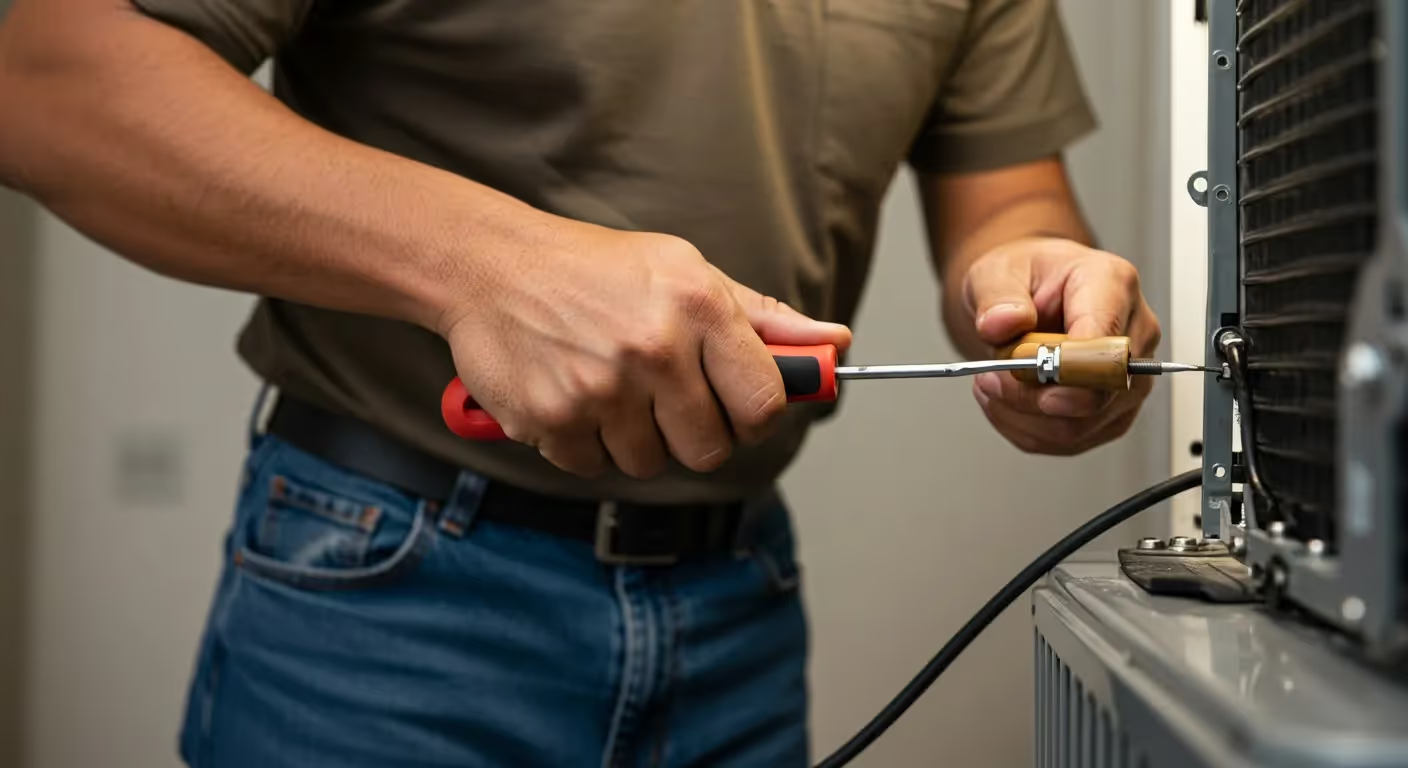
Immediate Diagnostics and System Restoration
When a technician arrives at your property, the priority is accurate fault isolation. Modern air conditioning systems are complex machines involving high-voltage electricity, pressurized refrigerant, and intricate airflow dynamics. A generic "tune-up" is insufficient when a system has ceased to function. The goal of a service visit is to identify exactly which component has failed and execute a repair that restores factory specifications.
Comprehensive diagnostics cover the entire cooling cycle. This includes inspecting the thermostat communication, the electrical disconnect, the condensing unit outside, and the air handler inside. technicians look for specific failure points that are common in this region due to weather patterns and system age.
.avif)
Common Failure Points Addressed
- Refrigerant Leaks: Low refrigerant levels result in ice buildup on the evaporator coil and a lack of cool air. Finding and repairing the leak is necessary before recharging the system; simply adding more refrigerant does not solve the underlying issue.
- Electrical Component Failure: Capacitors, contactors, and relays regulate the electrical flow to the compressor and fans. These components degrade over time due to heat stress and voltage fluctuations, leading to hard starts or complete system silence.
- Compressor Malfunctions: The compressor is the heart of the system. Issues here often manifest as loud banging noises, "hard starting," or tripping circuit breakers immediately upon startup.
- Condensate Drain Blockages: Algae and sediment can clog the drain line, causing the drain pan to overflow. Modern systems have safety switches that shut the unit down to prevent water damage, resulting in a system that refuses to turn on.
- Frozen Evaporator Coils: Caused by airflow restrictions (dirty filters) or low refrigerant, a frozen coil blocks heat transfer. The system must be thawed and the airflow issue corrected before operation can resume.
The Scope of Repair
A standard repair appointment includes a thorough examination of these components. Once the issue is isolated, the technician provides a clear explanation of the failure, the required parts, and the timeline for restoration. Most common parts, such as capacitors, hard start kits, and fan motors, are often stocked on the service vehicle to facilitate immediate restoration of cooling.
The Technical Approach to Resolving Air Conditioning Failures
Professional repair follows a strict protocol to ensure safety and system longevity. Unlike minor maintenance, repair work often involves handling hazardous materials and high voltage. The process is linear and transparent, ensuring that the homeowner understands the progression from diagnosis to functional system.
- System Evaluation: The process begins with a conversation about the symptoms—noises, smells, or cooling patterns. The technician then uses gauges to measure system pressures (suction and liquid lines) and multimeters to test voltage and amperage across motors and the compressor.
- Fault Isolation and Quotation: Once the data is gathered, the specific failure is identified. A quote is generated detailing the cost of the part and the labor required. This occurs before any wrench is turned, ensuring financial transparency.
- Execution of Repair: Upon approval, the technician performs the repair. This may involve brazing copper lines to seal leaks, wiring in new electrical components, or replacing a seized fan motor. During this phase, power is disconnected at the panel to ensure safety.
- System Testing and Validation: Replacing the part is not the final step. The system is run through a full cycle to verify performance. Technicians measure "superheat" and "subcooling" to ensure the refrigerant charge is balanced. Airflow is checked to verify the temperature split (the difference in temperature between supply and return air) falls within the manufacturer's specified range (typically 18–22 degrees Fahrenheit).
- Site Cleanup and Reporting: The work area is cleaned, and a detailed service report is provided. this report outlines what was done, the current status of the system, and any recommendations for future care.
Determining the Viability of Repair Versus System Replacement
Homeowners often face the difficult decision of whether to invest in a repair or opt for a full system replacement. This decision should be based on mathematical and technical realities rather than emotional pressure. There are specific thresholds where repair becomes economically unwise.
Gibson Heating & Cooling assists in navigating this decision by analyzing four main factors: the age of the equipment, the cost of the repair, the frequency of breakdowns, and energy efficiency.
The 50% Rule
A widely accepted industry standard is the 50% rule. If the cost of the repair approaches or exceeds 50% of the value of a new system (or 50% of the cost of a new unit adjusted for the age of the current one), replacement is generally the better financial path. For example, spending $2,000 to replace a compressor on a 12-year-old unit is rarely justifiable because other components are likely to fail soon.
Refrigerant Type and Availability
The type of refrigerant your system uses is a major factor. Systems manufactured prior to 2010 likely use R-22 (Freon), which has been phased out and is exponentially expensive to source. If an older R-22 system develops a major refrigerant leak, the cost to locate the leak, repair it, and recharge the system often rivals the cost of a down payment on a modern, high-efficiency system. Newer systems use R-410A or A2L refrigerants, which are compliant with environmental regulations and cheaper to service.
Frequency of Breakdowns
"Nickel and diming" refers to a situation where a homeowner pays for multiple minor repairs over a short period. If a system has required three or more repairs in the last two years, reliability has been compromised. Continued investment in a failing asset yields diminishing returns.
Efficiency and Utility Bills
Older units typically have a Seasonal Energy Efficiency Ratio (SEER) of 10 or 12. Modern standards require a minimum of SEER2 13.4 in the North, with many units exceeding SEER 20. Upgrading from an old 10 SEER unit to a 16 SEER unit can reduce cooling costs by significant margins. If the repair is costly and the current monthly energy bills are high, the return on investment (ROI) for a new system may be realized in just a few years through energy savings alone. View current promotions on new systems.
Navigating Local Climate and Compliance in Cherry Hill
Operating an air conditioning system in Camden County requires understanding specific environmental stressors. The region experiences distinct seasonality that impacts how AC units perform and degrade over time.
Humidity Management
The local climate is characterized by high humidity levels in the summer. An air conditioner does not just lower temperature; it dehumidifies the air. If a unit is short-cycling (turning on and off too quickly due to a faulty thermostat or oversized compressor), it will fail to remove moisture. This leads to a clammy indoor environment and promotes mold growth in ductwork. Repair services often involve adjusting blower speeds or thermostat settings to prioritize dehumidification, ensuring the home remains dry and comfortable.
Cottonwood and Debris
Local vegetation, particularly cottonwood and pollen, can wreak havoc on outdoor condensing units. The condenser coil needs to breathe to release heat. When these coils become matted with local debris, the compressor runs hotter and draws more amperage, leading to premature failure. Repair visits frequently reveal that a "broken" AC is simply a dirty one that has tripped on high-head pressure.
Permits and Regulations
When repairs escalate to major component replacements or full system change-outs, adherence to local building codes is mandatory. The township may require permits for specific types of HVAC work, particularly those involving electrical modifications or gas line handling (for combined HVAC units). Professional service providers handle the logistical burden of ensuring all work complies with local safety standards, preventing issues during future home sales or inspections.
Voltage Fluctuations
Summer storms in the region can cause power surges or brownouts. These fluctuations can damage sensitive electronic control boards in modern AC units. Repair technicians often recommend or install surge protectors specifically designed for HVAC equipment to prevent instant frying of circuit boards during thunderstorm season.
Why Professional Intervention Matters for Long-Term Performance
Attempting DIY repairs on central air conditioning systems often leads to further damage and safety hazards. The complexity of modern HVAC equipment demands specialized tools and training that go beyond general handyman skills.
Precision Tools and Diagnostics
Accurate diagnosis requires more than guesswork. Technicians utilize digital manifolds that provide real-time pressure and temperature readings accurate to the tenth of a degree. Micron gauges are used to measure vacuum depth during repairs to ensure no moisture remains in the lines—moisture that mixes with oil to form acid, which eats away at windings. An infrared camera may be used to detect duct leakage or hot spots in the electrical panel. These tools allow for data-backed decisions rather than trial and error.
Warranty Preservation
Most equipment manufacturers strictly void warranties if repairs are not performed by a licensed HVAC professional. A compressor carries a multi-year warranty, but claiming that warranty requires proof of professional service. Engaging a certified provider ensures that if a part fails prematurely, the manufacturer’s warranty remains valid, saving the homeowner significant costs on parts.
Safety Protocols
AC repair involves exposure to high-voltage electricity (240V) and refrigerants that can cause frostbite or asphyxiation if mishandled. Professionals are trained in Lockout/Tagout (LOTO) procedures to ensure zero energy state during repair. They also possess EPA Section 608 certification, which is legally required to handle, recover, and recycle refrigerants. This ensures that the repair is not only effective but also safe for the household and the environment.
Comprehensive System Analysis
A professional looks at the system holistically. A blown capacitor might be the immediate failure, but a professional will check why it blew. Is the condenser fan motor dragging? Is the coil dirty causing high heat load? Fixing the symptom without addressing the cause leads to repeat failures. Professional intervention focuses on reliability, ensuring the repair holds up against the remaining heat of the summer season.
Get Your Home Back to Cool, Safe, and Comfortable: Call Today
Restoring your home's comfort requires immediate, decisive action from qualified professionals. Don't let a breakdown compromise your safety or quality of life during the peak of summer.
Ready to restore your cool? Schedule your expert repair service now.
our process
Our heating Process Section
01
Thorough Diagnosis/Consultation
We start with a comprehensive assessment of your needs.
02
Upfront & Honest Pricing
We provide a clear, detailed estimate before any work begins.
03
Professional
Schedule
Our certified technicians perform the work to the highest standards.
04
Final Inspection & Clean-up
We ensure everything is working perfectly and leave your home clean.
testimonials
The Customer Experience:
Where Comfort Meets Reliability.
Trusted by Homeowners Across Burlington County.
