
Air Conditioning Installation in Marlton, NJ

Restore Comfort Immediately With Reliable Air Conditioning Installation
Dealing with a complete system failure during the peak of a Marlton summer creates immediate stress and discomfort for your household, risking safety and sleep quality. Schedule your consultation today by calling our office or applying for financing to secure a cooler home tonight.
- Technicians available 24/7 for emergency installations to prevent prolonged heat exposure.
- Same-day service ensures your new AC unit is up and running in no time.
- Flexible financing options to help manage installation costs without delaying necessary comfort.
All installations are fully licensed, with extended warranties and attractive financing available to ensure long-term peace of mind.
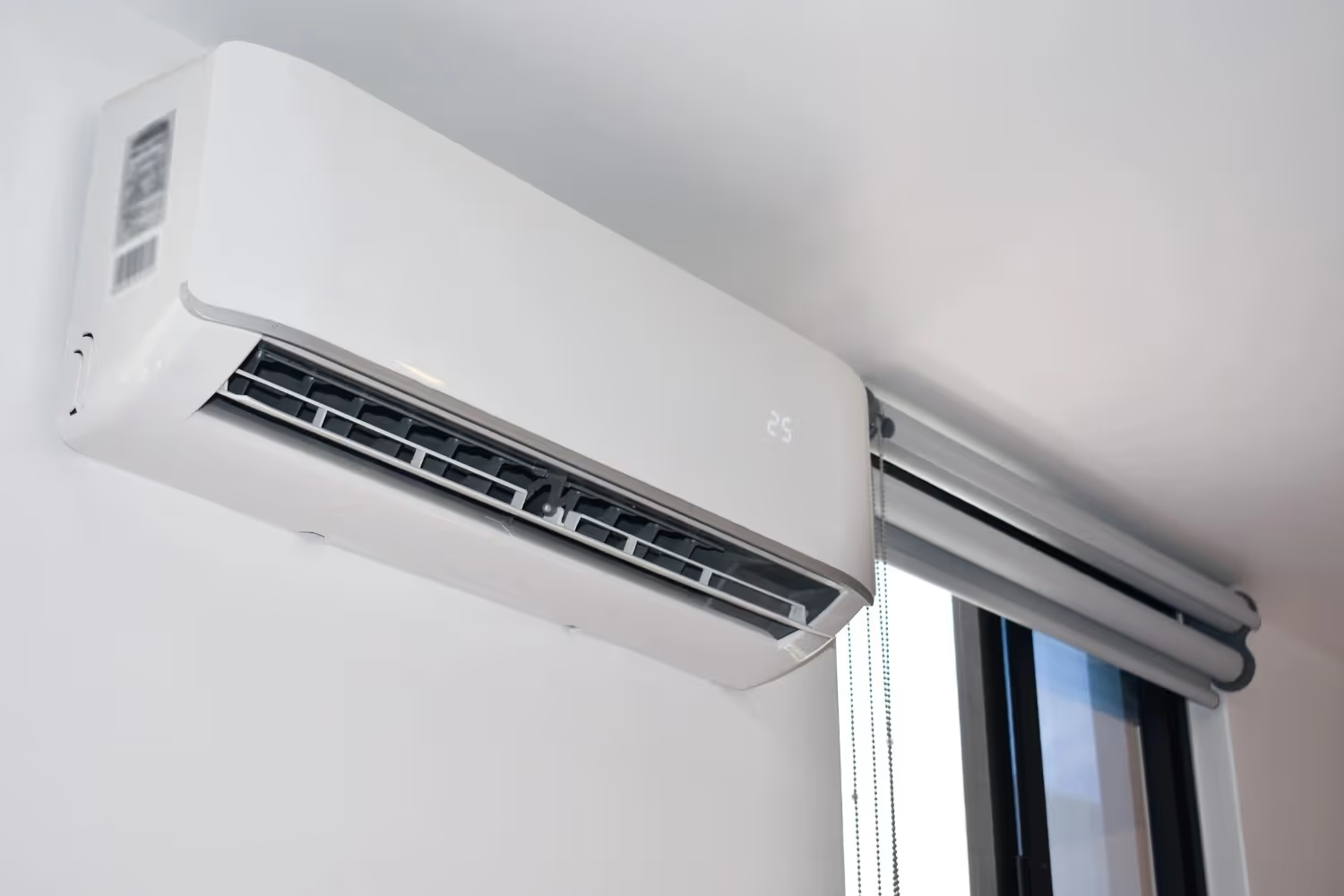
Today's Air Conditioning Services: What You Can Expect
When you invest in a new air conditioning system, you are purchasing more than just a piece of machinery; you are securing a comprehensive climate control solution designed to last for the next 15 to 20 years. Modern installation services in Marlton go far beyond simply swapping out an old box for a new one. The focus is on integrating a high-efficiency system with your home’s existing infrastructure to maximize airflow, reduce humidity, and lower energy consumption.
A professional installation creates a closed-loop environment where temperature and air quality are strictly controlled. This process begins with a complete evaluation of the home's thermal characteristics. Factors such as window orientation, insulation levels, and square footage dictate the specific cooling load required. If a unit is too small, it will run continuously without reaching the set temperature. If it is too large, it will "short cycle," turning on and off rapidly, which fails to remove humidity and wears out components prematurely.
The scope of work for a standard installation typically covers several critical components. This includes the removal and environmentally safe disposal of the existing condenser and evaporator coil. Technicians also inspect and modify the transition ductwork to ensure the new unit fits seamlessly. The refrigerant lines are either flushed or replaced depending on the condition and compatibility with modern refrigerants like R-410A or the newer A2L alternatives. Finally, the electrical disconnect box and whip are updated to meet current safety codes, ensuring reliable power delivery to the system.
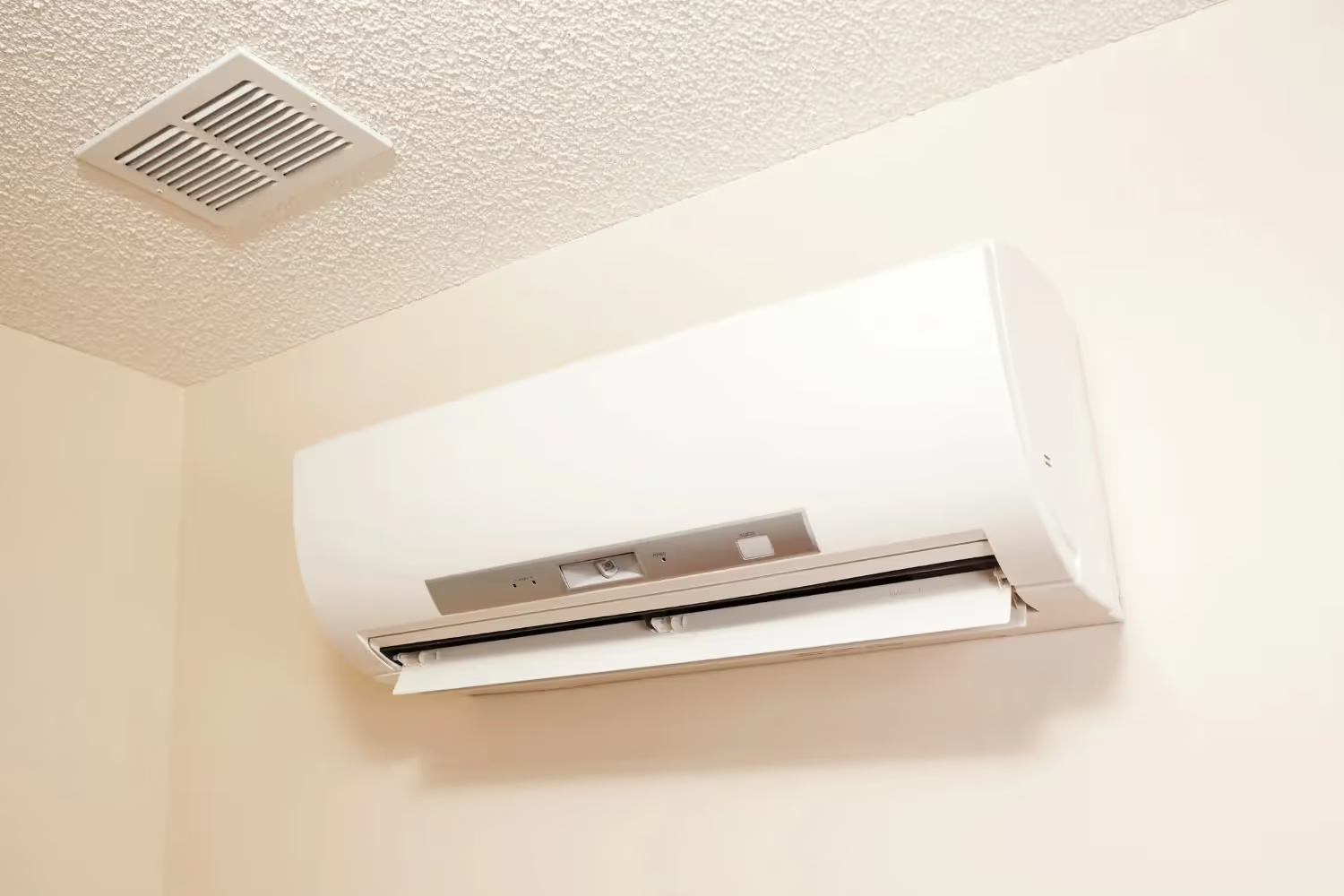
Understanding the Installation Process: Step-by-Step
A systematic approach to installation ensures that every variable is accounted for, minimizing the risk of future breakdowns. Professional installers follow a rigid protocol to guarantee the system operates at its rated efficiency from day one.
- Site Assessment and Engineering: The process starts with a technical assessment. Installers verify the structural integrity of the pad or mounting bracket where the outdoor unit will sit. Inside, they measure the plenum and return drops to ensure proper static pressure. This stage often involves a Manual J load calculation, which is the industry standard for determining the precise cooling needs of a specific structure.
- Protection of Property: Before any heavy lifting begins, the workspace is prepped to protect flooring and surrounding areas. Drop cloths are laid down, and technicians wear shoe covers. The goal is to leave the home exactly as it was found, minus the heat. Safety switches are turned off, and the electrical supply is verified dead before disconnection.
- Removal of Old Equipment: The existing refrigerant must be recovered into a specialized tank; venting it into the atmosphere is illegal and environmentally harmful. Once the system is empty, the old condenser and indoor coil are disconnected. Technicians then physically remove the heavy equipment, often navigating tight basements or attics typical of New Jersey architecture.
- Positioning and Connection: The new indoor coil is set in place and sealed to the furnace or air handler to prevent air leaks. The outdoor condenser is positioned on a level pad to ensure proper oil return to the compressor. Copper line sets are brazed together using nitrogen to prevent oxidation inside the pipes, a critical step for the longevity of modern valves.
- Evacuation and Charging: Once connected, the system is pressure-tested with nitrogen to check for leaks. A vacuum pump then removes all moisture and air from the lines, measuring down to 500 microns. Only after a perfect vacuum is achieved is the refrigerant released into the system. The charge is then fine-tuned based on "subcooling" and "superheat" metrics to match the manufacturer's exact specifications.
- Final Commissioning and Training: The system is powered on and tested across all modes. Technicians verify that the thermostat is communicating correctly and that the temperature drop across the coil is sufficient. Finally, the homeowner is walked through the operation of the new thermostat, filter maintenance schedules, and warranty registration procedures.
Repair vs. Replacement: Making the Right Choice for Your AC
Deciding between repairing an aging unit and investing in a replacement is a purely financial and logistical calculation. Homeowners often grapple with the sunk cost fallacy, pouring money into a dying system in hopes of extending its life by just one more season. However, there are clear benchmarks that indicate when replacement is the smarter economic move.
- The 50% Rule: A widely accepted guideline in the HVAC industry is the 50% rule. If the cost of the necessary repair approaches 50% of the value of a new system, replacement is the better option. For example, replacing a compressor on a 12-year-old unit is rarely worth the investment, as other components like the fan motor or capacitor are likely to fail soon after.
- Age and Refrigerant Type: Air conditioners generally have a lifespan of 10 to 15 years. If a unit is over 10 years old and requires a major repair, the return on investment diminishes rapidly. Furthermore, older systems utilize R-22 (Freon), which has been phased out. The cost of R-22 has skyrocketed, making even minor refrigerant leaks prohibitively expensive to fix. Modern systems use more environmentally friendly and affordable refrigerants.
- Frequency of Breakdowns: If you find yourself calling for service multiple times a year, the system has become a liability. Gibson Heating & Cooling recommends evaluating the total cost of ownership. Recurring repair bills, combined with the higher energy bills associated with an inefficient unit, often exceed the monthly cost of financing a new, high-efficiency installation.
- Efficiency Gains (SEER2 Ratings): New regulations have introduced SEER2 (Seasonal Energy Efficiency Ratio 2), a more rigorous testing standard. Replacing a unit that is just 10 years old (often 10-12 SEER) with a modern 16+ SEER2 system can result in significant energy savings. These savings can effectively subsidize a portion of the monthly payment for the new equipment.
Navigating Local Climate Demands and Permit Regulations
The climate in this region presents specific challenges that generic installation practices fail to address. We experience hot, humid summers with temperatures frequently reaching the upper 80s and low 90s, combined with significant moisture in the air. This requires an air conditioning system that excels at dehumidification, not just cooling.
- Humidity Control is Critical: In Marlton, an oversized unit will cool the air too quickly and shut off before it has a chance to pull moisture from the home. This leads to a cold, clammy environment that promotes mold growth. Proper sizing ensures the unit runs long enough to cycle air through the evaporator coil, effectively removing humidity and improving indoor air quality.
- Local Permitting and Inspections: Installation work involves electrical connections and gas lines (if part of a furnace system), which requires adherence to local building codes. Evesham Township and surrounding municipalities require permits for HVAC replacements to ensure safety standards are met. This process protects the homeowner, ensuring that the electrical load is safe for the panel and that the installation meets all fire and safety codes.
- Seasonal Timing: Waiting until the first heatwave of July to schedule an installation often results in delays due to high demand. The ideal time to address replacement is during the mild spring months or early summer. However, when emergency replacement is necessary during peak season, understanding the local supply chain and having access to local distributors ensures that the specific equipment needed for your home is acquired quickly.
Essential Components of High-Efficiency Systems
Modern air conditioning systems are composed of several advanced technologies that work in unison. Understanding these components helps homeowners appreciate the value of a professional installation.
- Variable-Speed Compressors: Unlike traditional single-stage compressors that run at 100% capacity or zero, variable-speed units can adjust their output in tiny increments. This allows the system to maintain a precise temperature within a fraction of a degree, running at lower speeds to save energy and reduce noise.
- Smart Thermostats: The brain of the system, modern thermostats, do more than just set a temperature. They monitor humidity levels, learn your schedule, and can be controlled remotely via smartphone. Some advanced models can even alert you to potential maintenance issues before the system fails.
- High-Efficiency Filtration: Protecting the equipment and the homeowners' health, advanced filtration systems capture dust, pollen, and pet dander. Higher MERV ratings on filters restrict more particles but also require a system designed to handle the increased static pressure.
Why Choose Us: Proof and Promises
Selecting the right contractor is as important as selecting the right equipment. The quality of the installation dictates 70% of the system’s efficiency and longevity. A top-tier unit installed poorly will perform worse than a mid-range unit installed perfectly.
- Licensed and Insured Professionals: Every technician holds the necessary state certifications and undergoes continuous training to stay updated on the latest technology and code requirements. Liability insurance and workers' compensation coverage protect the homeowner from any liability during the project.
- Transparent Pricing and Financing: Decisions regarding home comfort should be made based on long-term value, not immediate sticker shock. Clear, upfront pricing eliminates surprises. Financing options allow homeowners to invest in higher-efficiency systems that save money on utility bills, offsetting the initial investment over time.
- Warranty and Support: A robust warranty protects the investment. This includes manufacturer warranties on parts (often 10 years) and labor warranties provided by the installer. This guarantees that if an issue arises due to workmanship or a factory defect, it is resolved without additional cost to the homeowner.
Securing your home against the summer heat requires a partner who understands both the technical requirements of modern HVAC systems and the specific challenges of the local climate. Don't wait for the next heatwave to overwhelm your system.
Dependable Cooling Solutions for Marlton Homes
Securing your home against extreme summer heat requires a partner with proven technical expertise and deep knowledge of local climate conditions. From emergency replacements to high-efficiency upgrades, Gibson Heating & Cooling delivers reliable installations designed for long-term comfort and energy savings. Do not wait for the next heatwave to compromise your comfort—schedule your professional air conditioning installation assessment today and explore current savings.
Secure your comfort today—contact us now to schedule your air conditioning installation assessment.
our process
Our heating Process Section
01
Thorough Diagnosis/Consultation
We start with a comprehensive assessment of your needs.
02
Upfront & Honest Pricing
We provide a clear, detailed estimate before any work begins.
03
Professional
Schedule
Our certified technicians perform the work to the highest standards.
04
Final Inspection & Clean-up
We ensure everything is working perfectly and leave your home clean.
testimonials
The Customer Experience:
Where Comfort Meets Reliability.
Trusted by Homeowners Across Burlington County.
