
AC Service in Evesham, NJ

AC Failure During a Heatwave Requires Immediate Professional Attention
When your air conditioner stops working in the middle of a sweltering heatwave, the humidity and rising temperatures inside your home can become dangerous quickly, requiring urgent intervention. Residents in Evesham, NJ know that a breakdown isn’t just an inconvenience; it disrupts your life and threatens your comfort. Contact us now to schedule an emergency diagnostic or click here to view available financing options for major repairs.
You do not have to wait days for a resolution when the heat index rises.
- Same-day service availability ensures your home returns to a safe temperature quickly.
- Certified technicians arrive fully stocked to perform reliable repairs on the first visit.
- 24/7 support means we are available to assist whenever your cooling system fails.
- Licensed and fully insured—your peace of mind and home safety are our priority.

Comprehensive Air Conditioning Services Explained
When you request service for your cooling system, the goal is to restore efficiency and comfort immediately. Professional AC service encompasses more than just changing a filter; it involves a deep analysis of the thermodynamic and electrical systems that keep your home cool. In an area like Evesham, where humidity levels can saturate the air, your air conditioner acts as both a cooling unit and a dehumidifier. If one component fails, the entire system struggles, leading to higher energy bills and uneven cooling.
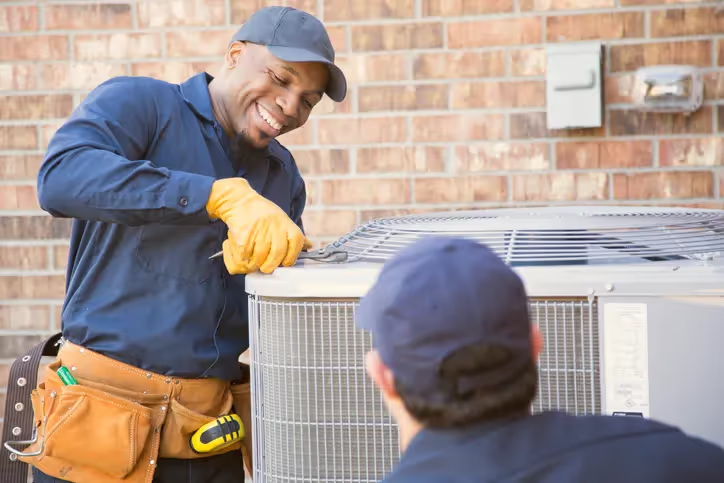
Diagnostic and Repair Scope
The initial phase of any service call involves pinpointing the root cause of the failure. Symptoms often manifest as weak airflow, warm air blowing from vents, or strange noises, but the causes are often internal.
- Electrical Component Analysis: Technicians inspect capacitors, contactors, and relays. These small components control the flow of electricity to the compressor and fans. A failed capacitor is a common issue that prevents the outdoor unit from starting.
- Refrigerant Level Checks: Low refrigerant indicates a leak, as AC units consume refrigerant in a closed loop. Simply "topping off" the system is not a permanent solution. The service includes locating the leak, repairing the line set or coil, and recharging the system to manufacturer specifications.
- Compressor Evaluation: The compressor is the heart of the system. Technicians measure the amperage and voltage to ensure it is not overheating or struggling to pump refrigerant.
- Airflow and Fan Inspection: The blower motor and condenser fan must operate at specific speeds. If a motor is dragging or a belt is loose, airflow drops, causing the evaporator coil to freeze.
Preventative Maintenance and Tuning
Beyond emergency repairs, comprehensive service includes preventative tuning designed to extend the lifespan of the unit. This is critical for homeowners who want to avoid the "open now" frantic searches during the peak of summer.
- Coil Cleaning: Dirty condenser coils cannot release heat effectively. Cleaning them restores the system's ability to reject heat outdoors, lowering amp draw and electricity usage.
- Drain Line Clearing: The condensate drain removes moisture pulled from the air. Over time, algae and sediment can clog this line, leading to water damage. Service includes flushing and treating this line.
- Thermostat Calibration: Ensuring your thermostat reads the indoor temperature accurately prevents short-cycling, where the unit turns on and off too frequently.
The Air Conditioning Service Process
Understanding what happens during a service visit helps homeowners prepare and eliminates uncertainty. Gibson Heating & Cooling follows a structured, logical process to ensure every repair is executed correctly and safely.
- Initial Assessment: Upon arrival, the technician will ask about the specific symptoms you have noticed, such as specific noises, smells, or timing of the breakdown. This history helps narrow down the potential issues before tools are even applied.
- System Shutdown and Inspection: For safety, power is disconnected. The technician removes access panels to visually inspect wiring, control boards, and mechanical parts.
- Diagnostic Testing: Using multimeters and pressure gauges, the technician tests the electrical continuity and refrigerant pressures. This data is compared against the manufacturer's engineering data plate to identify deviations.
- Presentation of Findings: Once the issue is isolated, the technician explains the problem clearly. You receive a report detailing which part failed, why it failed, and the options for repair. This step typically includes a transparent quote for the work required.
- Execution of Repair: With your approval, the repair is performed. This may involve soldering new connections, replacing a motor, or flushing the system.
- System Testing and Validation: After the repair, the system is restarted. The technician monitors the system for a full cycle to ensure the temperature drop across the coil is correct (typically 15 to 20 degrees difference between return and supply air) and that the unit cycles off when the thermostat is satisfied.
- Site Cleanup: The workspace is cleaned, and old parts are removed from the premises, leaving your home exactly as it was found, just cooler.
Deciding Between AC Repair and Replacement
One of the most difficult decisions homeowners face is whether to pour money into an aging unit or invest in a modern replacement. This decision should be based on data and financial logic rather than emotion. While immediate repair is often the cheapest short-term option, it is not always the most economical choice over a three-to-five-year horizon.
The 5000 Rule
A common industry standard used to determine the viability of a repair is the "$5000 Rule."
- Multiply the age of your equipment (in years) by the estimated cost of the repair.
- If the total exceeds $5,000, replacement is generally the wiser investment.
- For example, if you have a 12-year-old unit and the repair is $500, the score is 6,000. In this case, the unit has likely reached the end of its useful life, and money spent on repair is diminishing returns.
Frequency of Breakdowns
If you find yourself requiring service multiple times in a single season, the system is signaling critical failure. Constant repairs indicate that the internal components are wearing out simultaneously. While you might fix a capacitor today, the compressor or fan motor may fail next month. Investing in a new system eliminates the unpredictability of an unreliable unit.
R-22 vs. R-410A vs. R-454B
Refrigerant type plays a massive role in the repair decision. Older units utilize R-22 (Freon), which has been phased out and is exorbitantly expensive to source. If your R-22 system has a refrigerant leak, replacement is almost always the correct path, as repairing and recharging an obsolete system is financially impractical. Newer systems use more environmentally friendly refrigerants that are cheaper to service and more energy-efficient.
Efficiency and Energy Costs
Modern air conditioners have significantly higher SEER2 (Seasonal Energy Efficiency Ratio) ratings compared to units installed just a decade ago. A 10-year-old unit may operate at 10 SEER, while new base models start around 13-14 SEER, with high-efficiency models exceeding 20 SEER. Replacing an old unit can result in immediate reductions in monthly electrical bills, which helps offset the installation cost over time.
Local Considerations for AC Systems
Operating an HVAC system in Evesham requires attention to specific regional factors. The local climate and regulations dictate how systems should be maintained and when they should be upgraded.
Dealing with High Humidity
The humid subtropical climate means that your AC has to work harder to remove moisture from the air than it does to lower the temperature. Systems that are oversized for the home will cool the air too quickly and shut off before they have removed the humidity, leading to a clammy, uncomfortable indoor environment. Proper sizing and service ensure the unit runs long enough to dehumidify effectively.
Permitting and Code Compliance
In New Jersey, significant HVAC work, including the installation of new equipment and sometimes major repairs involving gas lines or electrical circuits, requires adherence to local building codes.
- Permits ensure that the installation meets safety standards regarding electrical connections, exhaust venting, and condensate disposal.
- Professional technicians handle the acquisition of necessary permits and coordinate inspections with the township to ensure your home remains compliant.
- Unpermitted work can cause issues when selling a home or filing insurance claims in the event of damage.
Utility Rebates and Incentives
Programs such as the New Jersey Comfort Partners or local utility incentives often provide rebates for upgrading to high-efficiency equipment. These programs change periodically and have strict eligibility requirements regarding the SEER rating and the certification of the installer. Professional service providers stay updated on these opportunities to help homeowners maximize their savings during a replacement.
Seasonality and Scheduling
Demand for AC service spikes dramatically as soon as the first heatwave hits late spring.
- Scheduling preventative maintenance in early spring ensures you are not caught in the rush.
- Winter maintenance is also vital for heat pumps, which provide cooling in summer and heating in winter.
- Snow and ice can impact outdoor units; ensuring they are clear of debris and vegetation is a year-round responsibility for homeowners in this region.
Why Choose Professional HVAC Technicians
While many home repairs can be DIY projects, air conditioning service requires specialized tools, handling of hazardous materials, and high-voltage electrical knowledge. Attempting to service an AC unit without training can lead to personal injury, voided warranties, and further damage to the system.
Safety and specialized Tooling
Technicians utilize gauges to measure high-pressure refrigerant lines and multimeters to test high-voltage circuits. Handling refrigerant requires EPA certification to ensure it is not vented into the atmosphere, which is a violation of federal law. Furthermore, identifying gas leaks or carbon monoxide risks in hybrid systems is strictly the domain of trained professionals.
Warranty Protection
Most equipment manufacturers require proof of professional maintenance to honor parts warranties. If a compressor fails under warranty but the homeowner cannot prove the system was maintained by a licensed contractor, the manufacturer may deny the claim. Professional service ensures a paper trail that protects your investment.
Accurate Diagnostics
Misdiagnosis is the most expensive part of amateur repair. Replacing a part that isn't broken because it "looks" like the problem wastes money and delays the solution. Professionals understand the sequence of operation and test components under load to verify the actual source of the failure.
Long-Term Reliability
A professional repair is meant to last. Technicians do not just swap parts; they inspect the system to understand why the part failed. If a capacitor blew because the condenser coil was dirty, replacing the capacitor without cleaning the coil will only result in another blown capacitor shortly. Holistic repair ensures the longevity of the entire system.
Call Us Now!
When your cooling system demands attention, you need a partner who understands the urgency of the situation and the technical complexities of modern HVAC equipment. Gibson Heating & Cooling provides the expertise required to navigate repair versus replacement decisions, ensuring your home remains cool and efficient regardless of the weather outside.
Don’t let a broken AC compromise your comfort—schedule your service now.
our process
Our heating Process Section
01
Thorough Diagnosis/Consultation
We start with a comprehensive assessment of your needs.
02
Upfront & Honest Pricing
We provide a clear, detailed estimate before any work begins.
03
Professional
Schedule
Our certified technicians perform the work to the highest standards.
04
Final Inspection & Clean-up
We ensure everything is working perfectly and leave your home clean.
testimonials
The Customer Experience:
Where Comfort Meets Reliability.
Trusted by Homeowners Across Burlington County.
