
Ventilation Services in Medford, NJ

Eliminate Stale Air and Moisture Buildup in Your Home
Stagnant air, persistent odors, and weeping windows often indicate that your home lacks the necessary airflow to maintain a healthy environment. In Medford’s variable climate, where humid summers clash with cold winters, relying solely on open windows is rarely an efficient or effective solution for indoor air quality. Gibson Heating & Cooling provides comprehensive ventilation services to mechanically regulate airflow, ensuring your home breathes correctly without sacrificing energy efficiency. Call us today to schedule a comprehensive ventilation assessment or apply for financing.
A proper ventilation strategy does more than just move air; it protects your home’s structure and your family’s health. Without adequate exchange, pollutants accumulate, and excess moisture can lead to mold growth in attics, basements, and living spaces. Our team addresses these issues directly through:
- Quick assessment and optimization of your existing ductwork and exhaust systems.
- Installation of high-performance ventilation solutions, such as ERVs and HRVs, adapted to Medford’s weather.
- Reduced energy costs and improved air quality all year round by recovering energy from exhausted air.
We are fully licensed and insured, with flexible financing available to fit your budget.
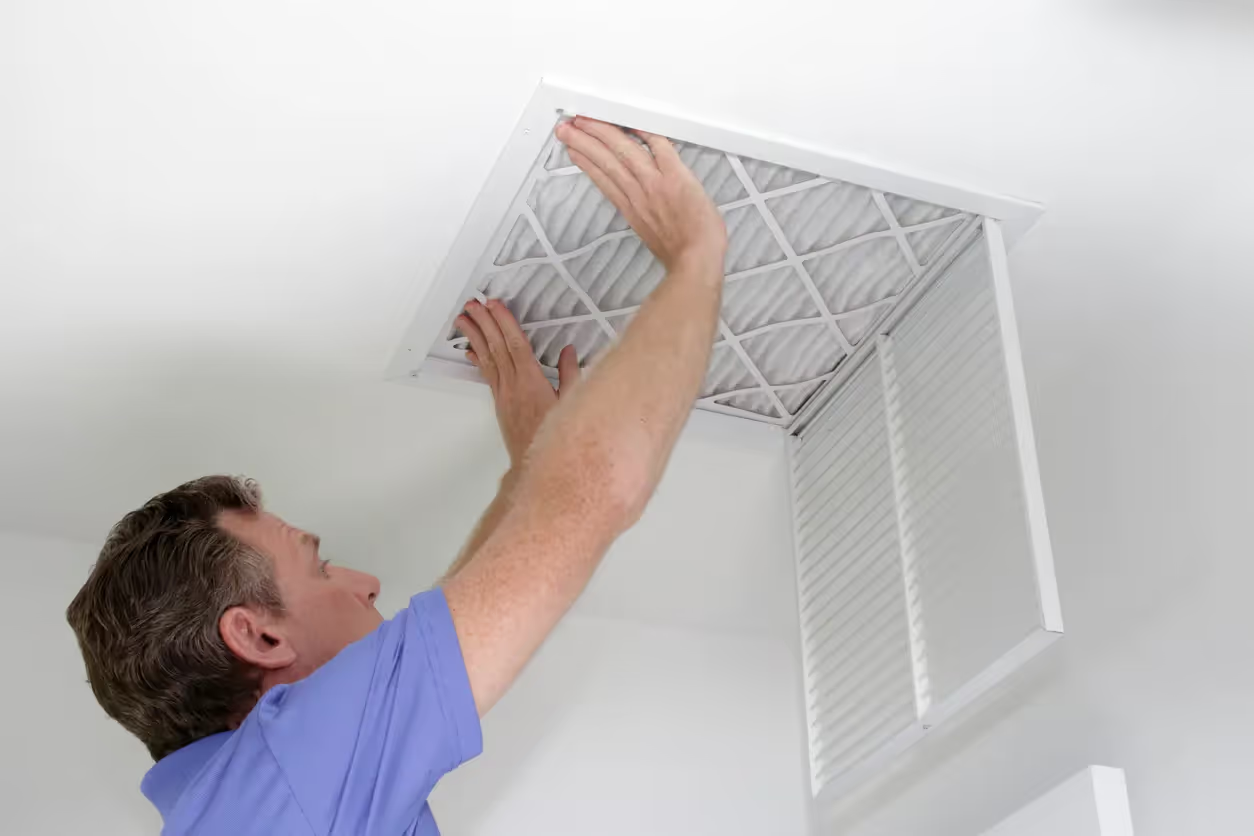
Comprehensive Ventilation Solutions for Healthy Interiors
Modern homes are built tighter to conserve energy, but this airtight construction often traps pollutants, allergens, and humidity inside. Effective ventilation is the mechanical lung of your property. We provide targeted installations and system integrations designed to expel stale air and bring in fresh, filtered air in a controlled manner.
Our services cover the full spectrum of residential ventilation needs:

Energy Recovery Ventilators (ERVs) and Heat Recovery Ventilators (HRVs)
For homeowners in Medford, the most efficient way to ventilate is through balanced mechanical systems. ERVs and HRVs replace stale indoor air with fresh outdoor air. The critical advantage of these systems is their ability to transfer thermal energy between the outgoing and incoming air streams:
- HRVs: These systems transfer heat from the stale exhaust air to the fresh incoming air during winter, pre-warming it so your furnace works less.
- ERVs: These transfer both heat and moisture. In our humid summers, an ERV transfers moisture from the incoming humid air to the outgoing dry air, helping keep humidity levels low inside your home. This is often the preferred choice for the local climate to combat summer stickiness.
Whole-House Fans
A whole-house fan is installed in the ceiling of the uppermost floor, venting into the attic. It pulls cool, outside air into the home through open windows and pushes hot indoor air out through attic vents. This is a powerful cooling solution for transitional seasons when the air conditioning does not need to run, rapidly lowering the thermal mass of the house in the evening.
Attic Ventilation Systems
Proper attic airflow is essential for the longevity of your roof. Without it, heat builds up in the summer, baking shingles, while moisture builds up in the winter, causing mold or ice dams. We install and service:
- Ridge vents that run along the peak of the roof.
- Soffit vents that act as intakes under the eaves.
- Powered attic fans (gable or roof-mounted) that actively exhaust superheated air.
Spot Ventilation (Bath and Kitchen Exhaust)
Localized moisture control is critical in high-humidity zones like bathrooms and kitchens. We install high-CFM, low-sone exhaust fans that remove moisture at the source before it can migrate to other parts of the home. Proper ducting to the exterior—never just into the attic—is a strict standard we follow to prevent moisture damage in your roof structure.
The Installation and Integration Process
Implementing a new ventilation system requires more than cutting a hole in the wall. It involves calculating the volume of the home, understanding existing HVAC pressures, and designing a pathway for air that maximizes efficiency. Our technicians follow a rigorous protocol to ensure every installation meets building science standards.
Assessment and Load Calculation
We begin by measuring the square footage and volume of your living space. We assess the tightness of your home envelope. If the home is too leaky, mechanical ventilation may need to be paired with air sealing. If the home is tight, we calculate the precise Cubic Feet per Minute (CFM) of airflow required to meet ASHRAE standards for air changes per hour.
System Selection and Design
Based on the assessment, we select the appropriate unit. For an ERV or HRV integration, we design the connection to your existing central HVAC ductwork. This ensures that fresh air is distributed evenly throughout the house rather than dumping into a single room. For dedicated exhaust or attic systems, we map out the shortest and most direct route for duct runs to minimize static pressure and maximize airflow.
Installation and Ductwork
Our install team mounts the units securely to minimize vibration and noise. We run rigid or semi-rigid ducting, ensuring all joints are sealed with mastic or foil tape to prevent leakage. For exterior penetrations, we install weather-proof vent hoods with backdraft dampers to prevent insects and outdoor air from entering when the system is off.
Balancing and Commissioning
Once installed, the system is not simply turned on. We use specialized flow hoods and manometers to measure the airflow at intake and exhaust points. We balance the system to ensure the house is neither under negative pressure (which sucks in soil gases like radon) nor excessive positive pressure (which pushes moisture into wall cavities). Gibson Heating & Cooling technicians verify that the system is moving the exact amount of air specified in the design phase.
Determining When to Repair or Upgrade Ventilation
Homeowners often debate whether to fix an existing noisy fan or invest in a new system. Ventilation technology has advanced significantly in the last decade. Older motors are inefficient and loud, often discouraging use.
Repair is viable when:
- The unit is less than 7 years old and the motor failure is an isolated incident.
- Ductwork is intact, insulated, and venting to the exterior correctly.
- The issue is merely a clogged vent cap or a dirty blower wheel that restricts airflow.
- Noise levels are due to loose mounting hardware rather than motor bearing failure.
Replacement or Upgrade is necessary when:
- Persistent Humidity: If you run your AC but the house still feels "muggy" or "sticky," your current passive ventilation is insufficient, and an ERV is likely required.
- Mold and Mildew: Recurring mold in bathrooms or attic spaces indicates that the current exhaust fans are underpowered or improperly vented.
- Noise Levels: If you avoid turning on bathroom fans because they sound like jet engines, they are likely old, ineffective contractor-grade units that move very little air.
- Energy Bills: Old ventilation systems (or lack thereof) force your AC and furnace to work harder. An HRV/ERV system recovers energy, lowering the load on your main HVAC equipment.
- Lingering Odors: Cooking smells or pet odors that hang in the air for hours suggest a lack of air changes per hour.
Local Considerations for Ventilation Projects
Operating in Medford requires specific attention to regional codes and climate data. A generic installation that works in an arid climate will fail here, potentially causing structural damage due to condensation.
Managing the Humid Subtropical Climate
Our region experiences significant humidity swings. In July and August, the outdoor dew point is high. Bringing in fresh air without removing humidity puts a massive strain on your air conditioner. This makes the selection of an ERV (Energy Recovery Ventilator) particularly advantageous for local homes, as it rejects humidity before it enters the airstream. Conversely, winter air is dry. A standard exhaust system sucks out all your humidity, causing static electricity and dry skin. Balanced ventilation helps retain necessary indoor moisture levels during freezing months.
Permits and Inspections
Modifying the mechanical systems of a home in Medford usually requires a permit, particularly when new electrical circuits or ductwork penetrations are involved. The township adheres to the New Jersey Uniform Construction Code. We handle the submission of technical drawings and permit applications. We ensure that all exhaust terminations meet code requirements regarding distance from windows, doors, and property lines to prevent exhaust re-entry.
Utility Efficiency Standards
New Jersey often incentivizes high-efficiency home upgrades. While specific rebates change, installing Energy Star-rated ventilation equipment contributes to the overall efficiency tier of your home — check our current promotions for savings. We ensure all equipment installed meets or exceeds current federal and state efficiency mandates.
Why Professional Execution Matters
Ventilation is often treated as an afterthought, but it is the primary defense against indoor air pollution. Improperly installed ventilation can backdraft combustion appliances like water heaters, pulling carbon monoxide into the living space. It can also pull moisture into wall cavities, creating hidden rot.
We approach ventilation from a building science perspective. We do not guess at airflow; we measure it. Our team understands the interplay between your heating, cooling, and ventilation systems. We ensure they work in harmony rather than fighting each other. Whether you are retrofitting a historic home or optimizing a modern build, we provide the technical expertise required to solve complex airflow problems.
Take control of your indoor environment. A properly ventilated home is cleaner, healthier, and more energy-efficient.
Restore Fresh, Balanced Air Throughout Your Home
Proper ventilation is essential for maintaining a healthy, energy-efficient living environment—especially in Medford’s demanding climate. A professionally designed ventilation system removes trapped moisture, pollutants, and odors while preserving indoor comfort and protecting your home’s structure. Trust Gibson Heating & Cooling to deliver precision-driven ventilation solutions that integrate seamlessly with your existing systems and provide lasting indoor air quality improvements.
Contact us today to discuss your ventilation needs and schedule a professional evaluation.
our process
Our heating Process Section
01
Thorough Diagnosis/Consultation
We start with a comprehensive assessment of your needs.
02
Upfront & Honest Pricing
We provide a clear, detailed estimate before any work begins.
03
Professional
Schedule
Our certified technicians perform the work to the highest standards.
04
Final Inspection & Clean-up
We ensure everything is working perfectly and leave your home clean.
testimonials
The Customer Experience:
Where Comfort Meets Reliability.
Trusted by Homeowners Across Burlington County.
