
Humidity Control in Voorhees, NJ

Eliminate Excess Moisture and Dry Air Issues Permanently
Residents of Voorhees deal with severe humidity issues, especially during the muggy summer months that penetrate every corner of your home, yet the dry winters can be just as damaging to your health and property. Discover how our comprehensive humidity control solutions ensure your indoor air remains within the ideal range to protect your family and your furnishings. Contact us today to schedule a consultation or learn about our financing options.
- Gain control over your indoor climate with professional-grade whole-home systems that integrate directly with your ductwork.
- Reduce health risks associated with mold growth in summer and airborne viruses in winter through precise humidity management.
- Experience tailored installation and ongoing maintenance for continuous comfort without the need for portable units.
At Gibson Heating & Cooling, our licensed experts handle all necessary permits and offer flexible financing options to make your installation seamless.
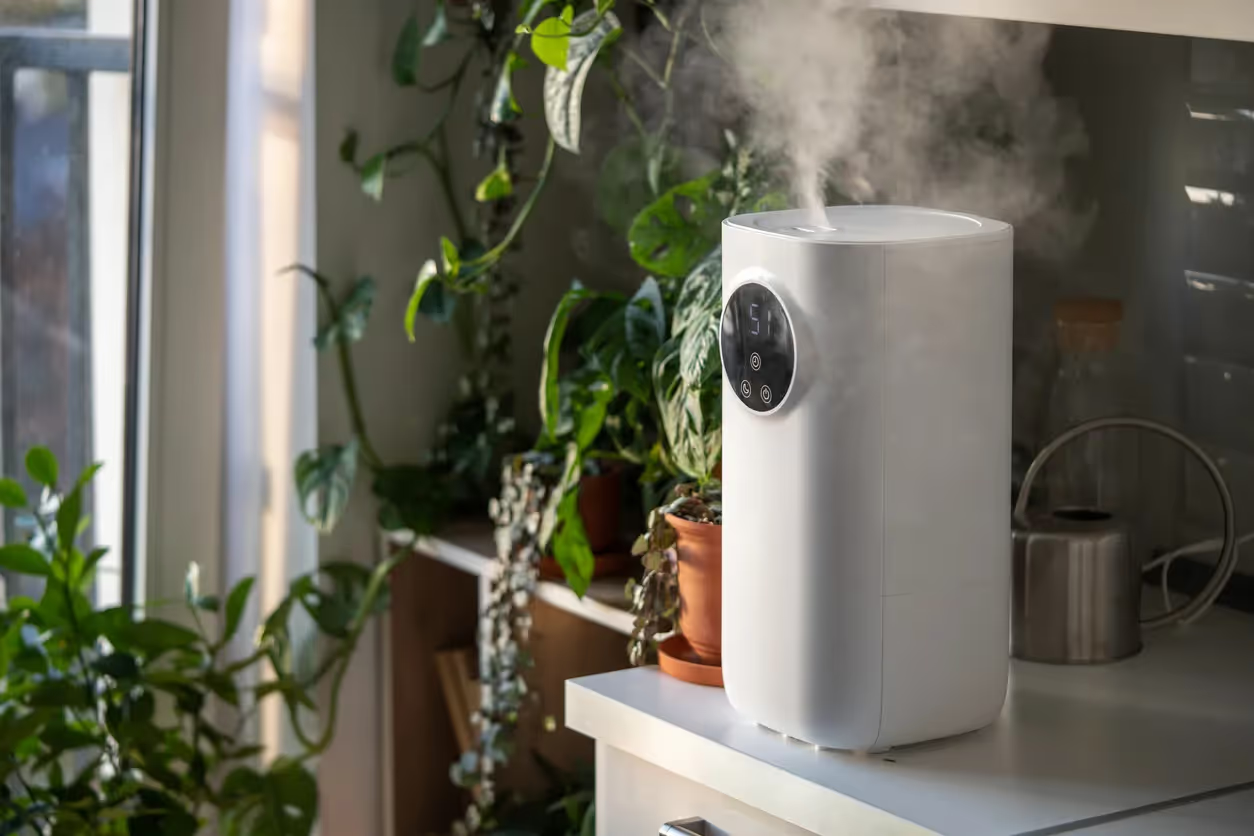
What You Get With Professional Humidity Management
When you invest in a whole-home humidity control solution, you are moving away from temporary fixes like portable plug-in units and toward a permanent, integrated climate strategy. Gibson Heating & Cooling provides systems that work in tandem with your central heating and cooling equipment to regulate moisture levels automatically. This approach ensures that every room in the house receives treated air, eliminating the hot spots or damp basements often found in local properties.
A comprehensive humidity control installation typically involves the integration of a whole-home dehumidifier for the warmer months and a dedicated humidifier for the heating season. For homeowners in Voorhees, this dual approach is essential because the climate swings drastically from highly saturated air in July to bone-dry conditions in January. A professionally installed system monitors the Relative Humidity (RH) levels constantly, adding or removing moisture only when necessary to maintain an ideal range, usually between 35% and 50%.
The scope of service includes a full evaluation of your current HVAC infrastructure. We determine the correct size and type of unit based on the cubic footage of your home and the thermal envelope's tightness. The installation package includes the unit itself, a dedicated humidistat or upgraded smart thermostat for control, all necessary water lines and drainage piping, and the electrical connections required to power the system safely. You receive a turnkey solution where the only user interaction required is setting your desired comfort level.

The Installation and Integration Process
Installing a whole-home humidifier or dehumidifier is a precise technical process that requires modifying your existing HVAC plenum and ductwork. Our technicians follow a rigorous protocol to ensure the new equipment does not disrupt airflow or static pressure within your heating and cooling system. The goal is seamless integration where the humidity control system operates quietly in the background.
The process begins with selecting the mounting location. For humidifiers, this is typically on the supply or return duct near the furnace. For dehumidifiers, the unit may be suspended from joists or placed on a dedicated pad, with ducting routed to pull air from the return, treat it, and inject it back into the supply.
- First, technicians measure and cut the sheet metal plenum to create the mounting aperture for the new unit.
- Next, if installing a bypass humidifier, a bypass duct is run from the supply to the return to utilize the pressure differential for airflow; for fan-powered units, the internal fan handles air movement.
- Then, the water supply line is tapped into your home’s existing water piping, often using a saddle valve or a more permanent plumbing connection depending on local codes.
- Simultaneously, a drainage line is installed. For dehumidifiers and flow-through humidifiers, this line is routed to a floor drain or condensate pump to remove excess water or condensate safely.
- After plumbing connections are secure, the electrical wiring is connected to the furnace control board or a dedicated 24-volt transformer to ensure the unit only runs when the HVAC blower is active.
- Finally, the humidistat is mounted and calibrated, or the new equipment is wired into an existing smart thermostat to allow for centralized control.
Once the physical installation is complete, the system undergoes a series of stress tests. We verify that the solenoid valves open and close correctly, that the fan engages, and that water flows without leaking. The airflow is checked to ensure that the addition of the equipment has not negatively impacted the static pressure of the HVAC system.
When Replacement Beats Repair
Humidity control systems, like any mechanical equipment, have a finite lifespan. While routine maintenance such as changing water panels or cleaning coils can extend the life of a unit, there comes a point where repair is no longer cost-effective. Recognizing the signs of system failure early can prevent water damage to your home and ensure your air quality does not suffer.
One of the primary indicators that replacement is necessary is the physical condition of the casing and internal components. If a humidifier has significant corrosion or rust on the housing, it indicates that water has been leaking or sitting where it shouldn't for an extended period. This corrosion can eventually lead to catastrophic leaks that damage the furnace or the floor beneath it. In these cases, swapping out the unit is safer than attempting to patch rusted metal.
- Consider replacement if the solenoid valve fails repeatedly. While a single valve replacement is standard repair, chronic electrical failures often suggest issues with the unit's internal wiring harness or control board.
- Opt for a new unit if mineral scale buildup is excessive — view current promotions. In areas with hard water, scale can calcify components to the point where they cannot be cleaned without breaking them. If the distribution tray or fan blades are caked in mineral deposits, efficiency drops drastically.
- Replace dehumidifiers that have lost refrigerant or have a failing compressor. Replacing a compressor in a residential dehumidifier is rarely cost-effective compared to installing a new, more energy-efficient model with a fresh warranty.
- Upgrade if your current system cannot keep up. If you have added square footage to your home or if the unit runs constantly without reaching the set humidity level, it is likely undersized or worn out.
Modern units are significantly more water-efficient and energy-efficient than models manufactured 15 years ago. Newer steam humidifiers, for example, can deliver moisture more precisely without wasting gallons of water down the drain, which is a common issue with older flow-through styles.
Local Climate and Infrastructure Factors
Operating humidity control systems in Voorhees requires specific attention to the local environment and utility infrastructure. The region’s humid subtropical climate means that during summer, the outdoor air carries a massive moisture load. Standard air conditioners often struggle to remove enough latent heat (moisture) before satisfying the temperature setting, leaving the home feeling cold but clammy. A dedicated whole-home dehumidifier is often the only way to achieve true comfort during a New Jersey July without over-cooling the house.
Conversely, the winters here can drop into the low 20s. When this cold outdoor air is brought inside and heated, its relative humidity plummets, often below 15%. This is drier than the desert and can cause hardwood floors in local homes to crack and separate. It also exacerbates static electricity and respiratory susceptibility. A properly calibrated humidifier must be adjusted based on the outdoor temperature to prevent window condensation while still protecting the home’s interior wood and occupants.
- Water Hardness: Local water quality can impact the lifespan of humidifier pads and steam canisters. We assess the mineral content to recommend the right maintenance schedule for your specific neighborhood.
- Basement Moisture: Many homes in the area utilize basements for living space or storage. The local water table and soil composition can lead to high basement humidity, requiring specific dehumidification strategies to prevent mold growth on drywall and carpeting.
- Electrical Codes: Integrating these systems requires adherence to specific New Jersey electrical codes, particularly regarding how appliances are hardwired into the HVAC circuit. Our installation process ensures full compliance with all local regulations.
Why Professional Integration Outperforms Portable Units
Many homeowners initially attempt to solve humidity problems with portable, single-room units purchased from big-box stores. While these can offer minor relief in a small bedroom, they are fundamentally incapable of managing the climate of an entire home. Portable units lack the airflow capacity to circulate treated air throughout the house, resulting in one room being comfortable while the rest of the home remains untreated.
Efficiency is a major differentiator. Portable dehumidifiers dump heat back into the room they are trying to cool and dry, forcing your air conditioner to work harder. In contrast, a whole-home dehumidifier is integrated into the ductwork, often utilizing the HVAC blower to move air efficiently. The heat generated by the process is managed correctly, or the unit is located in a mechanical space where it does not impact living areas.
Maintenance requirements for whole-home systems are drastically lower. Portable units require daily bucket emptying or messy hose setups that pose trip hazards. A whole-home solution drains automatically and typically requires attention only once or twice a year. This "set it and forget it" convenience ensures that humidity control is not dependent on whether you remembered to empty a water tank before work.
Furthermore, professional installation protects your existing HVAC investment. Excess humidity inside ductwork can encourage mold growth on evaporator coils, reducing system efficiency and spreading spores. Excessively dry air can cause seals and gaskets within the furnace to dry out and crack. By maintaining a constant, safe humidity level, Gibson Heating & Cooling helps extend the operational lifespan of your heating and air conditioning equipment.
Ensuring Healthy Air and Home Protection
The impact of humidity on indoor air quality is often underestimated. Biological pollutants thrive in extremes. Dust mites and mold love high humidity, while viruses and bacteria tend to remain airborne longer in dry air. By keeping the home’s relative humidity between 35% and 50%, you create an environment that is hostile to these pathogens and allergens. This is particularly important for households with asthma sufferers or individuals with seasonal allergies.
Beyond health, your home’s structure relies on stable humidity. Drywall, wood framing, hardwood floors, and wooden furniture are hygroscopic, meaning they absorb and release moisture. Constant cycling between swelling in the summer and shrinking in the winter causes structural stress, popping nails, and warping floorboards. A consistent internal environment stabilizes these materials.
We provide the expertise required to calculate the exact moisture load of your home. This calculation ensures the equipment installed is neither oversized, which leads to short-cycling and wear, nor undersized, which fails to solve the problem. We treat humidity control not as an accessory, but as a critical component of your home’s mechanical ecosystem.
Take control of your indoor environment today. Do not let the weather dictate the comfort and safety of your home interior.
Secure your home’s comfort and air quality now. Contact our team to discuss your humidity control options.
Precision Humidity Control Designed For Balanced Indoor Comfort
Effective humidity control in Voorhees, NJ, helps prevent moisture-related system strain and indoor discomfort. Gibson Heating & Cooling delivers calibrated solutions that stabilize indoor moisture levels while supporting HVAC efficiency. Limited availability makes early scheduling important to avoid extended system stress. Homeowners rely on our expertise to maintain balanced conditions without unnecessary equipment changes.
Improve Indoor Balance With Professional Humidity Control Solutions
our process
Our heating Process Section
01
Thorough Diagnosis/Consultation
We start with a comprehensive assessment of your needs.
02
Upfront & Honest Pricing
We provide a clear, detailed estimate before any work begins.
03
Professional
Schedule
Our certified technicians perform the work to the highest standards.
04
Final Inspection & Clean-up
We ensure everything is working perfectly and leave your home clean.
testimonials
The Customer Experience:
Where Comfort Meets Reliability.
Trusted by Homeowners Across Burlington County.
