
Furnace Repair in Cherry Hill, NJ

Restore Your Home's Heat Immediately
Is your heating system failing to keep up with the dropping temperatures, leaving your home uncomfortably cold? Dealing with a malfunction during the freezing winters common to Cherry Hill can be dangerous for your plumbing and stressful for your family. Contact Gibson Heating & Cooling immediately to schedule a diagnostic visit or inquire about financing options.
When your furnace stops working, you need a solution that prioritizes speed without sacrificing technical accuracy. We understand that heating issues rarely happen at convenient times, often occurring during the coldest nights or right before a holiday gathering. Our approach is built on rapid mobilization and technical precision to ensure your heat is restored quickly and stays on.
- Rapid on-site response within 24 hours to prevent frozen pipes and discomfort.
- Trusted HVAC experts with over a decade of local experience diagnosing all furnace makes and models.
- 24/7 emergency services are available to handle heating crises whenever they occur.
All services are backed by our comprehensive warranty and meet local permit requirements, ensuring peace of mind.

What to Expect from Our Furnace Services
When you reach out for service, the primary goal is accurate diagnosis followed by an immediate resolution. A broken furnace is not just an inconvenience; in New Jersey, it is a matter of home safety. We arrive fully equipped to handle the majority of common heating failures in a single visit. You should expect a technician who listens to the specific symptoms your unit is displaying—whether that is banging noises, short cycling, or a complete refusal to ignite—and investigates the root cause rather than just swapping parts.
We provide a comprehensive assessment of the entire heating system. This includes checking the thermostat calibration, inspecting the heat exchanger for dangerous cracks, testing the ignition system, and verifying that the blower motor is moving air efficiently. Transparency is key during this phase. You will receive a clear explanation of exactly what failed, why it failed, and what is required to fix it. There are no hidden fees or surprise add-ons; you approve the work before we pick up a wrench.
- Ignition System Repair: We troubleshoot faulty pilot lights, electronic igniters, and sensors that prevent the burners from firing.
- Airflow Solutions: We address issues with blower motors, belts, and bearings that cause poor circulation or loud operation.
- Thermostat Calibration: We resolve communication errors between your control unit and the furnace to ensure accurate temperature regulation.
- Safety Inspections: We test for carbon monoxide leaks and inspect the flue pipe for blockages to ensure your home is safe.
- Fuel Line Checks: We inspect gas or oil connections to ensure proper fuel delivery without leaks or pressure issues.
Your Step-by-Step Guide to Furnace Repair
Understanding the repair process helps alleviate the stress of a breakdown. We have streamlined our workflow to ensure minimal disruption to your daily routine while maximizing the quality of the repair. We do not skip steps, as thoroughness is the only way to prevent a callback for the same issue next week.
Scheduling and Dispatch:
- First, you contact our dispatch team, who will prioritize your call based on urgency and technician availability.
- You receive a confirmation of your appointment window, minimizing the time you have to wait around.
- A technician calls when they are on the way, giving you time to prepare for their arrival.
On-Site Diagnosis:
- Upon arrival, the technician treats your home with respect, wearing shoe covers and using drop cloths to protect your flooring.
- We run a series of diagnostic tests using advanced multimeters and manometers to read the electrical and pressure signals within your furnace.
- We visually inspect the internal components for signs of wear, corrosion, or heat damage.
Review and Approval:
- Once the problem is identified, we present you with a written quote detailing the necessary repairs.
- We explain the options available, including any temporary fixes versus permanent solutions.
- Work begins only after you have given your explicit authorization.
Execution and Testing:
- The technician performs the repair using high-quality, manufacturer-approved parts.
- After the repair is complete, we cycle the furnace multiple times to ensure it ignites, runs, and shuts down correctly.
- We measure the temperature rise (the difference between air entering and leaving the furnace) to confirm efficiency.
Cleanup and Debrief:
- Finally, we clean the work area, removing any old parts or packaging.
- We walk you through what was done and provide tips on how to maintain the repair.
Understanding When to Repair or Replace Your Furnace
Deciding between repairing an existing unit or investing in a new system is one of the most difficult choices a homeowner faces. Gibson Heating & Cooling helps you navigate this decision using data, not pressure. While our primary goal is to repair your current system, there are mathematical and practical limits where a repair no longer makes financial sense.
The industry standard "50% Rule" is a helpful baseline: if the cost of the repair approaches 50% of the cost of a new system, replacement is usually the wiser investment. However, other factors play a critical role. If your furnace is over 15 years old, parts may be becoming obsolete or prohibitively expensive. Older units also have lower Annual Fuel Utilization Efficiency (AFUE) ratings, meaning you are paying more each month for fuel that is wasted rather than converted into heat.
- Frequency of Breakdowns: If you have required repairs more than twice in the last two years, your system is likely entering the end of its reliable lifespan.
- Rising Energy Bills: A sudden or steady increase in heating costs without a change in usage often indicates internal components are wearing out and losing efficiency.
- Uneven Heating: If some rooms are freezing while others are roasting, the furnace may no longer have the compression or blower power to distribute air evenly.
- Safety Concerns: A cracked heat exchanger is a non-negotiable red flag. This component separates combustion gases from the air you breathe. If it is compromised, the unit must be replaced immediately to prevent carbon monoxide poisoning.
- Noise Levels: Excessive rattling, booming, or squealing usually points to major mechanical failure in the motor or inducer assembly.
Adapting to Local Climate: What You Need to Know
Operating a furnace in this region requires specific attention to the unique climate challenges we face. The humid subtropical climate means our winters are not just cold; they are often damp. This humidity can affect how heat is perceived in the home and can impact the longevity of your equipment if not managed correctly. Winter temperatures frequently dip into the 20s, meaning your system must be capable of working hard for extended periods without overheating.
Local building codes and township regulations in the Cherry Hill area also influence how repairs and installations are handled. For example, specific venting requirements must be met for high-efficiency gas furnaces to ensure exhaust is safely directed away from windows and air intakes. Electrical connections must adhere to strict safety standards to prevent fire hazards. We are intimately familiar with these local nuances and ensure every job remains compliant with municipal codes.
- Insulation and Ductwork: Many older homes in the area may have compromised insulation or leaky ductwork. We check these factors because even a perfectly working furnace cannot heat a home that is losing air to the attic or crawlspace.
- Thermostat Settings: We advise on optimal settings for local winters to balance comfort with energy savings, often recommending programmable thermostats to handle the temperature swings between day and night.
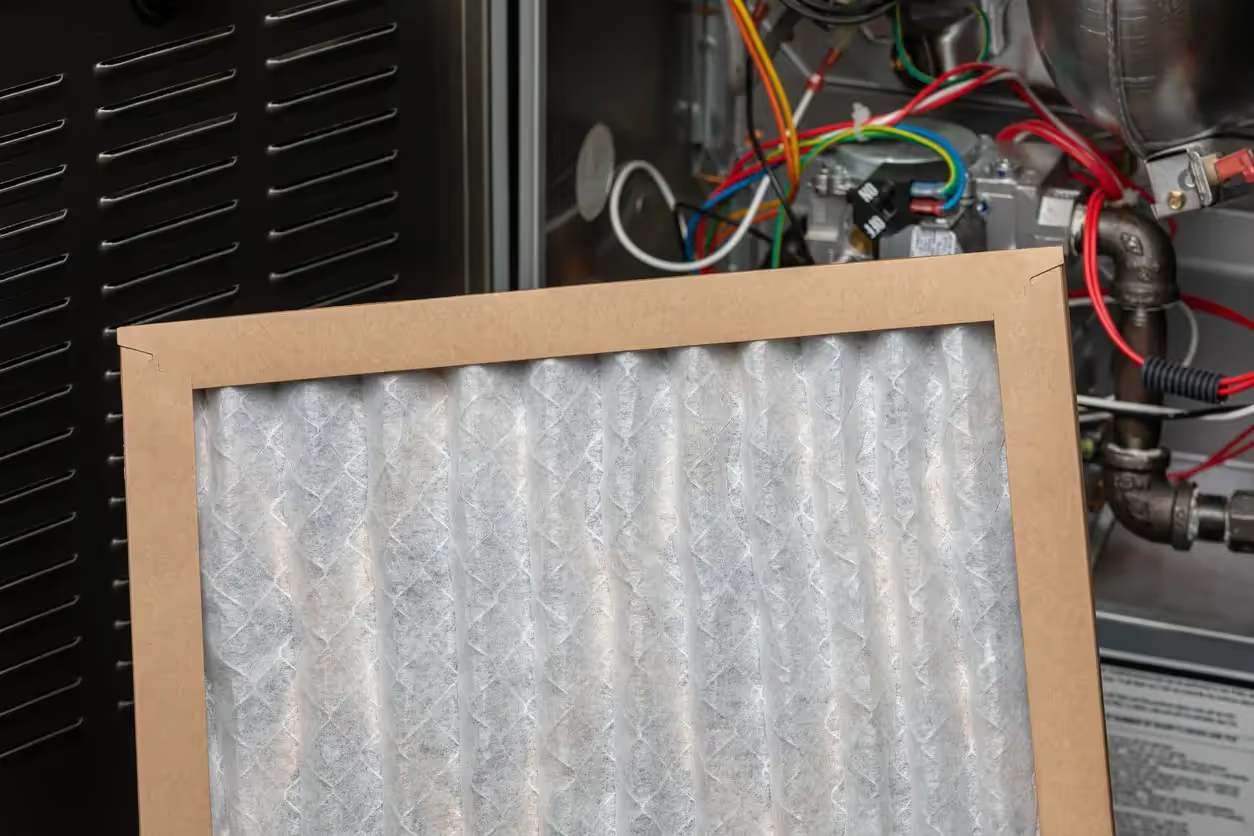
- Filter Maintenance: The local air quality and pollen counts can clog filters quickly. We recommend checking filters monthly during peak winter usage to prevent airflow restriction that overheats the heat exchanger.
- Humidification: Since heating air dries it out, and the outside winter air is dry, adding a whole-home humidifier can protect your wood furniture and improve respiratory comfort.
Common Furnace Failure Modes and Solutions
To better understand what is happening with your system, it helps to recognize the common technical failures we encounter. Furnaces are complex machines involving combustible gases, high-voltage electricity, and moving mechanical parts. A failure in one area can trigger safety switches that shut down the entire system.
- Flame Sensor issues: The flame sensor is a safety device that confirms a fire is actually burning. If it gets dirty (covered in carbon or dust), it cannot detect the flame, and the control board will cut the gas to prevent a leak. This often results in the furnace clicking on, firing for a few seconds, and then shutting off immediately.
- Limit Switch Malfunctions: The limit switch monitors the internal temperature of the furnace. If the blower motor fails or the filter is clogged, the furnace gets too hot. The limit switch will kill the burners to prevent a fire. If the blower continues to run but no heat comes out, this switch might be open.
- Igniter Failure: Modern furnaces use hot surface igniters rather than standing pilot lights. These ceramic elements get incredibly hot to light the gas. Over time, they can crack or burn out, similar to a lightbulb. If your furnace clicks but never roars to life, a broken igniter is a common culprit.
- Draft Inducer Motor Problems: Before a furnace lights, a small motor creates a draft to clear out any lingering gases in the heat exchanger. If this motor fails or the pressure switch attached to it detects a blockage (like a bird's nest in the flue), the furnace will not attempt ignition.
Why Professional Diagnosis Matters
In an era of online tutorials, some homeowners attempt DIY furnace repairs. However, modern heating systems are highly integrated with solid-state electronics and precise safety tolerances. Attempting to bypass a safety switch or guess at a part replacement can lead to catastrophic failure or dangerous operating conditions.
A professional diagnosis provides certainty. We utilize tools that measure the micro-amps of the flame rectification circuit, the inches of water column pressure in the gas valve, and the temperature rise across the heat exchanger. These metrics tell a story that a simple visual inspection cannot.
- Warranty Protection: Most manufacturer warranties require proof that repairs were performed by a licensed professional. DIY work can void your coverage.
- Safety Assurance: We test for gas leaks and carbon monoxide after every repair, utilizing industrial-grade sniffers that detect parts per million counts that household detectors might miss.
- Cost Efficiency: Replacing parts at random is expensive. We identify the exact component that failed, saving you from buying unnecessary hardware.
- Long-Term Reliability: We fix the root cause, not just the symptom. If a motor burned out because of high static pressure, replacing the motor without fixing the ductwork means the new motor will fail soon, too. We address the underlying issue.
Ensuring Continuous Comfort
Your home’s heating system is the heart of your winter comfort. Neglecting strange noises, odors, or erratic behavior can turn a small repair into a complete system replacement or a freezing night without heat. By addressing issues early and relying on professional expertise, you extend the life of your equipment and ensure reliable performance when you need it most.
We are committed to restoring your warmth with efficiency and integrity. Whether it is a minor sensor cleaning or a major component replacement, the goal remains the same: safe, consistent heat for your home. Gibson Heating & Cooling is ready to diagnose and resolve your furnace issues today.
Don't wait for the temperature to drop further—book your priority furnace repair service now.
our process
Our heating Process Section
01
Thorough Diagnosis/Consultation
We start with a comprehensive assessment of your needs.
02
Upfront & Honest Pricing
We provide a clear, detailed estimate before any work begins.
03
Professional
Schedule
Our certified technicians perform the work to the highest standards.
04
Final Inspection & Clean-up
We ensure everything is working perfectly and leave your home clean.
testimonials
The Customer Experience:
Where Comfort Meets Reliability.
Trusted by Homeowners Across Burlington County.
