
Air Conditioning Installation in Mount Laurel, NJ

Eliminate Unreliable Cooling and Rising Energy Costs
When summer humidity spikes in Mount Laurel, the last thing you want is an air conditioner that fails to keep up or breaks down entirely. You need a responsive team to restore comfort to your home immediately with professional installation services that prioritize efficiency and longevity. Contact us today to schedule your estimate.
- Get your new AC installed quickly to minimize downtime and discomfort.
- Benefit from transparent, upfront pricing with absolutely no hidden fees.
- Enjoy peace of mind knowing your investment is protected by comprehensive service warranties.
Licensed and fully insured—our services are backed by solid manufacturer warranties and flexible financing options to fit your budget.
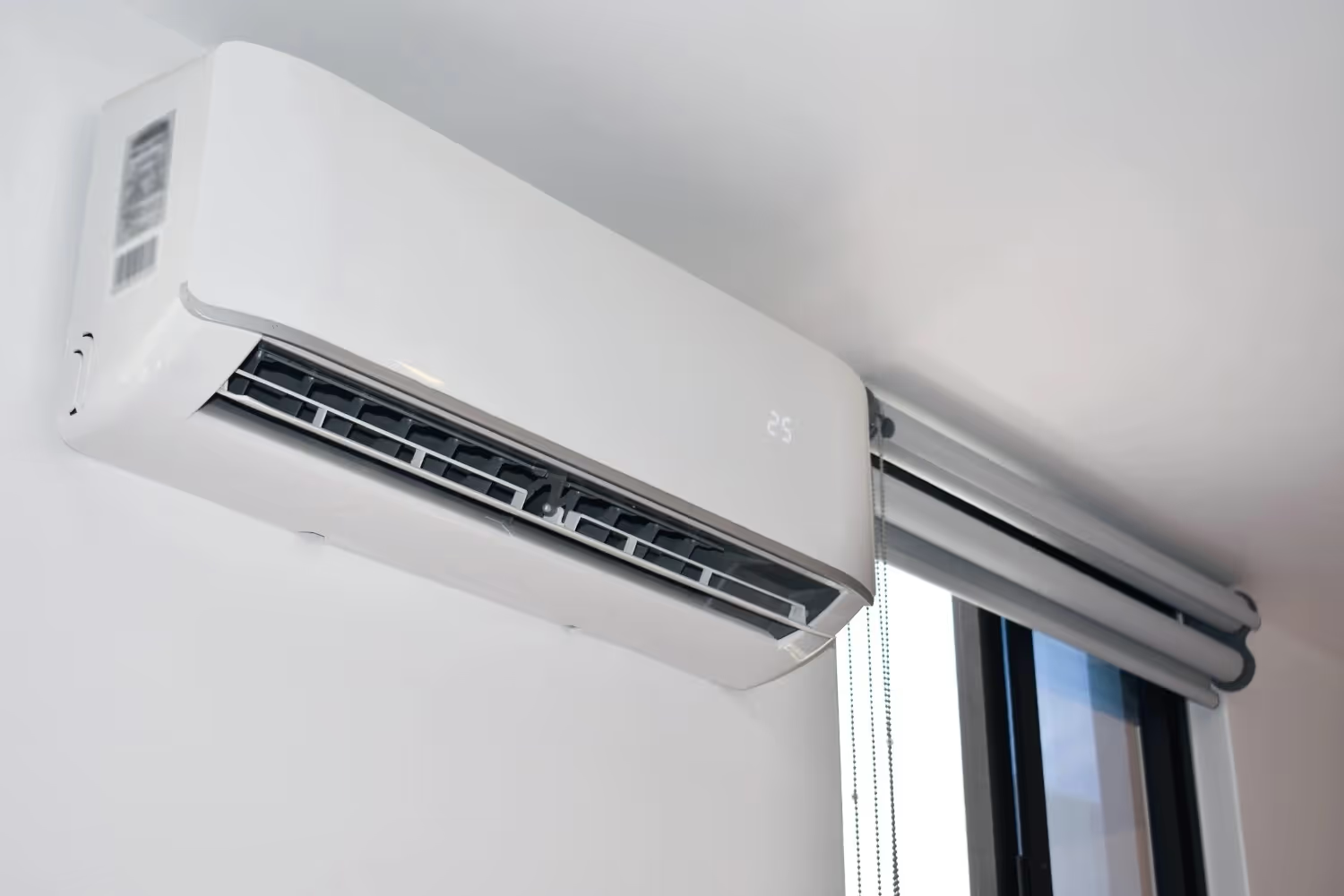
Comprehensive AC Installation Services Available Today
Choosing to install a new air conditioning system is a significant investment in your home’s infrastructure and your family’s daily comfort. When you move forward with an installation, you are not purchasing a boxed product off a shelf; you are purchasing a calibrated system design and the labor required to integrate it seamlessly into your home.
We provide a turnkey solution that handles every aspect of the transition from your old, inefficient unit to a modern, high-performance system. This includes the safe disconnection and environmentally responsible disposal of your existing equipment. We handle the logistical heavy lifting, ensuring that refrigerant is reclaimed according to EPA standards and that old metal components are recycled properly.
Your installation includes a full assessment of your current ductwork and electrical capacity. Many older homes in the area have duct systems designed for heating only or for less powerful AC units from decades past. We verify that your airflow infrastructure can support the output of a modern, high-efficiency system. If modifications are necessary to prevent back-pressure or airflow restrictions, these are identified immediately. The goal is to ensure that when the new unit turns on, it delivers consistent, even cooling to every room without straining the motor.
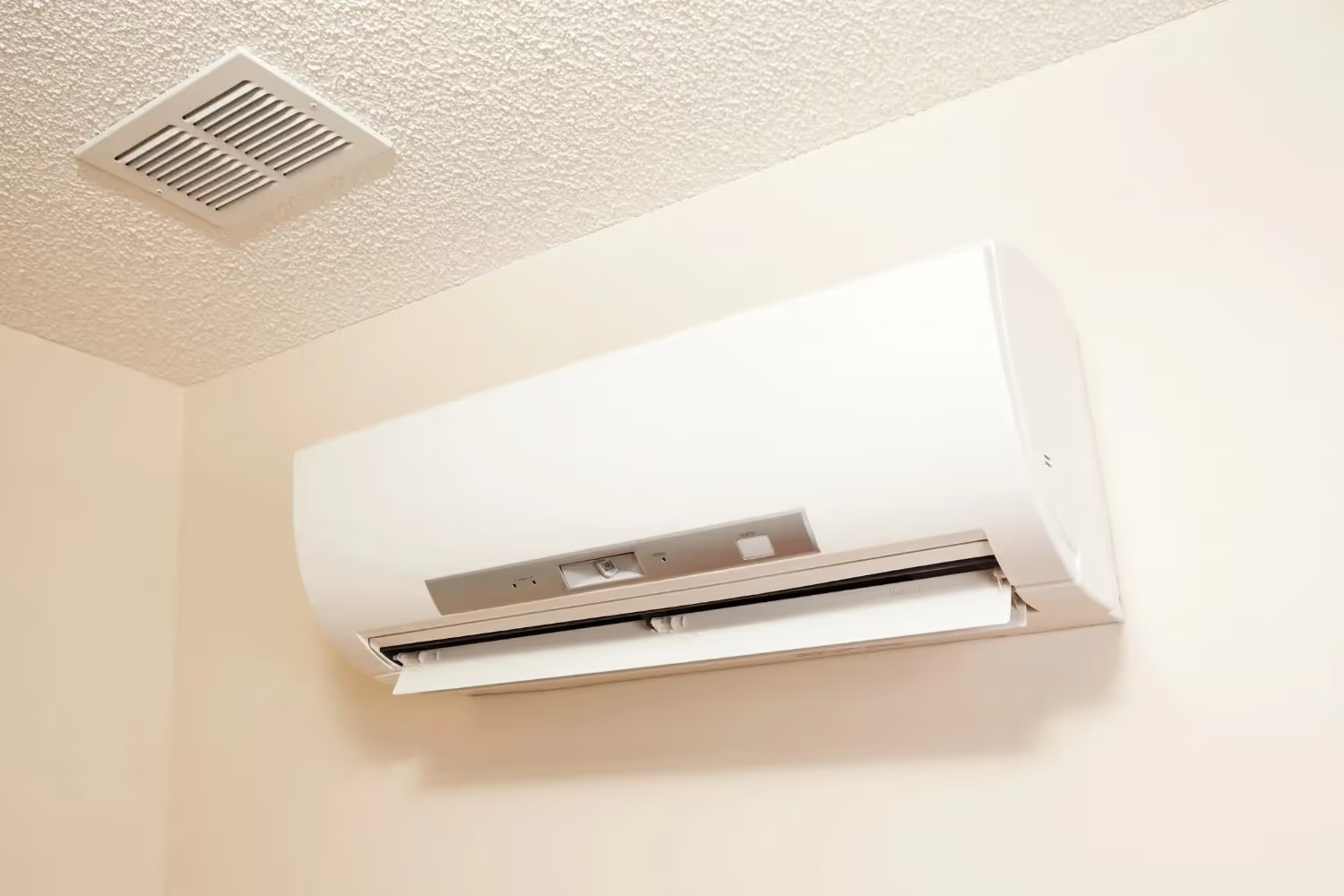
Understanding the Installation Workflow
A professional installation follows a strict protocol to ensure the longevity of the equipment. Skipping steps or rushing the process often leads to premature failure or reduced efficiency. We adhere to a meticulous process to guarantee the system operates at the manufacturer’s specified efficiency ratings.
Site Evaluation and Load Calculation
First, technicians perform a Manual J load calculation. This determines the exact cooling requirements of your home based on square footage, window orientation, insulation levels, and local climate data. Guessing the size of the unit is a recipe for disaster; an oversized unit cycles on and off too frequently, failing to dehumidify, while an undersized unit runs constantly without reaching the target temperature.
Preparation and Safety Setup
Next, the workspace is prepared to protect your property. Drop cloths are laid down, and electrical circuits dedicated to the HVAC system are shut off for safety. If the installation involves an attic or crawlspace, technicians ensure there is safe access and adequate lighting for the work.
Removal of Existing Equipment
The old condenser (outdoor unit) and evaporator coil (indoor unit) are disconnected. This involves cutting refrigerant lines and disconnecting high-voltage wiring. Great care is taken to prevent any remaining oil or sludge from the old system from contaminating the lines if they are being reused, though often line sets are replaced entirely.
Positioning the New Hardware
The new outdoor condenser is placed on a composite pad to ensure it remains level and is elevated off the ground to protect against snow accumulation and debris. Indoors, the new evaporator coil is fitted to the furnace or air handler. The seal between these components must be airtight to prevent conditioned air from leaking into the basement or utility closet.
Line Set Connection and Brazing
Technicians connect the copper refrigerant lines. This process involves brazing the copper while flowing nitrogen through the lines to prevent oxidation buildup inside the pipe. This is a critical step that prevents future blockages in the expansion valve.
Vacuum and Charge
Before releasing refrigerant, a vacuum pump is attached to the system to remove all air and moisture. Moisture inside the system is the enemy of an AC unit, as it causes acid to form and corrodes the compressor. Once a deep vacuum is achieved, the system is charged with the precise amount of refrigerant required.
Final Testing and Calibration
Finally, the system is powered on. Technicians measure static pressure, temperature drop across the coil, and amperage draw of the compressor. The thermostat is programmed or replaced, and the system is tested through a full cycle to ensure it meets performance standards.
When to Replace vs. Repair Your Air Conditioner
Homeowners often struggle with the decision of whether to sink more money into a repair or opt for a full replacement. While repairs can solve immediate issues, there is a mathematical tipping point where replacement becomes the more financially sound decision.
The "5,000 Rule" is a helpful benchmark used by industry professionals. Multiply the age of your unit by the estimated cost of the repair. If the total exceeds $5,000, replacement is generally the better option. For example, if you have a 12-year-old unit requiring a $500 repair (12 x 500 = 6,000), the investment is likely not worth it compared to the efficiency gains of a new system.
Consider replacement if:
The unit uses R-22 Refrigerant:
If your system was installed before 2010, it likely uses Freon (R-22). The production of this refrigerant has been banned, making refills exorbitantly expensive. A leak in an R-22 system is usually a signal to upgrade to a system using R-410A or newer refrigerants.
Frequent Breakdowns:
If you have required multiple repairs in the last two seasons, the system is reaching the end of its mechanical life. Components tend to fail in succession; replacing a capacitor today does not prevent the compressor from failing tomorrow.
Rising Energy Bills:
As internal components wear down and coils become impacted, the system must work harder to displace heat. If your summer electric bills have steadily increased despite usage remaining the same, the unit’s SEER (Seasonal Energy Efficiency Ratio) has effectively dropped. Modern units start at SEER2 ratings that can reduce cooling costs by 20% to 40% immediately.
Uneven Cooling and Noise:
Loud grinding, banging, or squealing noises indicate internal mechanical failure. Likewise, if the upstairs is hot while the downstairs is freezing, the compressor may no longer have the compression ratio needed to pump refrigerant effectively, or the blower motor is failing.
Local Installation Factors for Mount Laurel Residents
Operating an air conditioner in Mount Laurel requires specific considerations due to the regional climate and local building codes. This area experiences a humid subtropical climate, meaning that humidity control is just as important as temperature control.
Humidity Management
High humidity levels can make the air feel warmer than the thermostat reading. We prioritize systems with two-stage or variable-speed compressors for local homes. These units can run at lower speeds for longer periods, which is superior for pulling moisture out of the air compared to a single-stage unit that blasts cold air and shuts off quickly. Proper dehumidification protects your home from mold growth and hardwood floor warping.
Permitting and Code Compliance
Installation of new HVAC equipment in Mount Laurel requires adherence to local township codes. Permits are generally required to ensure the work meets safety standards regarding electrical connections and gas piping (if applicable). Navigating the paperwork with the construction office is part of the professional service provided. Failure to pull permits can result in fines or issues when selling the home in the future.
Utility Rebates and Incentives
New Jersey often offers incentives for upgrading to high-efficiency equipment through the Clean Energy Program or local utility providers. We stay updated on current SEER2 requirements and qualifying equipment lists to help you maximize potential rebates. These programs aim to reduce the load on the electrical grid during peak summer months, and participating can significantly offset the initial installation cost.
Differentiators in Service and Execution
There are many contractors capable of setting a box on a pad, but Gibson Heating & Cooling focuses on the technical precision that defines the lifespan of the unit. The difference between a system that lasts 10 years and one that lasts 20 years is almost always the quality of the installation.
We utilize advanced diagnostic tools during the commissioning phase. We do not simply turn the unit on and leave; we verify that the refrigerant charge is accurate to the sub-cool and superheat specifications of the manufacturer. A charge that is off by even 10% can reduce efficiency by up to 20%.
Our technicians treat your home with respect. We utilize shoe covers and floor protectors to ensure that the installation process leaves no trace other than a comfortable home. We prioritize clear communication, explaining the operation of your new thermostat and maintenance requirements before we depart.
Furthermore, we focus on system matching. An air conditioner is part of a split system, meaning it must work in tandem with your furnace or air handler. We ensure that the coil and condenser are perfectly matched to provide optimal static pressure and airflow, preventing the "short cycling" that destroys compressor motors.
Secure Your Comfort and Efficiency Now
Delaying the replacement of a failing air conditioner only leads to higher energy bills and the risk of a breakdown during a heatwave. Modern systems offer superior filtration, quieter operation, and significantly lower monthly operating costs. By choosing a professional installation, you ensure that your home remains a sanctuary against the heat and humidity of the season.
Gibson Heating & Cooling is ready to help you select the right system for your specific needs and budget. Do not settle for discomfort or uncertainty regarding your HVAC system.
Take control of your indoor climate today. Contact us now to schedule your installation assessment and experience the difference of a professionally installed, high-efficiency cooling system.
our process
Our heating Process Section
01
Thorough Diagnosis/Consultation
We start with a comprehensive assessment of your needs.
02
Upfront & Honest Pricing
We provide a clear, detailed estimate before any work begins.
03
Professional
Schedule
Our certified technicians perform the work to the highest standards.
04
Final Inspection & Clean-up
We ensure everything is working perfectly and leave your home clean.
testimonials
The Customer Experience:
Where Comfort Meets Reliability.
Trusted by Homeowners Across Burlington County.
