
Air Conditioning Installation in Berlin, NJ

Is Your Cooling System Failing to Combat the Summer Humidity?
When the humidity spikes and temperatures rise, an unreliable air conditioner turns your home from a sanctuary into a source of stress. Homeowners in Berlin, NJ, often face the frustration of units that run constantly without lowering the temperature, leading to soaring energy bills and sleepless nights. If you are experiencing uneven cooling or a complete system breakdown, contact us immediately to discuss financing options and schedule a site evaluation.
Gibson Heating & Cooling understands that waiting days for relief is not an option when the heat index climbs. Our approach focuses on rapid deployment and technical precision to restore comfort to your property.
- Secure same-day installation capabilities to restore a livable environment immediately.
- Rely on fully licensed and insured professionals who adhere to strict safety protocols.
- Access flexible financing plans designed to fit your budget while upgrading your home’s efficiency.
- Rest assured that every installation meets all local codes and comes with comprehensive warranty protection.

Comprehensive Air Conditioning Installation: Scope, Safety, and Standards
Investing in a new air conditioning system is about more than just swapping out a metal box outside your home; it is a complex construction project that integrates with your home's existing infrastructure. In the Berlin area, where housing styles vary from historic builds to modern developments, the scope of installation must be tailored to the specific thermal properties of the building. We provide a turnkey solution that handles every aspect of the transition from an old, inefficient unit to a high-performance cooling system.
The scope of work begins with a rigorous assessment of your current setup. This involves checking the integrity of existing ductwork, evaluating electrical capacity, and determining the correct tonnage required for the square footage. Simply installing a unit of the same size as the previous one is a common error that leads to short-cycling and humidity issues. We utilize industry-standard load calculations to ensure the new equipment is perfectly sized for the heat load of your specific living space.
Safety standards are paramount during this process. Handling high-voltage electricity and pressurized refrigerant requires certified expertise. Our teams manage the safe recovery and disposal of old refrigerant, preventing environmental contamination and ensuring compliance with EPA regulations. We also upgrade electrical disconnects and whips to meet current safety codes, reducing the risk of fire hazards. From the placement of the condenser pad to the final calibration of the thermostat, every step is executed to maximize system longevity and efficiency.
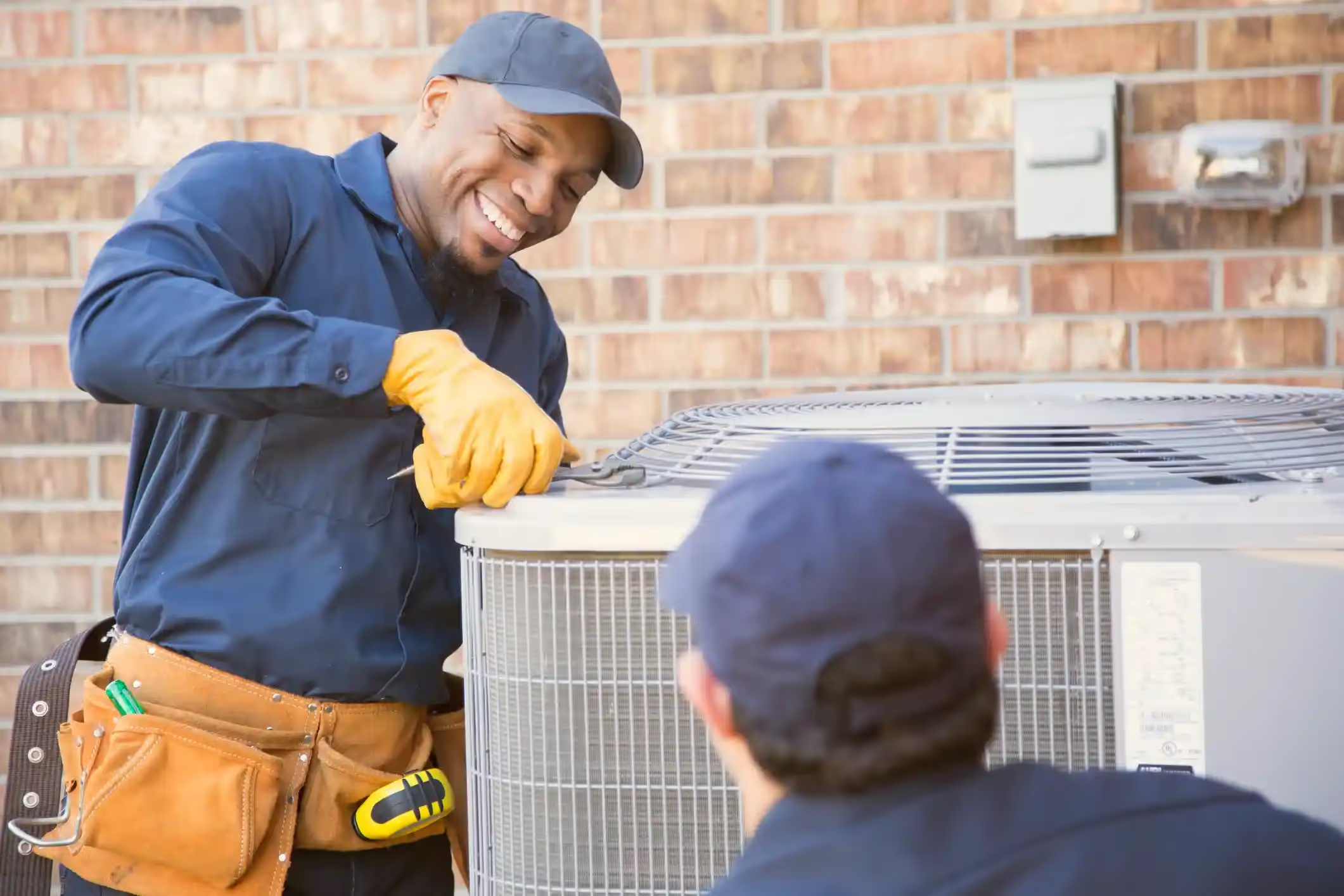
Your Installation Journey: From Assessment to Airflow
A professional installation follows a strict procedural workflow to ensure no detail is overlooked. Unlike quick fixes that cut corners, a structured approach guarantees that the system operates at its manufacturer-rated efficiency from the very first day. We maintain transparency throughout the process so you understand exactly what is happening at your property.
- Site Evaluation and Load Calculation: The process initiates with a Manual J load calculation. This determines the precise cooling requirements based on window placement, insulation levels, and square footage. This step is critical for residents in Berlin and West Berlin, where humidity control is just as important as temperature reduction.
- System Selection and Sizing: Based on the data collected, we recommend specific units that align with your energy goals and budget. This includes discussing SEER2 ratings (Seasonal Energy Efficiency Ratio) to project potential energy savings. Higher SEER ratings often translate to significantly lower monthly utility costs.
- Removal of Existing Equipment: Technicians isolate the electrical supply and pump down or recover the refrigerant from the old system. The obsolete condenser and air handler are disconnected and removed from the premises. Care is taken to protect your landscaping and flooring during this removal phase.
- Infrastructure Preparation: Before the new unit is set, the installation team inspects the plenum and transition ductwork. Any air leaks or structural weaknesses are addressed. If necessary, the pad for the outdoor condenser is leveled or replaced to ensure proper drainage and vibration isolation.
- Equipment Installation and Connection: The new indoor evaporator coil and outdoor condenser are positioned. Technicians braze the copper refrigerant lines using nitrogen purging to prevent oxidation inside the pipes. Electrical connections are established, and the condensate drain line is installed with necessary safety switches to prevent water damage.
- System Charging and Commissioning: Once physically installed, the system is pressure-tested for leaks. A vacuum pump removes moisture and non-condensables from the lines. The system is then charged with the precise amount of refrigerant. Finally, Gibson Heating & Cooling technicians perform a complete startup sequence, measuring static pressure, airflow, and temperature splits to verify peak performance.
Deciding Between AC Repair and Full Replacement
Homeowners often struggle with the decision of whether to pour more money into a failing unit or invest in a replacement. Making the right financial decision requires analyzing the age of the system, the cost of the repair, and the potential efficiency gains. In many cases, continuing to repair an aging system costs more in the long run than a modern upgrade.
- The 50% Rule: A general guideline used in the industry is the 50% rule. If the cost of the repair approaches 50% of the value of the system or the cost of a new unit, replacement is usually the wiser financial move. For example, replacing a compressor in a 12-year-old unit is rarely cost-effective. The money spent on such a major repair is better utilized as a down payment on a system with a fresh warranty — see our latest promotions.
- Refrigerant Obsolescence: Older systems that utilize R-22 (Freon) are becoming prohibitively expensive to service due to the phase-out of this refrigerant. If your system has a leak and relies on R-22, the cost to recharge it can be astronomical. Modern systems use R-410A or newer, eco-friendly refrigerants that are more efficient and readily available. Transitioning away from obsolete technology protects you from future supply chain issues and regulatory costs.
- Efficiency and Technology Gains: Air conditioning technology has advanced rapidly in the last decade. A unit installed 15 years ago likely has a SEER rating of 10 or less. Modern standards require much higher efficiency, often starting at 13.4 or 14 SEER2 in northern regions like New Jersey. Upgrading to a high-efficiency system can reduce cooling costs by 20% to 40%. Additionally, new systems often pair with smart thermostats and zoning capabilities, offering granular control over the climate in different areas of your home.
Navigating Local Regulations and Seasonal Factors
Every municipality has specific requirements regarding mechanical installations, and Berlin, NJ is no exception. Compliance with these regulations is not optional; it is essential for the safety of your home and the validity of your insurance coverage. Professional installers handle the administrative burden of permitting, ensuring that the work passes all required municipal inspections.
- Permits and Inspections: Local building codes dictate how electrical wiring must be handled, how the unit must be supported, and where it can be placed relative to the property line. An unpermitted installation can lead to fines, difficulties in selling your home in the future, and safety risks. We ensure that all necessary permits are pulled before work begins and that the final installation is inspected by local officials to verify code compliance.
- Electrical and Zoning Codes: Modern AC units often have different electrical requirements than older models. Upgrading the circuit breaker or the wire gauge may be necessary to meet the National Electrical Code (NEC). furthermore, local noise ordinances or setback requirements may influence where the outdoor condenser can be located. Understanding these local nuances prevents costly rework and neighbor disputes.
- Seasonality and Timing: While summer is the peak season for air conditioning failures, scheduling installations during the shoulder seasons (Spring and Fall) can sometimes offer more flexibility. However, when a breakdown occurs in July or August, speed is the priority. Local humidity levels in New Jersey can damage drywall and wood flooring if a home is left without climate control for extended periods. We prioritize emergency replacements during heatwaves to mitigate property damage and health risks associated with high heat.
Why Homeowners Rely on Licensed and Insured Expertise
The difference between a satisfied homeowner and one facing recurring issues often comes down to the quality of the installation. The most expensive, high-end equipment will fail prematurely if it is installed incorrectly. We prioritize technical excellence and accountability, ensuring that your investment is protected.
- Manufacturer Warranty Compliance: Most HVAC manufacturers explicitly state that their limited warranties are only valid if the equipment is installed by a licensed HVAC contractor. DIY installations or work performed by unlicensed handymen often void these warranties immediately. By choosing a professional provider, you ensure that the manufacturer will stand behind the parts if a defect arises.
- Liability and Insurance: HVAC installation involves significant risks, including electrical work, gas lines (in hybrid systems), and heavy lifting. A fully insured company carries general liability and workers' compensation insurance. This protects the homeowner from being held liable if a worker is injured on the property or if accidental damage occurs during the installation process.
- Long-Term Reliability: A "cheap" installation often incurs hidden costs later. Poorly brazed joints leak refrigerant, improper airflow burns out blower motors, and incorrect sizing leads to humidity problems (mold growth). Professional installation focuses on the long-term lifecycle of the unit. We follow best practices that extend the life of the compressor and ensure consistent comfort year after year — view our memberships.
- Tools and Training: Modern HVAC systems are sophisticated machines with complex circuit boards and variable-speed motors. Diagnosing and installing these systems requires specialized tools and ongoing training. Our technicians are equipped with digital gauges, micron gauges for vacuuming, and combustion analyzers to ensure precision. We stay updated on the latest industry trends and manufacturer specifications to provide the highest level of service in the Berlin area.
Securing Your Comfort with Professional Installation
Delaying the replacement of a failing air conditioning system only prolongs discomfort and increases the risk of a complete outage during a heatwave. A modern, professionally installed system offers immediate relief, lower energy bills, and peace of mind through robust warranties. Do not settle for temporary fixes or uncomfortable living conditions when a permanent solution is available.
Take the next step toward a cooler, more efficient home. Contact Gibson Heating & Cooling now to secure your installation slot.
our process
Our heating Process Section
01
Thorough Diagnosis/Consultation
We start with a comprehensive assessment of your needs.
02
Upfront & Honest Pricing
We provide a clear, detailed estimate before any work begins.
03
Professional
Schedule
Our certified technicians perform the work to the highest standards.
04
Final Inspection & Clean-up
We ensure everything is working perfectly and leave your home clean.
testimonials
The Customer Experience:
Where Comfort Meets Reliability.
Trusted by Homeowners Across Burlington County.
